
Medication Awareness in Care Homes: Why Every Care Worker Needs Basic Knowledge

Medication plays a vital role in supporting the health, wellbeing and quality of life of many people living in residential care homes, nursing homes and supported living environments. From managing long-term health conditions to relieving pain and treating illness, medicines help residents remain as healthy, comfortable and independent as possible. While administering medication is often carried out by trained and authorised staff, medication awareness is important for everyone working within a care setting. Every member of the care team should understand the principles of safe medication practice, recognise potential risks and know how their role contributes to protecting residents from avoidable harm. Developing medication awareness is not about turning every care worker into a medication administrator. Instead, it helps staff understand why medicines matter, how errors can occur and the importance of working safely, communicating effectively and following agreed procedures. In this guide, we explore why medication awareness is essential in modern care settings and how ongoing training supports both resident safety and high-quality care. Why Medication Awareness Matters Residents living in care settings often rely on several different medications to manage a range of health conditions. Some medicines may need to be taken at specific times, while others require careful monitoring or special administration instructions. Although only appropriately trained staff should administer medication, everyone involved in supporting residents has a responsibility to promote safe care. Medication awareness helps staff: When every member of the team understands these principles, residents benefit from more consistent and coordinated care. Understanding Your Role Different care workers have different responsibilities depending on their role, training and employer policies. Medication awareness training helps staff understand: Understanding professional boundaries is an important part of providing safe care and maintaining public trust. Common Causes of Medication Errors Medication errors can occur in any healthcare environment. Many are preventable and often result from communication problems, distractions or failure to follow established procedures. Examples include: Developing awareness helps staff recognise situations where additional care and attention are needed. Supporting Safe Medication Practices Safe medication practice depends on teamwork. Good practice includes: Consistency helps reduce unnecessary risks while promoting confidence among both staff and residents. The Importance of Communication Effective communication is one of the most important factors in medication safety. Staff should always communicate clearly when: Good communication helps ensure continuity of care and reduces the likelihood of misunderstandings. Recognising Possible Side Effects Although diagnosis remains the responsibility of healthcare professionals, care workers are often well placed to notice changes in a resident’s condition. Possible observations may include: Promptly reporting concerns allows appropriate action to be taken without delay. Accurate Record Keeping Clear documentation supports safe medication management. Good records help ensure: Incomplete or inaccurate records can increase the risk of avoidable mistakes. Supporting Residents with Respect Medication should always be provided in a way that respects each person’s dignity, privacy and individual preferences. Staff should support residents by: Every interaction should help preserve trust between residents and care staff. Medication Awareness and CQC Expectations The Care Quality Commission expects providers to have appropriate systems that promote safe, effective care. Medication awareness contributes to: Training also demonstrates an organisation’s commitment to maintaining high standards throughout the year rather than simply preparing for inspections. Why Ongoing Training Matters Healthcare guidance continues to evolve, making regular refresher training an important part of professional development. Ongoing learning helps staff: Learning should be viewed as an ongoing journey rather than a one-time requirement. Creating a Positive Safety Culture The safest care environments encourage everyone to speak up when something doesn’t seem right. Managers can support this by: When staff feel confident raising concerns, organisations become safer for everyone. Key Takeaways Medication awareness is an essential part of delivering safe, compassionate and person-centred care. While not every care worker administers medication, understanding the principles of safe medication practice helps protect residents, supports teamwork and reduces the risk of avoidable errors. By investing in regular training and promoting a positive culture of learning, care providers demonstrate their commitment to quality, professionalism and continuous improvement. Medication awareness is not simply about following procedures—it is about ensuring every resident receives the safe, respectful and high-quality care they deserve. Continue Developing Your Knowledge At FlexiLearnHub, we provide flexible online training designed to support care providers, managers and care professionals across the UK. Our growing library of CQC-aligned and CPD-accredited courses helps organisations build confident, knowledgeable teams while supporting compliance, professional development and outstanding standards of care. Visit FlexiLearnHub’s CPD & CQC Aligned certificated OnLine training courses Our growing course library includes: Thank you for visiting FlexiLearnHub Further Reading
End of Life Care Awareness Training: Supporting Compassionate Care
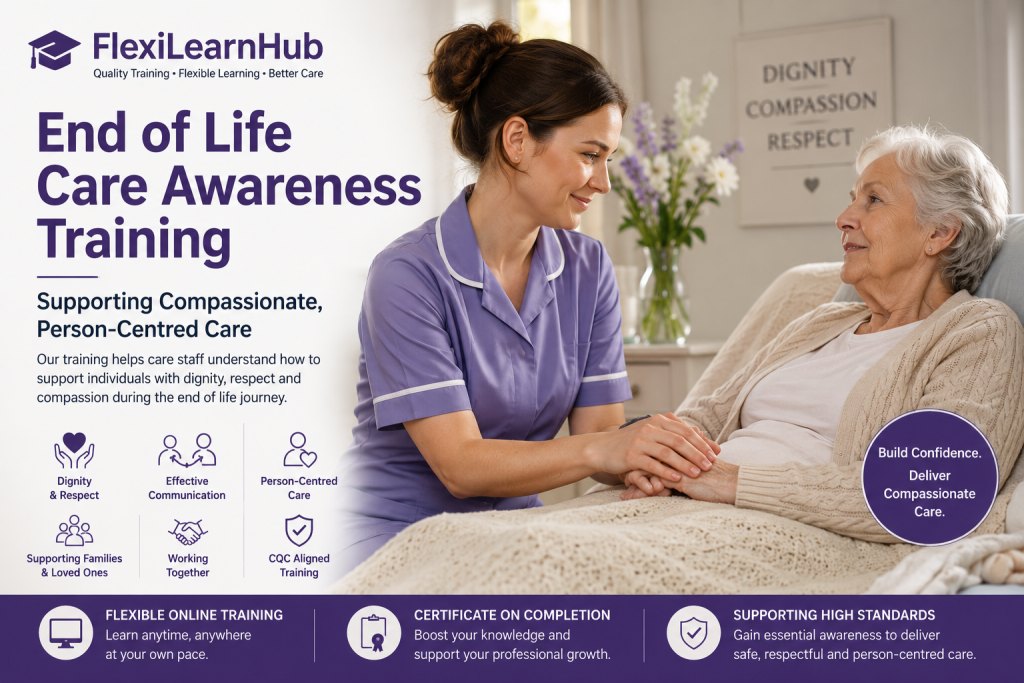
Providing compassionate, person-centred support is one of the most important responsibilities within health and social care. End of Life Care Awareness Training helps care staff develop an understanding of the principles that support dignity, comfort, communication and respect for individuals approaching the end of life. For many care workers, healthcare assistants and support staff, understanding these principles can help build confidence while promoting high-quality care and support. Understanding End of Life Care End of life care focuses on supporting individuals with compassion, dignity and respect during the final stages of life. The aim is to ensure that people receive care which reflects their wishes, preferences and individual needs while maintaining comfort and quality of life. Care should always be person-centred and delivered in a way that respects individual choices and values. Why Awareness Training Matters End of Life Care Awareness Training helps staff understand the importance of: Dignity and respect Person-centred care Effective communication Supporting emotional wellbeing Working collaboratively with families and professionals Understanding individual wishes and preferences Awareness training supports confidence while helping staff understand their professional responsibilities. Supporting Dignity and Respect Every individual deserves to be treated with dignity throughout their care journey. Care staff play an important role in creating a supportive environment where individuals feel respected, listened to and valued. Small actions, compassionate communication and person-centred approaches can make a significant difference to the experience of those receiving care. The Importance of Communication Good communication is a key element of quality care. This includes: Listening carefully Respecting individual preferences Communicating clearly and sensitively Supporting families appropriately Working effectively as part of a wider care team Strong communication helps ensure care remains focused on the individual’s needs and wishes. Supporting Families and Loved Ones Families and loved ones are often an important part of the care journey. Care staff may be involved in providing reassurance, practical support and compassionate communication while working within their professional role and organisational procedures. Awareness training helps staff understand the importance of family involvement and person-centred approaches. Who Should Complete End of Life Care Awareness Training? This type of training may be beneficial for: Care Assistants Senior Carers Support Workers Healthcare Assistants Care Home Staff Team Leaders Care Coordinators Registered Managers Understanding end of life care principles can support professional development across the entire care team. Supporting Professional Standards Health and social care professionals are expected to deliver care that is safe, respectful and person-centred. End of Life Care Awareness Training helps support these standards by increasing understanding of dignity, communication and compassionate care practices. Learn More with FlexiLearnHub FlexiLearnHub offers End of Life Care Awareness Training designed to support care staff working within care homes, supported living services and healthcare environments. Our flexible online training helps learners strengthen awareness, build confidence and support compassionate, person-centred care. Visit: FlexiLearnHub Food Safety & Hygiene HACCP Level 2 Allergen Awareness Nutrition & Hydration Dysphagia & IDDSI Awareness Advanced IDDSI Level 4 Professional Purée Presentation Infection Prevention & Control Dementia Awareness Mental Capacity Act & DoLS Awareness (CQC-Aligned) End of Life Care Awareness (CQC-Aligned) Modern Slavery Awareness (CQC-Aligned) Health & Safety Awareness in Care Settings (CQC-Aligned) Moving and Handling of People in Care Training helps kitchen teams remain compliant while continually developing their professional knowledge.
Mental Capacity Act & DoLS Training: Why Every Care Worker Needs Awareness
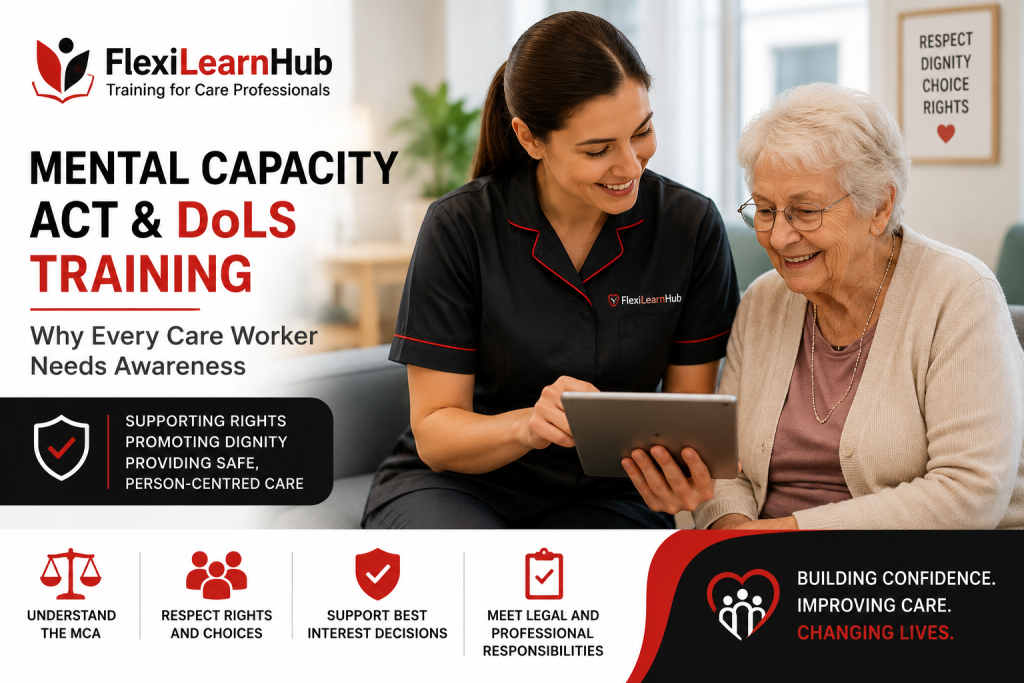
Understanding the Mental Capacity Act (MCA) and Deprivation of Liberty Safeguards (DoLS) is an important part of working within health and social care. These frameworks help protect the rights, dignity and wellbeing of individuals who may have difficulty making certain decisions for themselves. What Is the Mental Capacity Act? The Mental Capacity Act provides a framework that supports decision-making while helping to protect individuals who may lack capacity for specific decisions. The legislation promotes: The Act applies to a wide range of care and healthcare settings. Why Awareness Training Matters Training helps staff build confidence when supporting individuals in day-to-day care environments. Benefits include: ✔ Greater understanding of professional responsibilities ✔ Improved confidence when supporting residents ✔ Better awareness of rights and dignity ✔ Stronger person-centred care practices ✔ Support for regulatory compliance Supporting Safe and Respectful Care Understanding MCA and DoLS principles contributes to a culture of respect, dignity and person-centred support. Awareness training helps staff understand how legislation supports the people they care for while reinforcing professional responsibilities within regulated care environments. Developing Professional Confidence Ongoing learning plays an important role in workforce development. Training can help care workers, senior carers, support workers and managers strengthen their understanding of key principles while supporting consistent standards across teams. Learn More FlexiLearnHub offers Mental Capacity Act & DoLS Awareness Training designed to support care staff working within care homes, supported living services and healthcare environments. Explore our training courses to strengthen awareness, support professional development and build confidence in person-centred care.