
IDDSI Training in Canada: A Practical Guide for Long-Term Care & Foodservice Teams
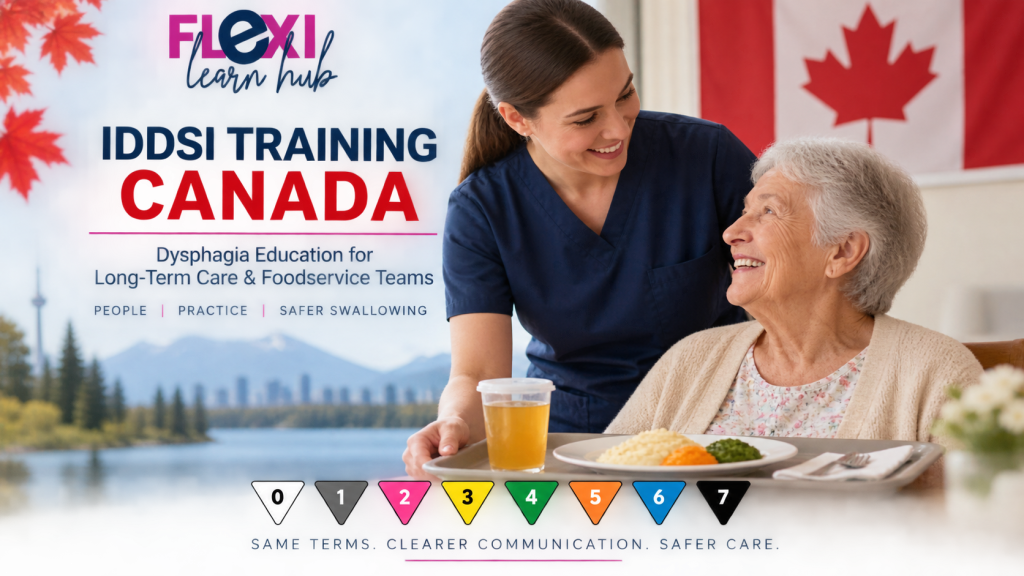
IDDSI Training Canada is increasingly relevant for long-term care, continuing care, dietary and foodservice teams supporting people with swallowing difficulties. Clear communication, consistency and an understanding of each person’s individual eating and drinking recommendations are essential. For staff working in long-term care, continuing care, residential care, dietary services and foodservice across Canada, the International Dysphagia Diet Standardisation Initiative — commonly known as IDDSI — provides standardised terminology for describing texture-modified foods and thickened liquids. But what exactly is IDDSI? How is the framework relevant in Canada? And what should care, dietary and foodservice teams understand when supporting someone with dysphagia? This practical guide introduces dysphagia and the IDDSI Framework, explains the importance of standardised terminology and looks at some of the practical considerations for Canadian long-term care and foodservice teams. Looking for flexible online training? FlexiLearnHub provides online Dysphagia Awareness & IDDSI Framework Training for individual learners and organisations across Canada. Explore IDDSI Training Canada What Is Dysphagia? Dysphagia is the medical term for difficulty swallowing. Swallowing difficulties can affect a person’s ability to manage food, drinks, saliva or medication. The nature and severity of dysphagia can vary considerably between individuals. For some people, an appropriate assessment may result in recommendations concerning food texture, drink thickness or other strategies related to eating and drinking. This is why dysphagia should not be treated simply as a catering issue. Assessment and management require appropriate professional input, while care, dietary and foodservice staff need the knowledge relevant to their own responsibilities. Awareness training can help staff understand terminology, recognise the importance of individual recommendations and appreciate why accurate communication between different members of the team matters. What Is the IDDSI Framework? The International Dysphagia Diet Standardisation Initiative (IDDSI) developed a global framework for describing texture-modified foods and thickened liquids used for people with feeding, chewing or swallowing difficulties. The framework consists of eight levels, numbered 0–7. These cover drinks of different thicknesses and foods with different texture characteristics. The purpose is to provide common terminology and definitions that can be understood across professions and care settings. IDDSI also provides testing methods that help determine whether foods and drinks have the characteristics associated with particular levels. The current official IDDSI Framework and Detailed Level Definitions is Version 2.2, while the current IDDSI Testing Methods is Version 2.0. For the latest documentation, always refer to: Official IDDSI Framework Documents Is IDDSI Used in Canada? Yes. IDDSI has an established history in Canada. The Canadian IDDSI Expert Reference Group reported that IDDSI was launched in Canada in January 2019, with work subsequently undertaken to support Canada-wide implementation. Dietitians of Canada has also publicly supported IDDSI and highlighted the potential benefits of standardised terminology for communication between professionals and facility staff. Importantly, however, IDDSI should not be presented as though the framework itself replaces individual assessment or determines what every person with dysphagia should receive. Dietitians of Canada’s long-term-care work has noted both the potential value of standardisation and the importance of individualising texture modification according to a resident’s needs and changing abilities. That distinction is important. IDDSI provides a common framework for describing food textures and drink thicknesses. The appropriate recommendations for an individual should still arise from appropriate assessment and professional decision-making. Why IDDSI Awareness Matters in Canadian Long-Term Care When considering IDDSI Training Canada, it is important to distinguish between awareness-level education and clinical dysphagia competency. A resident may receive support from several different professionals and departments. Depending upon the individual and setting, these might include: Speech-language pathologists Dietitians Nurses Care and support staff Dietary services Foodservice managers Cooks and kitchen staff Other members of the interdisciplinary team Each role is different, but information about an individual’s eating and drinking requirements may need to move accurately between several members of that team. Dietitians of Canada has identified inconsistent communication of diet orders or food and fluid texture modifications as a potential source of unintended errors in care. Its statement supporting IDDSI recognised the potential of common terminology to improve communication within and across care teams. For long-term-care organisations, this makes staff awareness important. Not everyone needs clinical expertise in dysphagia, but relevant staff should understand the terminology and responsibilities appropriate to their role. Understanding Texture-Modified Foods Some people with dysphagia may have recommendations for foods with particular texture characteristics. The IDDSI Framework includes food descriptions such as Pureed, Minced & Moist, Soft & Bite-Sized and Easy to Chew. These are not simply informal descriptions. Each level has defined characteristics and relevant testing methods. For dietary and foodservice teams, this means a food should not be assumed to meet a required texture merely because it appears soft, has been mashed or has been processed in a blender. Equally, staff should not decide independently that somebody requires a particular IDDSI level simply because that person has dysphagia. The person’s individual assessment, documented recommendations and organisational procedures should guide practice. For more practical information about texture modification, see: What Are Texture-Modified Meals? Texture-Modified Food and Quality of Life Texture modification involves more than achieving a particular physical consistency. Food is also connected with nutrition, enjoyment, choice, culture, dignity and quality of life. This is particularly important in long-term care, where residents may receive most or all of their meals from the organisation providing their care. Canadian long-term-care research and guidance have recognised some of the practical challenges surrounding texture-modified diets, including food production, resident acceptance, nutritional status and satisfaction. That reinforces an important principle: standardisation of terminology should sit alongside individualised and person-centred care. For cooks and foodservice teams, presentation and palatability therefore remain important even when a meal needs to meet particular texture requirements. For those interested specifically in improving Level 4 meal presentation, FlexiLearnHub also provides: Advanced IDDSI Level 4 Purée Presentation Understanding Thickened Liquids The IDDSI Framework also provides standardised terminology for drinks of different thicknesses. Where an individual has a documented recommendation for a particular drink thickness, relevant staff need to understand that requirement and follow the appropriate procedures. Standardised terminology
IDDSI & Dysphagia Training Australia | Practical Aged Care Guide
IDDSI Training Australia can help aged care, disability support, catering and foodservice teams develop a clearer understanding of dysphagia, texture-modified foods and thickened drinks. Supporting people with swallowing difficulties requires clear communication, consistency and an understanding of each person’s individual eating and drinking recommendations. For staff working in aged care, residential aged care, disability support, catering and foodservice across Australia, the International Dysphagia Diet Standardisation Initiative — commonly known as IDDSI — provides a standardised framework for describing texture-modified foods and thickened drinks. But what exactly is IDDSI? How does it relate to Australian aged care? And what should care, support, catering and foodservice teams understand when supporting someone with dysphagia? This practical guide explains the fundamentals of dysphagia and the IDDSI Framework, while also looking at the importance of texture-modified food and drink within Australian care settings. Looking for flexible online training? FlexiLearnHub provides online Dysphagia Awareness & IDDSI Framework Training for individual learners and organisations across Australia. Explore IDDSI Training Australia Online IDDSI & Dysphagia Training Australia What Is Dysphagia? Dysphagia is the medical term for difficulty swallowing. A person with dysphagia may experience difficulty managing food, drinks, saliva or medication. The nature and severity of swallowing difficulties vary considerably between individuals. For some people, changes to food texture or drink thickness may form part of their individual management plan following appropriate professional assessment. Australian Government aged-care training materials recognise dysphagia as an important consideration for care staff and discuss the use of texture modification alongside working with relevant health professionals. The important point for care and foodservice staff is that dysphagia requires individual assessment and appropriate professional input. Awareness training does not replace this clinical process. Instead, it can help relevant staff understand dysphagia terminology, appreciate why individual recommendations matter and recognise their own responsibilities when preparing, serving or supporting food and drink. What Is the IDDSI Framework? The International Dysphagia Diet Standardisation Initiative (IDDSI) developed a global framework for describing the texture of foods and thickness of drinks used for people with feeding, chewing or swallowing difficulties. The framework consists of eight levels, numbered 0–7. These levels cover drinks of different thicknesses and foods with different texture characteristics. The purpose of standardisation is important. Without common terminology, different facilities, professionals or foodservice teams could potentially use different descriptions for similar textures or interpret the same words differently. IDDSI provides standardised names, definitions and testing methods to support clearer communication. As of September 2026, the current IDDSI Framework and Detailed Level Definitions is Version 2.2, while the current IDDSI Testing Methods is Version 2.0. For the latest documentation, always refer to the official IDDSI resources: Official IDDSI Framework Documents Is IDDSI Used in Australia? Yes. IDDSI terminology is well established within Australian dysphagia and texture-modified food practice, and current Australian Government aged-care material directly references the framework. For example, Australian Government guidance for in-home meal requirements states that where providers deliver texture-modified meals, food and fluid levels should be clearly labelled and recommends following the IDDSI Framework when preparing and providing texture-modified foods and thickened fluids. Government guidance concerning aged-care information has also used IDDSI to describe a resident’s food texture and drink thickness. This makes an understanding of IDDSI particularly relevant for organisations and staff who may encounter texture-modified foods or thickened drinks. However, staff should still work according to their role, organisational policies, individual care plans and recommendations from appropriately qualified health professionals. Completing an online awareness course should not be interpreted as independently authorising someone to assess dysphagia or prescribe a particular food texture or drink thickness. Why IDDSI Dysphagia Training Matters in Australian Aged Care IDDSI Training Australia can help relevant aged care, disability support, catering and foodservice staff develop a shared understanding of the terminology used around texture-modified foods and thickened drinks. They contribute to enjoyment, dignity, choice, culture, social interaction and quality of life. This is particularly relevant in residential aged care. Australia’s strengthened Aged Care Quality Standards took effect on 1 November 2025, including a dedicated Standard 6: Food and Nutrition for residential care. Australian Government information emphasises nutritious, appetising and safe food and drink that meet older people’s needs and preferences. The Australian Government also specifically identifies the importance of providing appetising meals for older people requiring texture-modified diets. For somebody with dysphagia, achieving this can require cooperation between different roles. Depending on the person and setting, those involved may include: Speech pathologists Dietitians Nurses Care workers Support workers Chefs and cooks Catering teams Foodservice staff Other health and care professionals Different members of the team have different responsibilities. What they share is the need for accurate communication. Understanding Texture-Modified Foods Some people with dysphagia may have a recommendation for food with particular texture characteristics. The IDDSI Framework includes food descriptions such as Pureed, Minced & Moist, Soft & Bite-Sized and Easy to Chew. These descriptions are more than simply names. Each IDDSI level has specific characteristics and associated testing methods. For staff preparing or serving texture-modified meals, consistency is important. A meal should not simply be assumed to meet a required texture because it looks soft or has been processed in a blender. Likewise, staff should never decide that someone needs a particular IDDSI level merely because they have swallowing difficulties. The appropriate food and drink recommendations should come from the relevant assessment and care process. Care, support and foodservice staff should follow the person’s documented recommendations and their organisation’s procedures. Texture-Modified Food Should Still Be Appetising Texture modification should not mean abandoning the enjoyment or appearance of food. This is an increasingly important theme within Australian aged care. Australian Government food and nutrition initiatives emphasise providing nutritious and appetising meals, including for people requiring texture-modified diets. Government-published examples from Australian aged-care services also demonstrate efforts to make texture-modified meals visually appealing, including separating different components and colours rather than presenting everything together. This is particularly relevant to chefs, cooks and catering teams. A meal may need to meet particular texture requirements, but presentation, flavour, nutrition and