
Medication Awareness in Care Homes: Why Every Care Worker Needs Basic Knowledge

Medication plays a vital role in supporting the health, wellbeing and quality of life of many people living in residential care homes, nursing homes and supported living environments. From managing long-term health conditions to relieving pain and treating illness, medicines help residents remain as healthy, comfortable and independent as possible. While administering medication is often carried out by trained and authorised staff, medication awareness is important for everyone working within a care setting. Every member of the care team should understand the principles of safe medication practice, recognise potential risks and know how their role contributes to protecting residents from avoidable harm. Developing medication awareness is not about turning every care worker into a medication administrator. Instead, it helps staff understand why medicines matter, how errors can occur and the importance of working safely, communicating effectively and following agreed procedures. In this guide, we explore why medication awareness is essential in modern care settings and how ongoing training supports both resident safety and high-quality care. Why Medication Awareness Matters Residents living in care settings often rely on several different medications to manage a range of health conditions. Some medicines may need to be taken at specific times, while others require careful monitoring or special administration instructions. Although only appropriately trained staff should administer medication, everyone involved in supporting residents has a responsibility to promote safe care. Medication awareness helps staff: When every member of the team understands these principles, residents benefit from more consistent and coordinated care. Understanding Your Role Different care workers have different responsibilities depending on their role, training and employer policies. Medication awareness training helps staff understand: Understanding professional boundaries is an important part of providing safe care and maintaining public trust. Common Causes of Medication Errors Medication errors can occur in any healthcare environment. Many are preventable and often result from communication problems, distractions or failure to follow established procedures. Examples include: Developing awareness helps staff recognise situations where additional care and attention are needed. Supporting Safe Medication Practices Safe medication practice depends on teamwork. Good practice includes: Consistency helps reduce unnecessary risks while promoting confidence among both staff and residents. The Importance of Communication Effective communication is one of the most important factors in medication safety. Staff should always communicate clearly when: Good communication helps ensure continuity of care and reduces the likelihood of misunderstandings. Recognising Possible Side Effects Although diagnosis remains the responsibility of healthcare professionals, care workers are often well placed to notice changes in a resident’s condition. Possible observations may include: Promptly reporting concerns allows appropriate action to be taken without delay. Accurate Record Keeping Clear documentation supports safe medication management. Good records help ensure: Incomplete or inaccurate records can increase the risk of avoidable mistakes. Supporting Residents with Respect Medication should always be provided in a way that respects each person’s dignity, privacy and individual preferences. Staff should support residents by: Every interaction should help preserve trust between residents and care staff. Medication Awareness and CQC Expectations The Care Quality Commission expects providers to have appropriate systems that promote safe, effective care. Medication awareness contributes to: Training also demonstrates an organisation’s commitment to maintaining high standards throughout the year rather than simply preparing for inspections. Why Ongoing Training Matters Healthcare guidance continues to evolve, making regular refresher training an important part of professional development. Ongoing learning helps staff: Learning should be viewed as an ongoing journey rather than a one-time requirement. Creating a Positive Safety Culture The safest care environments encourage everyone to speak up when something doesn’t seem right. Managers can support this by: When staff feel confident raising concerns, organisations become safer for everyone. Key Takeaways Medication awareness is an essential part of delivering safe, compassionate and person-centred care. While not every care worker administers medication, understanding the principles of safe medication practice helps protect residents, supports teamwork and reduces the risk of avoidable errors. By investing in regular training and promoting a positive culture of learning, care providers demonstrate their commitment to quality, professionalism and continuous improvement. Medication awareness is not simply about following procedures—it is about ensuring every resident receives the safe, respectful and high-quality care they deserve. Continue Developing Your Knowledge At FlexiLearnHub, we provide flexible online training designed to support care providers, managers and care professionals across the UK. Our growing library of CQC-aligned and CPD-accredited courses helps organisations build confident, knowledgeable teams while supporting compliance, professional development and outstanding standards of care. Visit FlexiLearnHub’s CPD & CQC Aligned certificated OnLine training courses Our growing course library includes: Thank you for visiting FlexiLearnHub Further Reading
Why Every Care Home Needs Mental Capacity Act & DoLS Awareness Training

Supporting people within adult social care involves more than providing day-to-day assistance. Care professionals are expected to work in a way that promotes dignity, respect, person-centred care and individual rights while following professional standards and organisational procedures. Developing awareness of the Mental Capacity Act (MCA) and Deprivation of Liberty Safeguards (DoLS) helps staff better understand their professional responsibilities and supports safe, compassionate care within regulated care settings. What is the Mental Capacity Act? The Mental Capacity Act 2005 provides a legal framework that supports decision-making for adults who may have difficulty making certain decisions for themselves. For care staff, understanding the principles of the Mental Capacity Act helps promote: Awareness training helps staff understand these important principles while recognising the importance of following organisational policies, care plans and established procedures. Understanding Deprivation of Liberty Safeguards (DoLS) Deprivation of Liberty Safeguards are designed to help protect individuals who may lack capacity and require care arrangements that are in their best interests. While detailed legal decisions remain the responsibility of appropriately trained professionals, awareness training helps staff understand: Developing awareness supports safer and more consistent care across all care settings. Why Awareness Training Matters Regular refresher training helps organisations maintain high standards of care while supporting staff confidence and professional development. Benefits include: See Our Courses Visit: FlexiLearnHub Training helps kitchen teams remain compliant while continually developing their professional knowledge. Who Should Complete Mental Capacity Act & DoLS Awareness Training? This course is suitable for a wide range of professionals, including: Every member of the care team plays an important role in supporting safe, respectful and person-centred care. Flexible Online Learning with FlexiLearnHub At FlexiLearnHub, our Mental Capacity Act & DoLS Awareness (CQC-Aligned) course has been designed to provide engaging, easy-to-follow online learning. Learners benefit from: Supporting Better Care Through Professional Development Investing in staff training helps organisations promote high standards of care while supporting professional development and workplace confidence. Whether you are an individual learner or responsible for managing staff training, Mental Capacity Act & DoLS Awareness Training forms an important part of a well-rounded learning programme for adult social care professionals. Learn with FlexiLearnHub Start your Mental Capacity Act & DoLS Awareness (CQC-Aligned) training today and strengthen your understanding of person-centred care, professional responsibilities and safe working practices within adult social care. Mental Capacity Act & DoLS Awareness
Mental Capacity Act & DoLS Training: Why Every Care Worker Needs Awareness
Understanding the Mental Capacity Act (MCA) and Deprivation of Liberty Safeguards (DoLS) is an important part of working within health and social care. These frameworks help protect the rights, dignity and wellbeing of individuals who may have difficulty making certain decisions for themselves. What Is the Mental Capacity Act? The Mental Capacity Act provides a framework that supports decision-making while helping to protect individuals who may lack capacity for specific decisions. The legislation promotes: The Act applies to a wide range of care and healthcare settings. Why Awareness Training Matters Training helps staff build confidence when supporting individuals in day-to-day care environments. Benefits include: ✔ Greater understanding of professional responsibilities ✔ Improved confidence when supporting residents ✔ Better awareness of rights and dignity ✔ Stronger person-centred care practices ✔ Support for regulatory compliance Supporting Safe and Respectful Care Understanding MCA and DoLS principles contributes to a culture of respect, dignity and person-centred support. Awareness training helps staff understand how legislation supports the people they care for while reinforcing professional responsibilities within regulated care environments. Developing Professional Confidence Ongoing learning plays an important role in workforce development. Training can help care workers, senior carers, support workers and managers strengthen their understanding of key principles while supporting consistent standards across teams. Learn More FlexiLearnHub offers Mental Capacity Act & DoLS Awareness Training designed to support care staff working within care homes, supported living services and healthcare environments. Explore our training courses to strengthen awareness, support professional development and build confidence in person-centred care.
Common Training Gaps Identified During Care Home Inspections
Care providers work hard to maintain high standards of care, safety and professionalism. One area that frequently receives attention during inspections is staff training. While training alone does not determine inspection outcomes, providers are expected to demonstrate that staff have the knowledge, skills and support required to carry out their roles effectively. Identifying and addressing training gaps can help organisations strengthen workplace confidence, support safe care delivery and maintain consistent standards across teams. Why Training Matters Training helps ensure staff understand their responsibilities and can apply organisational policies and procedures appropriately within their roles. Effective training programmes support: ✔ Safe care delivery ✔ Regulatory awareness ✔ Professional confidence ✔ Consistent working practices ✔ Continuous professional development Maintaining accurate training records and refresher schedules also helps demonstrate a commitment to workforce development. Safeguarding Awareness One of the most important training areas within health and social care is safeguarding. Staff should understand: ✔ Different forms of abuse and neglect ✔ Professional responsibilities ✔ Reporting procedures ✔ Whistleblowing processes ✔ Professional boundaries Regular safeguarding refresher training helps ensure staff remain confident in recognising concerns and responding appropriately. Related Training:Safeguarding Adults Level 1 & 2 Training Mental Capacity Act & DoLS Awareness Understanding the Mental Capacity Act (MCA) and Deprivation of Liberty Safeguards (DoLS) remains essential within many care settings. Training should support awareness of: ✔ Decision-making principles ✔ Individual rights ✔ Consent and capacity ✔ Professional responsibilities ✔ Person-centred care approaches A lack of understanding in this area can create uncertainty when supporting individuals who may have fluctuating or impaired capacity. Related Training:Mental Capacity Act & DoLS Awareness Training Infection Prevention & Control Infection prevention remains a core area of workplace training. Staff should understand: ✔ Hygiene practices ✔ Cross-contamination awareness ✔ Use of PPE ✔ Workplace procedures ✔ Reporting processes Regular refresher training helps reinforce safe working practices and workplace standards. Related Training:Infection Prevention & Control Training Moving & Handling Awareness Moving and handling training supports both staff and resident safety. Training should help staff understand: ✔ Risk awareness ✔ Safe working practices ✔ Professional responsibilities ✔ Equipment awareness ✔ Workplace procedures Regular updates help maintain consistency across teams and reduce avoidable risks. Related Training:Moving & Handling of People Training Dementia Awareness Many care environments support individuals living with dementia. Training helps staff develop understanding of: ✔ Person-centred approaches ✔ Communication techniques ✔ Emotional wellbeing ✔ Environmental considerations ✔ Individual support needs Building confidence in dementia awareness can improve day-to-day interactions and support positive care experiences. Related Training:Dementia Awareness Training Mealtime Safety & Nutritional Awareness Mealtimes play an important role in health, wellbeing and quality of life. Training gaps can sometimes occur around: ✔ Nutrition and hydration ✔ Dysphagia awareness ✔ Texture modified meals ✔ Food safety ✔ Allergen awareness Providing staff with appropriate awareness training helps support safer mealtime experiences and improved understanding of individual needs. Related Training: Supporting Consistent Standards Across Teams Care providers often face challenges when managing training across large teams, multiple shifts and varying levels of experience. A structured training programme can help: ✔ Track learning progress ✔ Identify refresher requirements ✔ Maintain consistent standards ✔ Support induction programmes ✔ Demonstrate workforce development Online training systems can also help simplify administration while supporting ongoing professional development. Group Training for Care Homes & Employers FlexiLearnHub offers flexible online training suitable for both individual learners and care organisations. Our Group Training system enables employers to: ✔ Enrol multiple staff members ✔ Assign training programmes ✔ Monitor learner progress ✔ Track certificate completion ✔ Support workforce development This helps organisations maintain oversight of staff training while reducing administrative workload. Building a Positive Learning Culture Addressing training gaps is not simply about compliance. It is about creating a workplace culture where staff feel confident, supported and equipped to deliver high-quality care. Regular training, refresher learning and professional development opportunities can help organisations strengthen workforce confidence and support positive outcomes for the people they care for. Explore Our Care Home Staff Training Courses FlexiLearnHub provides a growing range of online care training courses designed to support: ✔ Care Assistants ✔ Senior Care Staff ✔ Support Workers ✔ Team Leaders ✔ Care Home Managers ✔ Healthcare Professionals Explore our care training courses and group training solutions to support safe, effective and person-centred care.
Why Staff Training Matters During CQC Inspections
Staff training plays an important role in supporting quality care, workplace confidence and ongoing professional development within health and social care environments. For care providers, maintaining effective staff training programmes can also help demonstrate a commitment to safe, effective and person-centred care during Care Quality Commission (CQC) inspections. While training alone does not determine inspection outcomes, it can form part of the wider evidence that organisations use to demonstrate good practice and continuous improvement. Training and Compliance Care providers have a responsibility to ensure that staff receive appropriate information, instruction and workplace training relevant to their roles. Training helps support: ✔ Safe working practices ✔ Professional competence ✔ Workplace confidence ✔ Understanding of organisational policies and procedures ✔ Continuous professional development Providing access to appropriate learning opportunities helps create a culture where staff can develop their knowledge and understanding throughout their careers. How Training Records Support Inspection Readiness During inspections, providers may be asked to demonstrate how staff are supported to carry out their roles effectively. Maintaining accurate training records can help organisations: ✔ Monitor staff learning ✔ Track completed training ✔ Identify refresher requirements ✔ Demonstrate workforce development ✔ Support compliance monitoring Well-maintained training records can provide evidence of ongoing investment in staff development and workplace learning. Common Training Areas Reviewed by Inspectors Training requirements vary between organisations and job roles. However, common workplace training areas often include: Safeguarding Awareness Supporting awareness of protecting individuals from abuse, neglect and harm. Mental Capacity Act & DoLS Awareness Understanding key principles that support decision-making and individual rights. Infection Prevention & Control Promoting safe working practices and workplace hygiene standards. Moving and Handling Awareness Supporting safer working practices when assisting individuals with movement and mobility. Dementia Awareness Helping staff develop understanding of dementia and person-centred approaches to care. Health & Safety Awareness Supporting safe workplace practices and risk awareness. Managing Training Across Multiple Staff For many care providers, managing training across multiple employees can become increasingly challenging. Organisations may need to: ✔ Monitor training completion ✔ Manage refresher training ✔ Track learner progress ✔ Maintain training records ✔ Support workforce development Having a structured training system can help simplify administration while supporting staff learning. Flexible Online Group Training for Employers FlexiLearnHub provides flexible online training designed to support employers, managers and workplace teams. Our Group Training system allows organisations to: ✔ Assign training to staff ✔ Monitor learner progress ✔ Track course completion ✔ Manage workplace learning ✔ Access training records online Explore our Group Training options: Supporting Continuous Professional Development Professional development should be viewed as an ongoing process rather than a one-off event. Regular training and refresher learning can help support workplace confidence, encourage good practice and contribute to a positive learning culture within care environments. By investing in staff development, organisations can help build knowledgeable, confident teams that are better equipped to support the individuals they care for. Explore Our Care Training Courses FlexiLearnHub offers a growing range of online training designed to support care staff, catering teams and workplace managers. Popular training areas include: ✔ Safeguarding Awareness ✔ Mental Capacity Act & DoLS Awareness ✔ Infection Prevention & Control ✔ Moving and Handling Awareness ✔ Dementia Awareness ✔ Health & Safety Awareness ✔ Nutrition & Hydration ✔ Dysphagia & IDDSI Awareness Explore our training courses and resources to support workplace learning and professional development.
What Are Texture Modified Meals? A Guide for Care & Catering Teams
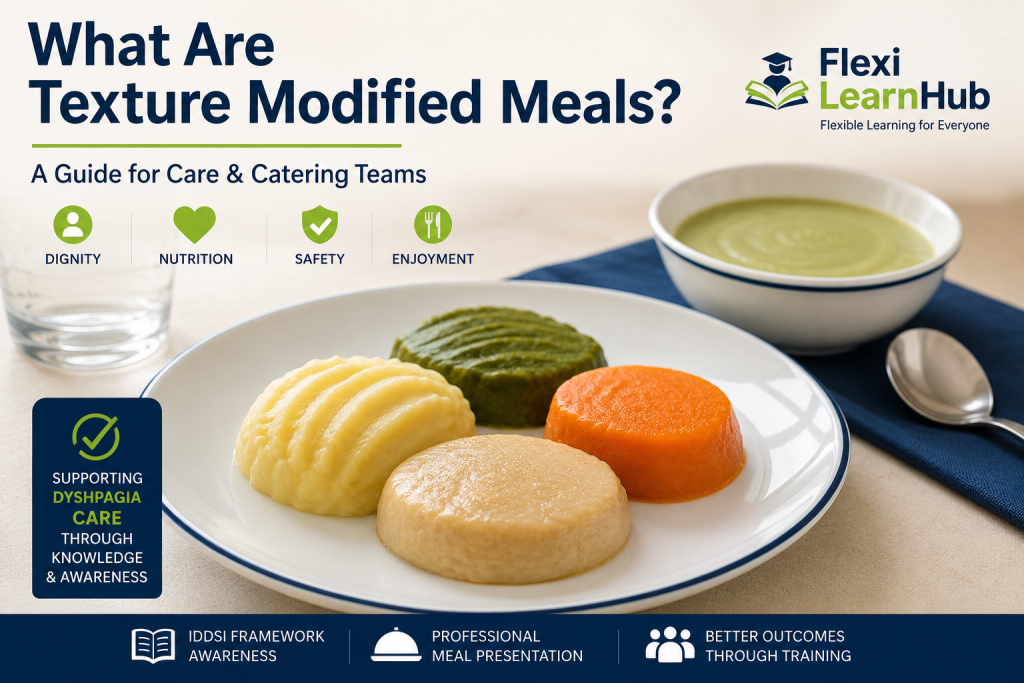
Within healthcare, care homes and specialist catering environments, texture modified meals play an important role in supporting individuals who may require modified food textures as part of their care and support arrangements. As awareness of dysphagia and specialist dietary requirements continues to grow, understanding texture modified meals is becoming increasingly important for care staff, catering teams and healthcare professionals. Understanding Texture Modified Meals Texture modified meals are foods that have been prepared, adapted or modified to achieve a specific texture or consistency. These meals are commonly used within healthcare, aged care and specialist care environments where individuals may require food textures that differ from standard meals. The goal is to provide meals that are suitable for an individual’s assessed needs while still supporting nutrition, hydration and positive mealtime experiences. Why Are Texture Modified Meals Important? Mealtimes are about far more than simply providing food. Within care environments, mealtimes can contribute to wellbeing, dignity, comfort and social interaction. Professional preparation and presentation of texture modified meals can help support: ✔ Positive mealtime experiences ✔ Dignity and respect ✔ Professional catering standards ✔ Visual appeal ✔ Consistency within care catering environments For catering teams, understanding texture modified meals is increasingly recognised as an important part of professional practice. The Role of the IDDSI Framework he International Dysphagia Diet Standardisation Initiative (IDDSI) Framework provides internationally recognised terminology and guidance relating to texture modified foods and drinks. The framework helps support consistency across healthcare, aged care and specialist catering environments. Many organisations now use the IDDSI Framework as part of their workplace awareness and professional development programmes. For a more detailed overview, visit our dedicated: IDDSI & Dysphagia Awareness Training Hub Why Professional Presentation Still Matters One common misconception is that texture modified meals cannot look appealing. In reality, professional meal presentation remains an important part of modern care catering. Thoughtfully presented meals can help support: ✔ Mealtime dignity ✔ Visual appeal ✔ Positive dining experiences ✔ Professional workplace standards ✔ Confidence within catering teams This is one reason why specialist awareness around professional purée presentation and plating is becoming increasingly popular within healthcare catering environments. Specialist IDDSI & Dysphagia Training At FlexiLearnHub, we provide specialist online training designed to support care and catering professionals. Our training includes: Dysphagia Care Training within The IDDSI Framework Designed to help provide awareness and understanding of texture modified meals, dysphagia awareness and the IDDSI Framework. Advanced IDDSI Level 4 Professional Purée Presentation & Plating Focused on professional shaping, plating and presentation awareness for Level 4 texture modified meals. Watch Our IDDSI Awareness Videos Watch our latest YouTube videos exploring: ✔ IDDSI awareness ✔ Texture modified meals ✔ Professional meal presentation ✔ Care catering standards [YouTube Long Video] [YouTube Short] Flexible Online Learning for Care & Catering Teams FlexiLearnHub provides flexible online learning designed for modern care, healthcare and catering environments. Explore our specialist training courses and resources to support professional development and workplace awareness. 👉 Dysphagia Course 👉 Advanced Level 4 Course 👉 Group Training for Employers Thank You!