
7 Practical Ways Care Homes Can Help Prevent Dehydration

Maintaining good hydration is an essential part of delivering high-quality care. While dehydration can affect people of all ages, older adults and individuals living in residential and nursing care settings may be at a greater risk due to age, medical conditions, reduced mobility or difficulties with eating and drinking. The good news is that encouraging good hydration doesn’t have to be complicated. Small, consistent actions throughout the day can make a positive difference to residents’ health, wellbeing and quality of life. Here are seven practical ways care homes can help support good hydration every day. 1. Offer Drinks Regularly Throughout the Day Rather than waiting until mealtimes, encourage regular opportunities to drink throughout the day. Offering drinks during activities, after medication rounds and at social gatherings helps make hydration a natural part of everyday life. Remember that some residents may not ask for a drink, so regular encouragement can make a real difference. 2. Provide a Choice of Drinks Everyone has different preferences. Offering a variety of drinks such as water, tea, coffee, milk, fruit juice or sugar-free alternatives (where appropriate) can encourage better fluid intake. Respecting individual preferences and cultural choices is an important part of person-centred care. 3. Create a Positive Drinking Environment People are often more likely to enjoy food and drinks when the environment is calm, welcoming and comfortable. Encouraging residents to enjoy drinks together during activities or social occasions can help make hydration feel less like a task and more like an enjoyable part of the day. 4. Encourage Hydration During and Between Meals Meals provide an excellent opportunity to encourage fluid intake, but hydration should continue throughout the day. Offering drinks between meals helps support regular hydration and provides additional opportunities for residents to enjoy refreshments. 5. Observe for Changes and Report Concerns Care staff are often the first to notice changes in an individual’s usual eating and drinking habits. Reduced interest in drinks, changes in behaviour or other concerns should be reported promptly in accordance with the individual’s care plan and your organisation’s procedures. Good observation and communication help ensure concerns are addressed appropriately. 6. Work Together as One Care Team Supporting hydration is everyone’s responsibility. Care assistants, nurses, catering teams, managers and healthcare professionals all contribute to promoting healthy fluid intake. Good communication between team members helps ensure consistent, person-centred care. 7. Keep Hydration Person-Centred Every resident is unique. Some individuals may enjoy frequent small drinks, while others prefer larger drinks less often. Some may have cultural preferences or require specific support in accordance with their care plan. By respecting personal preferences and encouraging independence wherever appropriate, care teams help create a more positive and enjoyable hydration experience. Good Hydration Supports Good Care Promoting good hydration is about much more than simply offering drinks. It is about supporting health, wellbeing, dignity and quality of life through consistent, person-centred care. By encouraging regular fluid intake, remaining observant and working together as a team, care homes can help create an environment where residents feel supported, comfortable and valued. Free Professional Resource Looking to support your team with hydration awareness? Download our free professional guide: 📄 Preventing Dehydration in Care Settings – A Professional Awareness Guide for Care Staff The guide provides practical awareness to help care staff understand the importance of hydration, recognise possible concerns and promote good everyday hydration practices. Continue Your Professional Development For more in-depth learning, explore our Nutrition & Hydration in Care Settings (CPD Accredited) online training course. Designed for care staff, support workers, healthcare assistants and care home managers, the course helps develop knowledge and confidence in supporting good nutrition and hydration within care settings.
Common Training Gaps Identified During Care Home Inspections
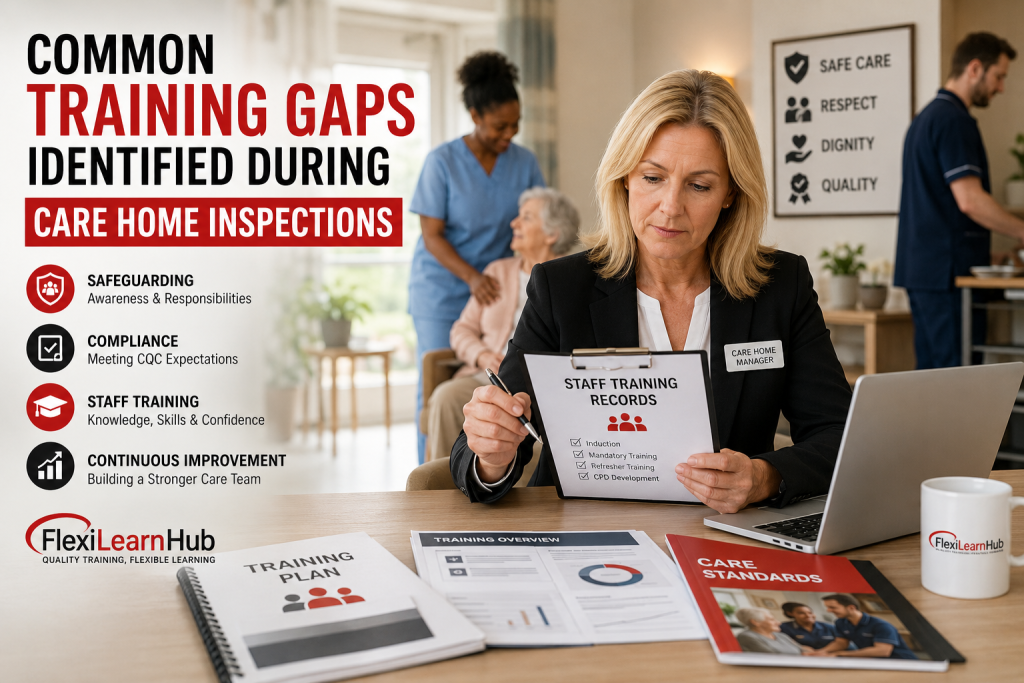
Care providers work hard to maintain high standards of care, safety and professionalism. One area that frequently receives attention during inspections is staff training. While training alone does not determine inspection outcomes, providers are expected to demonstrate that staff have the knowledge, skills and support required to carry out their roles effectively. Identifying and addressing training gaps can help organisations strengthen workplace confidence, support safe care delivery and maintain consistent standards across teams. Why Training Matters Training helps ensure staff understand their responsibilities and can apply organisational policies and procedures appropriately within their roles. Effective training programmes support: ✔ Safe care delivery ✔ Regulatory awareness ✔ Professional confidence ✔ Consistent working practices ✔ Continuous professional development Maintaining accurate training records and refresher schedules also helps demonstrate a commitment to workforce development. Safeguarding Awareness One of the most important training areas within health and social care is safeguarding. Staff should understand: ✔ Different forms of abuse and neglect ✔ Professional responsibilities ✔ Reporting procedures ✔ Whistleblowing processes ✔ Professional boundaries Regular safeguarding refresher training helps ensure staff remain confident in recognising concerns and responding appropriately. Related Training:Safeguarding Adults Level 1 & 2 Training Mental Capacity Act & DoLS Awareness Understanding the Mental Capacity Act (MCA) and Deprivation of Liberty Safeguards (DoLS) remains essential within many care settings. Training should support awareness of: ✔ Decision-making principles ✔ Individual rights ✔ Consent and capacity ✔ Professional responsibilities ✔ Person-centred care approaches A lack of understanding in this area can create uncertainty when supporting individuals who may have fluctuating or impaired capacity. Related Training:Mental Capacity Act & DoLS Awareness Training Infection Prevention & Control Infection prevention remains a core area of workplace training. Staff should understand: ✔ Hygiene practices ✔ Cross-contamination awareness ✔ Use of PPE ✔ Workplace procedures ✔ Reporting processes Regular refresher training helps reinforce safe working practices and workplace standards. Related Training:Infection Prevention & Control Training Moving & Handling Awareness Moving and handling training supports both staff and resident safety. Training should help staff understand: ✔ Risk awareness ✔ Safe working practices ✔ Professional responsibilities ✔ Equipment awareness ✔ Workplace procedures Regular updates help maintain consistency across teams and reduce avoidable risks. Related Training:Moving & Handling of People Training Dementia Awareness Many care environments support individuals living with dementia. Training helps staff develop understanding of: ✔ Person-centred approaches ✔ Communication techniques ✔ Emotional wellbeing ✔ Environmental considerations ✔ Individual support needs Building confidence in dementia awareness can improve day-to-day interactions and support positive care experiences. Related Training:Dementia Awareness Training Mealtime Safety & Nutritional Awareness Mealtimes play an important role in health, wellbeing and quality of life. Training gaps can sometimes occur around: ✔ Nutrition and hydration ✔ Dysphagia awareness ✔ Texture modified meals ✔ Food safety ✔ Allergen awareness Providing staff with appropriate awareness training helps support safer mealtime experiences and improved understanding of individual needs. Related Training: Supporting Consistent Standards Across Teams Care providers often face challenges when managing training across large teams, multiple shifts and varying levels of experience. A structured training programme can help: ✔ Track learning progress ✔ Identify refresher requirements ✔ Maintain consistent standards ✔ Support induction programmes ✔ Demonstrate workforce development Online training systems can also help simplify administration while supporting ongoing professional development. Group Training for Care Homes & Employers FlexiLearnHub offers flexible online training suitable for both individual learners and care organisations. Our Group Training system enables employers to: ✔ Enrol multiple staff members ✔ Assign training programmes ✔ Monitor learner progress ✔ Track certificate completion ✔ Support workforce development This helps organisations maintain oversight of staff training while reducing administrative workload. Building a Positive Learning Culture Addressing training gaps is not simply about compliance. It is about creating a workplace culture where staff feel confident, supported and equipped to deliver high-quality care. Regular training, refresher learning and professional development opportunities can help organisations strengthen workforce confidence and support positive outcomes for the people they care for. Explore Our Care Home Staff Training Courses FlexiLearnHub provides a growing range of online care training courses designed to support: ✔ Care Assistants ✔ Senior Care Staff ✔ Support Workers ✔ Team Leaders ✔ Care Home Managers ✔ Healthcare Professionals Explore our care training courses and group training solutions to support safe, effective and person-centred care.
Why Staff Training Matters During CQC Inspections
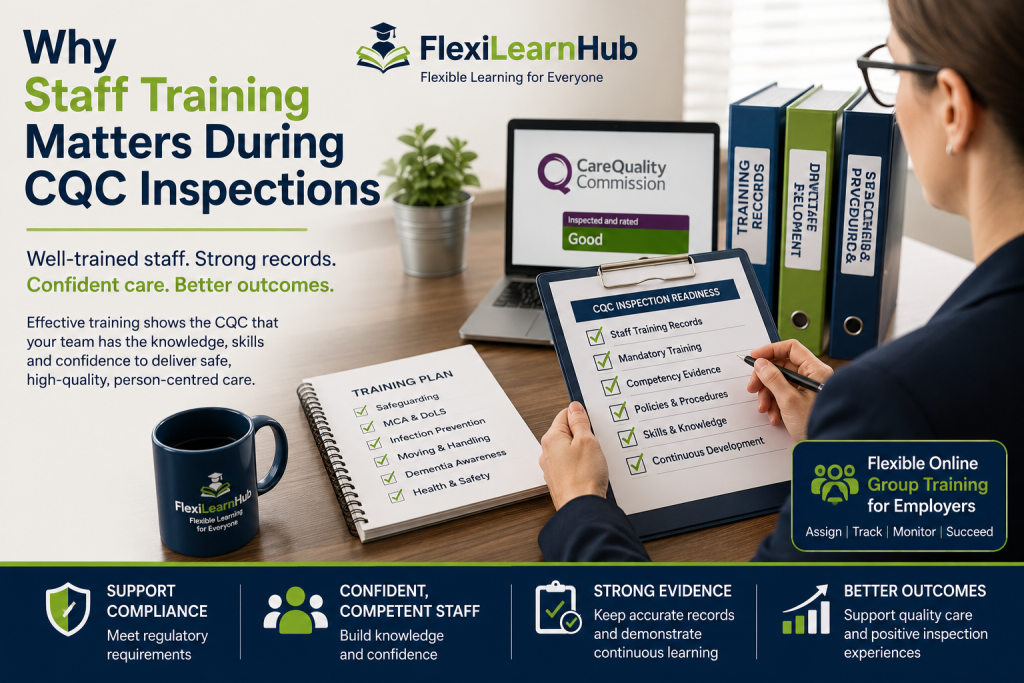
Staff training plays an important role in supporting quality care, workplace confidence and ongoing professional development within health and social care environments. For care providers, maintaining effective staff training programmes can also help demonstrate a commitment to safe, effective and person-centred care during Care Quality Commission (CQC) inspections. While training alone does not determine inspection outcomes, it can form part of the wider evidence that organisations use to demonstrate good practice and continuous improvement. Training and Compliance Care providers have a responsibility to ensure that staff receive appropriate information, instruction and workplace training relevant to their roles. Training helps support: ✔ Safe working practices ✔ Professional competence ✔ Workplace confidence ✔ Understanding of organisational policies and procedures ✔ Continuous professional development Providing access to appropriate learning opportunities helps create a culture where staff can develop their knowledge and understanding throughout their careers. How Training Records Support Inspection Readiness During inspections, providers may be asked to demonstrate how staff are supported to carry out their roles effectively. Maintaining accurate training records can help organisations: ✔ Monitor staff learning ✔ Track completed training ✔ Identify refresher requirements ✔ Demonstrate workforce development ✔ Support compliance monitoring Well-maintained training records can provide evidence of ongoing investment in staff development and workplace learning. Common Training Areas Reviewed by Inspectors Training requirements vary between organisations and job roles. However, common workplace training areas often include: Safeguarding Awareness Supporting awareness of protecting individuals from abuse, neglect and harm. Mental Capacity Act & DoLS Awareness Understanding key principles that support decision-making and individual rights. Infection Prevention & Control Promoting safe working practices and workplace hygiene standards. Moving and Handling Awareness Supporting safer working practices when assisting individuals with movement and mobility. Dementia Awareness Helping staff develop understanding of dementia and person-centred approaches to care. Health & Safety Awareness Supporting safe workplace practices and risk awareness. Managing Training Across Multiple Staff For many care providers, managing training across multiple employees can become increasingly challenging. Organisations may need to: ✔ Monitor training completion ✔ Manage refresher training ✔ Track learner progress ✔ Maintain training records ✔ Support workforce development Having a structured training system can help simplify administration while supporting staff learning. Flexible Online Group Training for Employers FlexiLearnHub provides flexible online training designed to support employers, managers and workplace teams. Our Group Training system allows organisations to: ✔ Assign training to staff ✔ Monitor learner progress ✔ Track course completion ✔ Manage workplace learning ✔ Access training records online Explore our Group Training options: Supporting Continuous Professional Development Professional development should be viewed as an ongoing process rather than a one-off event. Regular training and refresher learning can help support workplace confidence, encourage good practice and contribute to a positive learning culture within care environments. By investing in staff development, organisations can help build knowledgeable, confident teams that are better equipped to support the individuals they care for. Explore Our Care Training Courses FlexiLearnHub offers a growing range of online training designed to support care staff, catering teams and workplace managers. Popular training areas include: ✔ Safeguarding Awareness ✔ Mental Capacity Act & DoLS Awareness ✔ Infection Prevention & Control ✔ Moving and Handling Awareness ✔ Dementia Awareness ✔ Health & Safety Awareness ✔ Nutrition & Hydration ✔ Dysphagia & IDDSI Awareness Explore our training courses and resources to support workplace learning and professional development.
Nutrition and Hydration in Care Homes: Essential Training for Staff

Nutrition and hydration play a vital role in maintaining the health, wellbeing and quality of life of care home residents. Poor nutrition or dehydration can lead to serious health complications, including weight loss, infections and hospital admissions. In this guide, we explore why nutrition and hydration are so important in care settings and how proper training supports safe, person-centred care. Why Nutrition and Hydration Matter in Care Homes Many residents in care homes are at increased risk of malnutrition and dehydration due to age, illness or reduced appetite. Good nutrition and hydration help to: Signs of Malnutrition and Dehydration Care staff must be able to recognise early warning signs, including: Early identification allows for timely intervention and improved outcomes. Supporting Residents with Eating and Drinking Providing support with meals and fluids is essential in care environments. This includes: Person-centred care is key to ensuring residents receive adequate nutrition and hydration. Accurate monitoring helps ensure residents are receiving enough nutrition and fluids. Care homes should: This helps maintain compliance with care standards and improves resident outcomes. The Role of Training in Nutritional Care Training ensures staff understand how to support residents safely and effectively. Proper training helps staff: To support safe and effective care, structured training is essential.👉 Start your Nutrition & Hydration training course here Supporting Care Homes with Online Training FlexiLearnHub provides flexible online training designed for care staff and catering teams. Our Nutrition and Hydration course helps staff: Conclusion Nutrition and hydration are fundamental to safe and effective care. With proper training and awareness, care teams can significantly improve the health and wellbeing of residents. Residents with swallowing difficulties may require modified diets.👉 Learn more about the IDDSI framework in care homes Safe food preparation is essential when supporting nutritional care.👉 Read our food safety guide Start Your Training Today If your team requires nutrition and hydration training, FlexiLearnHub offers accessible online courses designed for real care environments. ✔ Flexible online learning✔ Practical and easy to follow✔ Certificate provided on completion 👉 Start your Nutrition & Hydration training today If you require experienced chefs to support your care home or catering operation:👉 Visit ASL Catering Agency for chef recruitment and cover Related Training Guides
What is IDDSI and Why Does It Matter in Care Settings?

In care homes and healthcare environments, providing safe and appropriate food for individuals with swallowing difficulties is essential. The IDDSI framework was developed to standardise food textures and drink thickness, helping reduce risk and improve safety. In this guide, we explain what IDDSI is, why it matters, and how training can support compliance and best practice in care settings. What is IDDSI? The International Dysphagia Diet Standardisation Initiative (IDDSI) is a globally recognised framework that standardises texture-modified foods and thickened fluids. It provides a clear system (Levels 0–7) to ensure food and drink are prepared safely for individuals with dysphagia (swallowing difficulties). Why is IDDSI Important in Care Homes? Incorrect food texture can lead to serious risks, including choking and aspiration. Implementing IDDSI ensures: Safer meal preparation Consistency across staff and shifts Improved resident wellbeing Compliance with care standards Understanding IDDSI Levels The IDDSI framework includes: Level 0–3: Drinks (thin to moderately thick) Level 4: Pureed foods Level 5–6: Soft and bite-sized foods Level 7: Regular diet Each level requires specific preparation techniques and testing methods. The Role of Training in IDDSI Compliance Training is essential to ensure staff understand how to prepare, test and serve food correctly. Without proper training, there is a higher risk of: Incorrect food textures Inconsistent preparation Increased safety risks 👉 Start your IDDSI training course here Supporting Care Staff with Practical Training FlexiLearnHub provides flexible online training designed for real care environments. Our IDDSI training helps staff: Understand the framework clearly Apply it in real kitchen settings Improve safety and confidence Meet compliance expectations Conclusion IDDSI plays a vital role in ensuring safe and consistent food preparation in care settings. With proper training and understanding, care teams can deliver meals that support both safety and dignity. Start Your Training Today If you or your team need IDDSI training, FlexiLearnHub provides accessible, practical online courses designed for care and catering professionals. Start your IDDSI training today Explore more training guides: Safeguarding Training Infection Prevention Moving & Handling Dementia Awareness Training for your team?Assign courses, track progress and manage certificates easily. Start your Group Training Today