
Food Poisoning in Care Homes: Prevention, Warning Signs & Staff Responsibilities

Food safety is important in every catering environment, but within a care home it deserves particular attention. Meals may be prepared for older people and individuals with health conditions or other factors that can make the consequences of illness more significant. Preventing food poisoning in care homes therefore involves much more than simply keeping a kitchen looking clean. Safe food handling depends on good systems, appropriate staff training, effective temperature control, personal hygiene, contamination prevention and clear communication between care and catering teams. Food poisoning is caused by consuming food contaminated with harmful germs. According to the NHS, common causes include food that has not been cooked or reheated thoroughly, food that has not been stored correctly, food left out for too long, food handled by somebody who is ill or has not washed their hands properly, and food eaten after its use-by date. nhs.uk For care homes, understanding these risks can help staff build safer everyday practices around food preparation and service. Why Food Safety Matters in Care Homes A care-home kitchen may prepare dozens or even hundreds of meals each day. This creates numerous points at which food must be stored, prepared, cooked, transported and served correctly. Food may also need to meet individual requirements such as: This means food safety is not solely the responsibility of the chef. Kitchen assistants, care workers, domestic staff, managers and anybody involved in handling, transporting or serving food can all contribute to maintaining safe practices. Good food safety depends on everyone understanding where their own responsibilities begin and end. What Can Cause Food Poisoning? Food can become unsafe at different stages between delivery and service. The NHS identifies Campylobacter, Salmonella, E. coli and norovirus among infections commonly associated with food poisoning. nhs.uk However, staff do not need to identify which microorganism is responsible in order to understand the basic principles of prevention. Several everyday failures can increase food-safety risks. 1. Poor Hand Hygiene Hands can transfer contamination between people, equipment, surfaces and food. Staff involved with food should follow their workplace’s handwashing and personal-hygiene procedures, particularly before handling food and after activities that could contaminate their hands. The NHS specifically identifies food handled by someone who is ill or who has not washed their hands as one way food poisoning can occur. nhs.uk 2. Cross-Contamination Cross-contamination can occur when harmful microorganisms are transferred from one food, surface, utensil or piece of equipment to another. Raw and ready-to-eat foods therefore need careful separation. Work surfaces, chopping boards, utensils, containers and hands can all become routes of contamination when appropriate procedures are not followed. A kitchen may look visibly clean while unsafe cross-contamination is still occurring. 3. Incorrect Food Storage Food needs to be stored according to its requirements and the care home’s food-safety procedures. Poor refrigeration, unsuitable storage arrangements or leaving food at inappropriate temperatures can increase risk. Stock rotation is equally important. Staff should understand the difference between date markings and follow the manufacturer’s storage instructions and their organisation’s food-safety system. The NHS specifically warns that incorrectly chilled or frozen food and food eaten after its use-by date can cause food poisoning. nhs.uk For more information, see our guide to Temperature Control in Care Homes: 4. Inadequate Cooking or Reheating Food must be prepared according to safe procedures. Simply judging food by its appearance is not always sufficient to determine whether appropriate cooking or reheating requirements have been met. Care-home catering teams should follow their food-safety management procedures for cooking, reheating, temperature checking and recording. The NHS includes food that has not been cooked or reheated thoroughly among recognised causes of food poisoning. nhs.uk 5. Leaving Food Out for Too Long Food safety does not stop when cooking finishes. Meals may sometimes need to travel from the kitchen to dining rooms, individual rooms or other areas of a care setting. That makes the period between preparation and consumption important. Staff should follow the organisation’s procedures for holding, transporting and serving food and avoid leaving foods requiring temperature control outside appropriate conditions unnecessarily. This is particularly relevant when meals are served over an extended period or when a resident’s meal is delayed. 6. Staff Working While Unwell A staff member experiencing vomiting or diarrhoea should not simply continue handling food as normal. Illness can create a route through which infection spreads to food, surfaces, colleagues or residents. Every care home should have procedures explaining what staff must do if they develop symptoms of infectious illness and when they can safely return to duties involving food. Managers should ensure employees understand these procedures and know whom they need to inform. Recognising Possible Food Poisoning Care workers are often well placed to notice changes in a resident’s wellbeing. The NHS lists common food-poisoning symptoms including: Symptoms can begin within hours or days of eating contaminated food, although in some circumstances they may take longer to appear. nhs.uk However, these symptoms are not specific to food poisoning. Staff should not attempt to diagnose food poisoning themselves. Instead, they should follow the care home’s procedures for reporting illness and obtaining appropriate clinical advice. Why Dehydration Requires Attention Vomiting and diarrhoea can result in fluid loss. This is particularly relevant in care settings because the NHS identifies older people, people with weakened immune systems and people with certain other health conditions among those at increased risk from dehydration. nhs.uk Care staff should therefore follow each person’s care plan and organisational procedures, observe for concerns and escalate them appropriately. Our related guide provides further information: Nutrition and Hydration in Care Homeshttps://flexilearnhub.com/nutrition-hydration-care-homes/ What Should Staff Do if Food Poisoning Is Suspected? The first priority is the wellbeing of the person concerned. Staff should follow the individual’s care plan, their employer’s illness and infection-control procedures and the appropriate escalation pathway. Depending on the circumstances, this may include: Staff should not attempt to determine the organism responsible or make clinical diagnoses unless that falls within their professional role. The NHS advises contacting 111 in a number of circumstances, including when
Essential Guide to Privacy and Dignity in Care Homes

Privacy and dignity are fundamental to good care. In all care settings, people deserve respect and privacy in daily routines and decision-making. People do not lose their right to privacy, independence or personal choice simply because they move into a care home or require assistance with everyday activities. For care workers, protecting dignity is about much more than being polite. It influences how staff enter someone’s room, provide personal care, hold conversations, handle confidential information, support choices and talk about the people they care for. Small actions can have a significant impact. Knocking before entering a bedroom and asking permission before helping someone Knocking before entering a bedroom, asking permission before helping someone, and covering a person’s body appropriately during personal care may seem straightforward. Yet these everyday behaviours can determine whether a person feels respected or powerless. The Care Certificate recognises this importance by dedicating Standard 7 to Privacy and Dignity. CQC Regulation 10 also requires people receiving regulated care to be treated with dignity and respect. So what does good practice actually look like? What Do Privacy and Dignity Mean in Care? Although closely connected, privacy and dignity are not exactly the same. Privacy includes giving people appropriate personal space and protecting their body, belongings, relationships, conversations and personal information. Dignity means recognising the inherent value of every individual and treating them with respect. In practice, dignity means recognising that the person receiving care remains an adult with their own: The Care Certificate describes dignity as focusing on the value of every individual, including respecting their views, choices and decisions and communicating directly with them whenever possible. Dignity Is More Than Being Kind Kindness is extremely important in care, but dignity goes further. A member of staff might speak kindly to a resident while still making all their decisions for them. Another might be friendly while discussing the person’s private medical information where other residents can hear. Someone might provide excellent physical care but never ask the resident how they would like that care delivered. Good intentions therefore do not automatically guarantee dignified care. Dignity requires staff to consider: “How would this person like to be supported?” That principle connects directly with Person-Centred Care. Knock Before Entering A resident’s bedroom should be treated as their personal space. Staff should normally knock and wait appropriately before entering rather than assuming that working in the care home gives them unrestricted access. The Care Certificate specifically identifies getting permission before entering someone’s personal space and knocking before entering their room as examples of maintaining privacy and dignity. Imagine somebody entering your bedroom at home without knocking. Most people would consider it intrusive. The same principle applies in residential care. Protect Privacy During Personal Care Personal care can involve some of the most private moments in a person’s life. This may include: Staff should take reasonable steps to prevent unnecessary exposure. This may involve closing doors, positioning curtains or screens correctly, covering areas of the body that do not need to be exposed and explaining what is happening. CQC specifically requires privacy to be maintained when people wash, bathe, use the toilet and receive care or treatment. Ask Before You Help Needing assistance does not remove someone’s right to be involved. Rather than simply beginning a task, staff should communicate first. For example: “Would you like some help getting your cardigan on?” is very different from silently taking someone’s arm and dressing them. Wherever possible, explain what you intend to do and seek the person’s agreement. Good Communication in Care Homes is therefore closely connected with dignity. Support People to Do What They Can for Themselves Doing everything for somebody may appear caring, but it can sometimes reduce independence. A resident might be able to: They may simply need additional time, encouragement or limited assistance. CQC Regulation 10 explicitly includes supporting people’s autonomy and independence as part of dignity and respect. Good care asks: “What can this person still do?” rather than automatically asking: “What can I do for them?” Respect People’s Choices Dignity includes having meaningful control over everyday life. Depending on the person’s circumstances, choices may include: Care homes have routines, but organisational convenience should not unnecessarily override individual preferences. Use the Person’s Preferred Name Some people prefer their first name. Others prefer Mr, Mrs, Miss, Ms or another form of address. Nicknames should not automatically be used because staff believe they sound friendly. Terms such as “love,” “sweetheart” or “dear” may be welcomed by some people and disliked by others. CQC guidance states that people should be addressed in the way they prefer. The important issue is not what the care worker prefers. It is what the individual prefers. Speak to Adults as Adults Age, dementia, disability or communication difficulties do not make someone a child. Staff should avoid patronising language, childish tones or discussing the person as though they are not present. Even when somebody has significant communication difficulties, staff should continue to acknowledge and involve them appropriately. Respectful communication is a fundamental part of maintaining dignity. Do Not Talk Over People Imagine sitting in a room while two care workers discuss: “She’s been difficult with her tablets again today.” Apart from the obvious confidentiality issue, this reduces the person to a subject of conversation rather than an active participant. Where appropriate, speak with the person rather than about them. This is especially important when relatives, healthcare professionals or other staff are present. Protect Confidentiality Privacy includes information as well as physical space. Care staff may know extremely personal details about residents, including information about: That information should not become casual conversation. The Care Certificate specifically highlights the importance of discussing care where others cannot overhear and protecting information people may wish to keep private. Be Careful Where Conversations Take Place Care homes are busy environments. Corridors, dining rooms, reception areas and communal lounges may seem convenient places to exchange information, but other people can often hear. Staff should consider: Who can hear this conversation? Discussing someone’s
Communication in Care Homes: A Practical Guide for Care Staff

Communication is at the heart of good care. Every conversation, question, facial expression, handover and written record can influence a person’s experience of the support they receive. For care workers, effective communication is about much more than speaking clearly. It involves listening, observing, understanding individual communication needs and giving people sufficient opportunity to express their wishes, feelings and concerns. Good communication can help people feel respected, involved and understood. Poor communication, on the other hand, can contribute to distress, misunderstandings, medication errors, missed changes in health, complaints and potentially unsafe care. This makes communication a fundamental professional skill for everyone working in residential care, nursing homes and other adult social care settings. Why Is Communication So Important in Care? People receiving care need to be able to express what matters to them. This may include: Communication therefore affects virtually every aspect of care. It is closely connected to dignity, consent, safety, safeguarding and person-centred care. Communication Is Part of the Care Certificate Communication is sufficiently important to have its own standard within the Care Certificate. The 2025 Care Certificate Standard 6: Communication includes understanding different ways people communicate, identifying people’s communication and language needs, recognising barriers, using communication aids and assistive technologies, understanding behaviour as communication and maintaining confidentiality. This reinforces an important principle: Effective communication is a professional care skill — not simply the ability to have a conversation. Start With the Individual There is no single communication method that works for everybody. One resident may enjoy conversation and communicate verbally with ease. Another may have hearing loss. Someone living with dementia may need additional processing time. Another person may use British Sign Language, pictures, symbols or assistive technology. Somebody recovering from a stroke may understand what is being said but experience difficulty expressing their response. Care staff should therefore understand each person’s individual communication needs and preferences. The person’s care plan may contain important information about: Staff should not assume that everyone communicates in the same way. Listening Is as Important as Speaking Effective communication requires active listening. A care worker may technically hear someone’s words without genuinely listening to what they are saying. Imagine a resident saying: “I don’t want to go into the dining room today.” A task-focused response might be: “Come on, everyone is having lunch now.” A more person-centred response would explore the reason. Perhaps the resident: Listening creates an opportunity to understand the person rather than simply completing the task. Give People Time to Respond Silence does not necessarily mean someone has nothing to say. Some people require additional time to: Repeatedly asking the question or finishing someone’s sentence can make communication more difficult. Where appropriate, ask clearly and then allow sufficient time for the person to respond. Patience is an important communication skill. Pay Attention to Non-Verbal Communication Communication does not depend entirely on words. People communicate through: A resident saying “I’m fine” while appearing distressed may be communicating something very different through their body language. Care staff should therefore consider verbal and non-verbal information together. Behaviour Can Be Communication This is particularly important when supporting people who have difficulty expressing themselves verbally. Changes in behaviour may sometimes indicate an unmet need. For example, a resident who becomes agitated might be: This does not mean staff should automatically assume the cause of someone’s behaviour. Instead, behaviour should encourage professional curiosity. Ask: What might this person be trying to communicate? Communicating With Someone Living With Dementia Dementia can affect memory, understanding, language and the ability to process information. Good communication may involve: Most importantly, staff should communicate with the person rather than around them. Someone living with dementia remains an individual with preferences, feelings and a right to be involved. You can explore this further in our Dementia Awareness Training for Care Staff. Supporting People With Hearing Loss Hearing loss can easily create misunderstandings. A person who appears not to understand may simply not have heard what was said. Practical approaches may include: Staff should follow the person’s communication plan and seek appropriate support if their hearing appears to have changed. Supporting People With Visual Impairment Visual impairment can also influence communication. Care staff may need to: Never assume that someone recognises who has entered the room simply because you recognise them. Communication Aids and Accessible Information Some people may benefit from additional communication support. This could include: NICE guidance emphasises identifying and recording how people wish to communicate and providing appropriate support to help them express their views and participate in decisions. Care staff should know where communication information is recorded and how to access appropriate support. Avoid Jargon Care professionals use terminology every day that may mean very little to residents or their relatives. Terms such as: MAR, SALT, IDDSI, PRN, safeguarding referral, capacity assessment may be familiar to staff but unfamiliar to somebody receiving care. Information should be explained in clear language appropriate to the individual. NICE recommends using plain language and checking that people understand when complicated information or technical terminology is necessary. Check Understanding A person nodding does not necessarily mean they understood. Staff should check understanding sensitively rather than simply asking: “Do you understand?” Depending on the circumstances, it may be more useful to ask the person to explain their understanding in their own words or use another appropriate communication method. This is particularly important when information affects: Communication and Mental Capacity Difficulty communicating does not automatically mean someone lacks mental capacity. The Mental Capacity Act requires appropriate support to help people make their own decisions wherever possible. A person may require: Staff should not confuse difficulty expressing a decision with inability to make that decision. Our Mental Capacity Act & DoLS Awareness guide explores this important area further. Communication During Personal Care Personal care requires particularly sensitive communication. Before providing support, staff should explain what they are doing and involve the person as much as possible. This helps protect: Staff should not simply enter a room and begin providing care because the task appears on
Falls Prevention in Care Homes: A Practical Guide for Care Staff

Falls are an important safety concern in residential and nursing care. For an older person, a fall can result in injury, pain, reduced confidence and a loss of independence. Even when a fall does not cause a serious physical injury, the fear of falling again can affect someone’s willingness to move around and participate in everyday activities. Preventing falls, however, does not mean preventing people from moving. High-quality falls prevention is about understanding each person’s individual circumstances, recognising factors that may increase their likelihood of falling and taking proportionate steps to support them to remain as safe, active and independent as possible. Care workers have an important role in this process. Because staff often spend considerable time with residents, they may be among the first to notice changes in mobility, behaviour, confidence, health or the environment that could contribute to a fall. This guide explores practical ways care staff can contribute to falls prevention while maintaining dignity, choice and person-centred care. Why Are Falls Important in Care Homes? Many people living in residential and nursing care have complex health and support needs. Some residents may be living with: Medicines, environmental factors and changes in a person’s health may also contribute to falls. The important point is that falls rarely have one simple cause. Effective falls prevention therefore requires staff and relevant healthcare professionals to consider the whole person, rather than concentrating on a single risk factor. Falls Prevention Should Be Person-Centred Every resident is different. One person may require significant mobility support, while another may walk independently but become less steady when tired. Someone else may have excellent mobility but experience dizziness after standing. Falls prevention should therefore be based on individual needs rather than applying the same restrictions to everyone. This closely reflects the principles discussed in our guide to person-centred care. Staff should consider: The aim should be to support the person’s life, not simply manage a risk. Do Not Assume That Preventing Movement Prevents Falls Following a fall, there can be a natural temptation to become extremely cautious. Staff or relatives may feel that someone should remain seated or ask for assistance every time they want to move. Sometimes additional support will be appropriate. However, unnecessary restriction can have unintended consequences. Reduced activity can contribute to loss of: Residents should therefore be supported to remain appropriately active according to their individual abilities, care plan and professional recommendations. Falls prevention and independence should work together. Recognise Changes in Mobility Care workers often know residents’ normal abilities extremely well. This means they may notice subtle changes before anyone else. For example: “Mrs Williams normally walks confidently to the dining room, but today she is holding onto the furniture.” That observation matters. Changes might include: Staff should report significant changes according to organisational procedures so that the person’s needs can be reviewed appropriately. Keep the Environment Safe Environmental hazards can contribute to slips, trips and falls. Staff should remain alert to potential problems such as: A hazard should not simply be ignored because dealing with it technically belongs to another department. Our guide to duty of care in health and social care explains why recognising and responding appropriately to foreseeable risks forms an important part of professional care practice. Consider Lighting and Visibility Good visibility can make a significant difference to someone’s ability to move around confidently. Care environments should consider lighting in: Night-time arrangements can be particularly important when residents need to use the toilet. Staff should also be aware that an individual’s eyesight may change over time. If a resident appears to have difficulty seeing objects, judging distances or navigating familiar areas, this should be communicated appropriately. Footwear and Foot Condition Matter Poorly fitting or unsuitable footwear can affect stability. Care staff should be observant where footwear appears: Residents’ personal preferences remain important, but concerns should be communicated and addressed appropriately. Foot discomfort or changes in foot condition may also affect how someone walks and should not simply be ignored. Mobility Equipment Must Be Used Correctly Some residents use mobility aids such as: Equipment should be suitable for the individual and used according to the relevant assessment, care plan, training and instructions. Care staff should not improvise with equipment or alter someone’s mobility arrangements simply because another approach appears quicker. If equipment seems damaged, unsuitable or no longer appropriate, staff should report the concern. Our guide to Moving and Handling in Care Homes provides further information about safe staff practice when supporting people’s movement. Nutrition and Hydration Can Be Relevant Falls prevention is not limited to walking and environmental hazards. A person’s wider health and wellbeing can influence their stability. NICE includes diet, fluid intake and weight loss among the factors that may need consideration within a comprehensive falls assessment. Care workers should therefore remain alert to changes such as: Staff should record and report concerns according to the person’s care plan and organisational procedures. Our guides to nutrition and hydration in care homes and preventing dehydration in care homes provide further practical information. Medicines Can Contribute to Falls Risk Some medicines can contribute to factors associated with falling. For example, a medicine might be associated with effects such as dizziness, drowsiness or changes in blood pressure. This does not mean care workers should decide to stop or change someone’s medicine. Medication decisions should be made by appropriately qualified professionals. However, care workers can play an important observational role. If a resident becomes noticeably more drowsy, dizzy or unsteady — particularly following a medication change — staff should record and report the concern appropriately. Medication review forms part of comprehensive falls management in residential care. Our Medication Awareness in Care Homes guide provides further information about the role care staff can play in supporting safer medication practices. Dementia and Falls Prevention People living with dementia may experience additional factors that affect their safety. These can include changes in: However, dementia should never automatically be used as a reason to remove someone’s independence. Staff should understand the individual
Proven Duty of Care in Health and Social Care

Everyone working in health and social care has responsibilities towards the people they support. One of the most important principles underpinning those responsibilities is Duty of Care in Health and Social Care. Duty of Care in Health and Social Care guides everyday decisions in care. It covers following care plans, using equipment safely, reporting concerns, maintaining confidentiality, and responding appropriately when something goes wrong. However, Duty of Care in Health and Social Care does not mean removing every risk from someone’s life. It also does not imply automatically making decisions on their behalf. High-quality care requires staff to protect people from avoidable harm. This Duty of Care in Health and Social Care also respects their rights, choices, dignity and independence. This can sometimes create difficult situations. What happens when someone makes a choice that staff believe involves risk? What should a care worker do if they witness unsafe practice? When should concerns be escalated? And what happens when a genuine mistake occurs? In this guide, we explore what Duty of Care in Health and Social Care means for everyday practice. We also explain how care workers can apply it safely and professionally. What Is Duty of Care? Duty of Care in Health and Social Care sets the standard for protecting the safety and well-being of those supported. This obligation requires organisations and staff to act with due regard for the people you support. In practice, this means taking reasonable care to avoid actions — or failures to act — that could cause foreseeable harm. For a care worker, duty of care can influence almost every aspect of the working day. This may include: Duty of care is therefore not one individual task. It is a principle that should underpin everyday professional practice. Duty of Care and the Care Certificate Duty of care is included within the Care Certificate standards for people working in health and social care. It covers important areas including understanding how duty of care affects a person’s work role, recognising dilemmas between an individual’s rights and safety, responding appropriately to complaints, and dealing with incidents, errors and near misses. For new care workers, understanding duty of care provides an important foundation for safe and professional practice. For experienced staff, the principles remain equally important and should continue to be reinforced through supervision, reflective practice and ongoing training. What Does Duty of Care Look Like in Everyday Practice? Duty of care is often easiest to understand through ordinary situations. Imagine that a care worker notices water spilled on a corridor floor. Walking past it because cleaning is technically someone else’s responsibility would not be appropriate if the spill presents an immediate risk. A responsible response might involve making the area safe and following the organisation’s procedure for dealing with the hazard. Another example could involve noticing an unexplained bruise on a resident. The care worker should not simply assume that someone else will deal with it. They should follow the appropriate recording and reporting procedures. Duty of care often means recognising something that could affect another person’s well-being and taking appropriate action rather than ignoring it. Duty of Care Does Not Mean Removing All Risk This is one of the most important principles for care staff to understand. People receiving care retain rights, preferences and choices. A duty to protect someone from avoidable harm does not automatically give staff the right to prevent them from doing anything that carries an element of risk. Everyday life involves risk. Walking outdoors can involve a risk of falling. Cooking can involve heat and sharp objects. Choosing particular foods may involve nutritional considerations. Going into the community involves different environmental risks. Removing every possible risk could also remove independence, enjoyment, confidence and personal freedom. The aim should therefore be proportionate risk management, not eliminating every element of risk regardless of the person’s wishes. Our guide to person-centred care explains why individual choice, independence and dignity should remain central to care. Balancing Duty of Care With Individual Choice Care workers will sometimes encounter situations where their responsibility to promote safety appears to conflict with someone’s choices. Consider a resident who enjoys walking independently but has recently experienced a fall. A purely risk-averse response might be: “You can’t walk on your own anymore because you might fall.” A more person-centred approach would consider the wider situation. Questions might include: The objective is to manage risk appropriately without unnecessarily restricting someone’s life. Duty of Care and Mental Capacity Questions about risk and choice may also involve the Mental Capacity Act. Care workers should never assume that someone lacks capacity simply because they make a decision others consider unwise. Capacity is decision-specific. A person may require support with one complex decision while remaining perfectly capable of making many other decisions independently. Where there are genuine concerns about a person’s capacity to make a particular decision, staff should follow the appropriate procedures and work within the Mental Capacity Act framework. Our guide to Mental Capacity Act and DoLS awareness provides further information about capacity, individual rights and person-centred decision-making. Work Within Your Role and Competence An important part of duty of care is recognising the limits of your own role. Staff should not undertake tasks for which they have not received appropriate training or where they have not been assessed as competent when competency is required. If you are asked to do something you do not understand or do not feel competent to perform safely, the correct response is not to guess. You should seek support. Depending on the situation, this might mean speaking with: Knowing when to ask for help is a sign of responsible professional practice. Duty of Care and Safeguarding Duty of care is closely connected with safeguarding. Care workers may be among the first people to notice signs that someone could be experiencing abuse, neglect or improper treatment. Possible concerns might include: Staff should understand their organisation’s safeguarding procedures and know how concerns must be reported. Concerns should never be ignored because
What Is Person-Centred Care? A Practical Guide for Care Staff

Person-centred care is one of the fundamental principles of high-quality adult social care. It means recognising that every person receiving support is an individual with their own history, preferences, abilities, relationships, beliefs and aspirations. Good care should therefore not simply revolve around completing a list of tasks. Helping someone wash, dress, eat, take medication or participate in activities is important, but how that support is provided matters just as much. People should be involved in decisions about their lives and supported to retain as much choice, dignity, independence and control as possible. For care workers, person-centred practice means moving away from asking: “What tasks do I need to complete?” and instead thinking: “What matters to this person, and how can I support them in the way that is right for them?” In this guide, we explore what person-centred care means in everyday practice and how care staff can help ensure that each person remains at the heart of their own care. What Does Person-Centred Care Mean? Person-centred care means providing care and support around the individual rather than expecting the individual to fit around the routines of the service. It recognises that two people with apparently similar care needs may want very different forms of support. For example, two residents may both require assistance getting ready in the morning. One may have spent their working life getting up at 6am and still enjoy an early start. Another may have always preferred staying up late and sleeping until 9am. Providing exactly the same morning routine to both people might be convenient for the service, but it would not necessarily be person-centred. Instead, staff should consider each person’s preferences wherever reasonably possible. Person-centred care can involve: The person should remain an active participant in their care rather than becoming a passive recipient of services. Person-Centred Care Is More Than Being Kind Kindness and compassion are essential qualities in care, but person-centred practice goes further. A member of staff could be extremely kind while still making decisions for someone unnecessarily. For example: “I’ve chosen your clothes and brought your breakfast because I thought that would make things easier for you.” The intention may be good, but the person has lost two opportunities to make everyday choices. A more person-centred approach might involve asking what they would like to wear and offering breakfast choices in a way they can understand. Small decisions matter. Being able to choose when to get up, what to wear, what to eat, where to sit or how to spend the afternoon can contribute enormously to someone’s sense of identity and control. Why Person-Centred Care Matters Moving into a care environment can involve significant changes in someone’s life. A person may have previously: Needing care does not erase that person’s identity. Person-centred care helps preserve the things that make someone who they are. It can support: Understanding the person rather than simply understanding their care needs can make an enormous difference to their experience. Person-Centred Care and CQC Expectations Person-centred care is also an important regulatory requirement. Regulation 9 of the Health and Social Care Act 2008 (Regulated Activities) Regulations 2014 requires care and treatment to be appropriate, meet people’s needs and reflect their preferences. Providers are expected to work collaboratively with people when assessing their needs and preferences and support them to understand and participate in decisions about their care. Person-centred practice should therefore be visible throughout a service — not simply written into policies. Our guide to CQC training requirements for care homes explores the wider importance of ensuring staff have appropriate knowledge and competence. Managers preparing their teams for inspection may also find our CQC inspection staff training checklist useful. Start by Getting to Know the Person Person-centred care becomes difficult if staff know very little about the individual. Care plans should contain important information, but meaningful conversations and everyday interaction can help staff understand much more. Useful things to learn may include: This knowledge can transform apparently routine care into meaningful interaction. A resident who rarely engages in organised activities, for example, may become animated when discussing the football club they supported for 60 years. Knowing someone’s story helps staff see the individual rather than simply their room number, diagnosis or care needs. Promote Choice in Everyday Care Choice does not only involve major medical or care decisions. Some of the most important choices happen during ordinary daily routines. Where appropriate, people may be able to choose: Staff should avoid creating unnecessary restrictions simply because a particular routine is easier for the organisation. Support Independence Rather Than Automatically Taking Over One of the easiest traps in care work is doing something for someone because it is quicker. Person-centred care asks a different question: What can this person still do for themselves? A resident might need help preparing for breakfast but still be able to: Providing the right amount of support rather than automatically taking over can help maintain skills, confidence and independence. Independence does not necessarily mean doing everything without assistance. Sometimes independence means receiving exactly the right support to continue doing as much as possible yourself. Protect Dignity and Privacy Dignity is closely connected with person-centred care. People receiving care may need support with very personal aspects of daily living, including washing, dressing, toileting and continence care. Staff should consider how they would want to be treated in the same circumstances. Good practice can include: Small actions can have a significant impact on someone’s dignity. Communicate in a Way the Person Understands Person-centred communication means adapting communication to the individual rather than expecting everyone to communicate in the same way. Some people may need: Staff should also consider non-verbal communication. Facial expression, posture, behaviour and tone of voice may provide valuable information, particularly when someone has difficulty communicating verbally. People should be given enough time to express themselves rather than having others automatically speak for them. Person-Centred Care and Dementia Person-centred practice is particularly important when supporting someone living with dementia. A diagnosis of
Medication Awareness in Care Homes: Why Every Care Worker Needs Basic Knowledge

Medication plays a vital role in supporting the health, wellbeing and quality of life of many people living in residential care homes, nursing homes and supported living environments. From managing long-term health conditions to relieving pain and treating illness, medicines help residents remain as healthy, comfortable and independent as possible. While administering medication is often carried out by trained and authorised staff, medication awareness is important for everyone working within a care setting. Every member of the care team should understand the principles of safe medication practice, recognise potential risks and know how their role contributes to protecting residents from avoidable harm. Developing medication awareness is not about turning every care worker into a medication administrator. Instead, it helps staff understand why medicines matter, how errors can occur and the importance of working safely, communicating effectively and following agreed procedures. In this guide, we explore why medication awareness is essential in modern care settings and how ongoing training supports both resident safety and high-quality care. Why Medication Awareness Matters Residents living in care settings often rely on several different medications to manage a range of health conditions. Some medicines may need to be taken at specific times, while others require careful monitoring or special administration instructions. Although only appropriately trained staff should administer medication, everyone involved in supporting residents has a responsibility to promote safe care. Medication awareness helps staff: When every member of the team understands these principles, residents benefit from more consistent and coordinated care. Understanding Your Role Different care workers have different responsibilities depending on their role, training and employer policies. Medication awareness training helps staff understand: Understanding professional boundaries is an important part of providing safe care and maintaining public trust. Common Causes of Medication Errors Medication errors can occur in any healthcare environment. Many are preventable and often result from communication problems, distractions or failure to follow established procedures. Examples include: Developing awareness helps staff recognise situations where additional care and attention are needed. Supporting Safe Medication Practices Safe medication practice depends on teamwork. Good practice includes: Consistency helps reduce unnecessary risks while promoting confidence among both staff and residents. The Importance of Communication Effective communication is one of the most important factors in medication safety. Staff should always communicate clearly when: Good communication helps ensure continuity of care and reduces the likelihood of misunderstandings. Recognising Possible Side Effects Although diagnosis remains the responsibility of healthcare professionals, care workers are often well placed to notice changes in a resident’s condition. Possible observations may include: Promptly reporting concerns allows appropriate action to be taken without delay. Accurate Record Keeping Clear documentation supports safe medication management. Good records help ensure: Incomplete or inaccurate records can increase the risk of avoidable mistakes. Supporting Residents with Respect Medication should always be provided in a way that respects each person’s dignity, privacy and individual preferences. Staff should support residents by: Every interaction should help preserve trust between residents and care staff. Medication Awareness and CQC Expectations The Care Quality Commission expects providers to have appropriate systems that promote safe, effective care. Medication awareness contributes to: Training also demonstrates an organisation’s commitment to maintaining high standards throughout the year rather than simply preparing for inspections. Why Ongoing Training Matters Healthcare guidance continues to evolve, making regular refresher training an important part of professional development. Ongoing learning helps staff: Learning should be viewed as an ongoing journey rather than a one-time requirement. Creating a Positive Safety Culture The safest care environments encourage everyone to speak up when something doesn’t seem right. Managers can support this by: When staff feel confident raising concerns, organisations become safer for everyone. Key Takeaways Medication awareness is an essential part of delivering safe, compassionate and person-centred care. While not every care worker administers medication, understanding the principles of safe medication practice helps protect residents, supports teamwork and reduces the risk of avoidable errors. By investing in regular training and promoting a positive culture of learning, care providers demonstrate their commitment to quality, professionalism and continuous improvement. Medication awareness is not simply about following procedures—it is about ensuring every resident receives the safe, respectful and high-quality care they deserve. Continue Developing Your Knowledge At FlexiLearnHub, we provide flexible online training designed to support care providers, managers and care professionals across the UK. Our growing library of CQC-aligned and CPD-accredited courses helps organisations build confident, knowledgeable teams while supporting compliance, professional development and outstanding standards of care. Visit FlexiLearnHub’s CPD & CQC Aligned certificated OnLine training courses Our growing course library includes: Thank you for visiting FlexiLearnHub Further Reading
7 Practical Ways Care Homes Can Help Prevent Dehydration

Maintaining good hydration is an essential part of delivering high-quality care. While dehydration can affect people of all ages, older adults and individuals living in residential and nursing care settings may be at a greater risk due to age, medical conditions, reduced mobility or difficulties with eating and drinking. The good news is that encouraging good hydration doesn’t have to be complicated. Small, consistent actions throughout the day can make a positive difference to residents’ health, wellbeing and quality of life. Here are seven practical ways care homes can help support good hydration every day. 1. Offer Drinks Regularly Throughout the Day Rather than waiting until mealtimes, encourage regular opportunities to drink throughout the day. Offering drinks during activities, after medication rounds and at social gatherings helps make hydration a natural part of everyday life. Remember that some residents may not ask for a drink, so regular encouragement can make a real difference. 2. Provide a Choice of Drinks Everyone has different preferences. Offering a variety of drinks such as water, tea, coffee, milk, fruit juice or sugar-free alternatives (where appropriate) can encourage better fluid intake. Respecting individual preferences and cultural choices is an important part of person-centred care. 3. Create a Positive Drinking Environment People are often more likely to enjoy food and drinks when the environment is calm, welcoming and comfortable. Encouraging residents to enjoy drinks together during activities or social occasions can help make hydration feel less like a task and more like an enjoyable part of the day. 4. Encourage Hydration During and Between Meals Meals provide an excellent opportunity to encourage fluid intake, but hydration should continue throughout the day. Offering drinks between meals helps support regular hydration and provides additional opportunities for residents to enjoy refreshments. 5. Observe for Changes and Report Concerns Care staff are often the first to notice changes in an individual’s usual eating and drinking habits. Reduced interest in drinks, changes in behaviour or other concerns should be reported promptly in accordance with the individual’s care plan and your organisation’s procedures. Good observation and communication help ensure concerns are addressed appropriately. 6. Work Together as One Care Team Supporting hydration is everyone’s responsibility. Care assistants, nurses, catering teams, managers and healthcare professionals all contribute to promoting healthy fluid intake. Good communication between team members helps ensure consistent, person-centred care. 7. Keep Hydration Person-Centred Every resident is unique. Some individuals may enjoy frequent small drinks, while others prefer larger drinks less often. Some may have cultural preferences or require specific support in accordance with their care plan. By respecting personal preferences and encouraging independence wherever appropriate, care teams help create a more positive and enjoyable hydration experience. Good Hydration Supports Good Care Promoting good hydration is about much more than simply offering drinks. It is about supporting health, wellbeing, dignity and quality of life through consistent, person-centred care. By encouraging regular fluid intake, remaining observant and working together as a team, care homes can help create an environment where residents feel supported, comfortable and valued. Free Professional Resource Looking to support your team with hydration awareness? Download our free professional guide: 📄 Preventing Dehydration in Care Settings – A Professional Awareness Guide for Care Staff The guide provides practical awareness to help care staff understand the importance of hydration, recognise possible concerns and promote good everyday hydration practices. Continue Your Professional Development For more in-depth learning, explore our Nutrition & Hydration in Care Settings (CPD Accredited) online training course. Designed for care staff, support workers, healthcare assistants and care home managers, the course helps develop knowledge and confidence in supporting good nutrition and hydration within care settings. Visit FlexiLearnHub’s CPD & CQC Aligned certificated OnLine training courses Our growing course library includes: Thank you for visiting FlexiLearnHub
End of Life Care Awareness Training: Supporting Compassionate Care
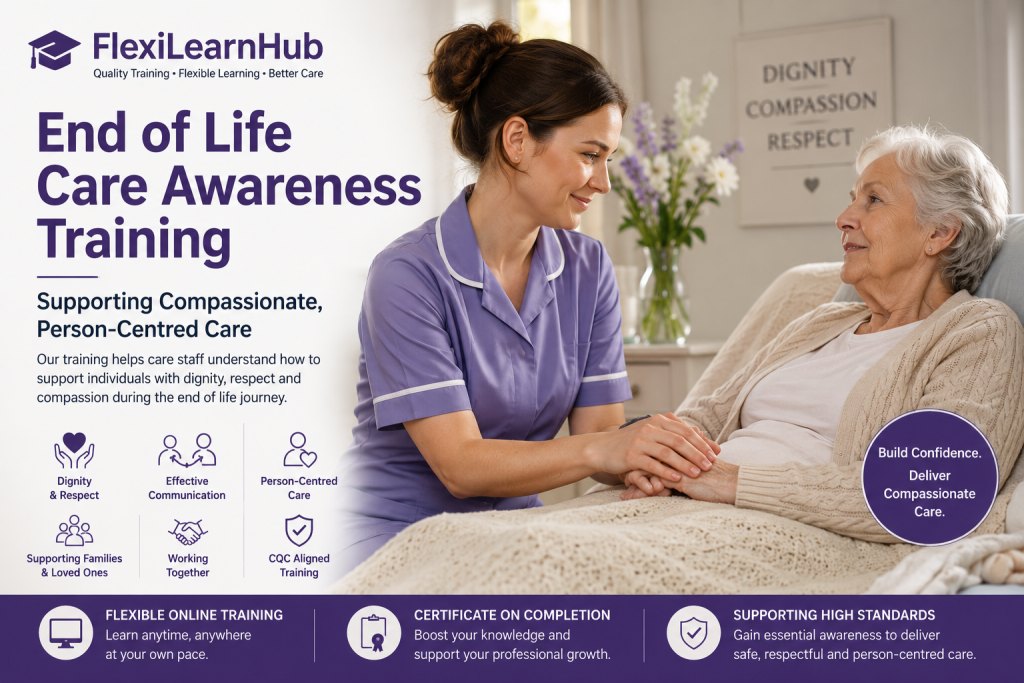
Providing compassionate, person-centred support is one of the most important responsibilities within health and social care. End of Life Care Awareness Training helps care staff develop an understanding of the principles that support dignity, comfort, communication and respect for individuals approaching the end of life. For many care workers, healthcare assistants and support staff, understanding these principles can help build confidence while promoting high-quality care and support. Understanding End of Life Care End of life care focuses on supporting individuals with compassion, dignity and respect during the final stages of life. The aim is to ensure that people receive care which reflects their wishes, preferences and individual needs while maintaining comfort and quality of life. Care should always be person-centred and delivered in a way that respects individual choices and values. Why Awareness Training Matters End of Life Care Awareness Training helps staff understand the importance of: Dignity and respect Person-centred care Effective communication Supporting emotional wellbeing Working collaboratively with families and professionals Understanding individual wishes and preferences Awareness training supports confidence while helping staff understand their professional responsibilities. Supporting Dignity and Respect Every individual deserves to be treated with dignity throughout their care journey. Care staff play an important role in creating a supportive environment where individuals feel respected, listened to and valued. Small actions, compassionate communication and person-centred approaches can make a significant difference to the experience of those receiving care. The Importance of Communication Good communication is a key element of quality care. This includes: Listening carefully Respecting individual preferences Communicating clearly and sensitively Supporting families appropriately Working effectively as part of a wider care team Strong communication helps ensure care remains focused on the individual’s needs and wishes. Supporting Families and Loved Ones Families and loved ones are often an important part of the care journey. Care staff may be involved in providing reassurance, practical support and compassionate communication while working within their professional role and organisational procedures. Awareness training helps staff understand the importance of family involvement and person-centred approaches. Who Should Complete End of Life Care Awareness Training? This type of training may be beneficial for: Care Assistants Senior Carers Support Workers Healthcare Assistants Care Home Staff Team Leaders Care Coordinators Registered Managers Understanding end of life care principles can support professional development across the entire care team. Supporting Professional Standards Health and social care professionals are expected to deliver care that is safe, respectful and person-centred. End of Life Care Awareness Training helps support these standards by increasing understanding of dignity, communication and compassionate care practices. Learn More with FlexiLearnHub FlexiLearnHub offers End of Life Care Awareness Training designed to support care staff working within care homes, supported living services and healthcare environments. Our flexible online training helps learners strengthen awareness, build confidence and support compassionate, person-centred care. Visit: FlexiLearnHub Food Safety & Hygiene HACCP Level 2 Allergen Awareness Nutrition & Hydration Dysphagia & IDDSI Awareness Advanced IDDSI Level 4 Professional Purée Presentation Infection Prevention & Control Dementia Awareness Mental Capacity Act & DoLS Awareness (CQC-Aligned) End of Life Care Awareness (CQC-Aligned) Modern Slavery Awareness (CQC-Aligned) Health & Safety Awareness in Care Settings (CQC-Aligned) Moving and Handling of People in Care Training helps kitchen teams remain compliant while continually developing their professional knowledge.
Mental Capacity Act & DoLS Training: Why Every Care Worker Needs Awareness
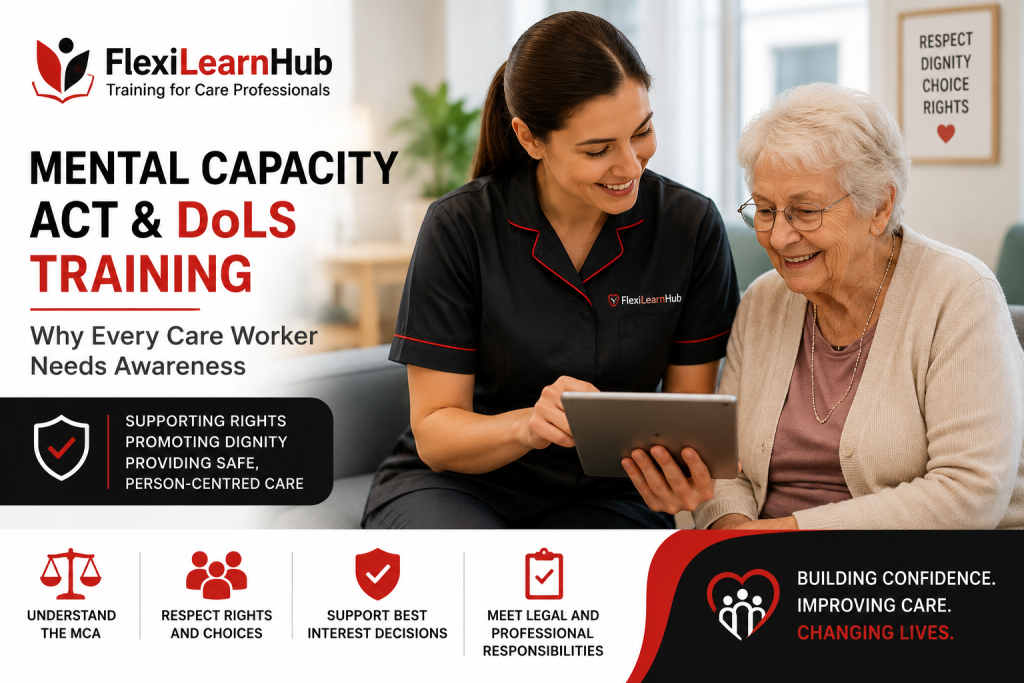
Understanding the Mental Capacity Act (MCA) and Deprivation of Liberty Safeguards (DoLS) is an important part of working within health and social care. These frameworks help protect the rights, dignity and wellbeing of individuals who may have difficulty making certain decisions for themselves. What Is the Mental Capacity Act? The Mental Capacity Act provides a framework that supports decision-making while helping to protect individuals who may lack capacity for specific decisions. The legislation promotes: The Act applies to a wide range of care and healthcare settings. Why Awareness Training Matters Training helps staff build confidence when supporting individuals in day-to-day care environments. Benefits include: ✔ Greater understanding of professional responsibilities ✔ Improved confidence when supporting residents ✔ Better awareness of rights and dignity ✔ Stronger person-centred care practices ✔ Support for regulatory compliance Supporting Safe and Respectful Care Understanding MCA and DoLS principles contributes to a culture of respect, dignity and person-centred support. Awareness training helps staff understand how legislation supports the people they care for while reinforcing professional responsibilities within regulated care environments. Developing Professional Confidence Ongoing learning plays an important role in workforce development. Training can help care workers, senior carers, support workers and managers strengthen their understanding of key principles while supporting consistent standards across teams. Learn More FlexiLearnHub offers Mental Capacity Act & DoLS Awareness Training designed to support care staff working within care homes, supported living services and healthcare environments. Explore our training courses to strengthen awareness, support professional development and build confidence in person-centred care.