
What Is Person-Centred Care? A Practical Guide for Care Staff

Person-centred care is one of the fundamental principles of high-quality adult social care. It means recognising that every person receiving support is an individual with their own history, preferences, abilities, relationships, beliefs and aspirations. Good care should therefore not simply revolve around completing a list of tasks. Helping someone wash, dress, eat, take medication or participate in activities is important, but how that support is provided matters just as much. People should be involved in decisions about their lives and supported to retain as much choice, dignity, independence and control as possible. For care workers, person-centred practice means moving away from asking: “What tasks do I need to complete?” and instead thinking: “What matters to this person, and how can I support them in the way that is right for them?” In this guide, we explore what person-centred care means in everyday practice and how care staff can help ensure that each person remains at the heart of their own care. What Does Person-Centred Care Mean? Person-centred care means providing care and support around the individual rather than expecting the individual to fit around the routines of the service. It recognises that two people with apparently similar care needs may want very different forms of support. For example, two residents may both require assistance getting ready in the morning. One may have spent their working life getting up at 6am and still enjoy an early start. Another may have always preferred staying up late and sleeping until 9am. Providing exactly the same morning routine to both people might be convenient for the service, but it would not necessarily be person-centred. Instead, staff should consider each person’s preferences wherever reasonably possible. Person-centred care can involve: The person should remain an active participant in their care rather than becoming a passive recipient of services. Person-Centred Care Is More Than Being Kind Kindness and compassion are essential qualities in care, but person-centred practice goes further. A member of staff could be extremely kind while still making decisions for someone unnecessarily. For example: “I’ve chosen your clothes and brought your breakfast because I thought that would make things easier for you.” The intention may be good, but the person has lost two opportunities to make everyday choices. A more person-centred approach might involve asking what they would like to wear and offering breakfast choices in a way they can understand. Small decisions matter. Being able to choose when to get up, what to wear, what to eat, where to sit or how to spend the afternoon can contribute enormously to someone’s sense of identity and control. Why Person-Centred Care Matters Moving into a care environment can involve significant changes in someone’s life. A person may have previously: Needing care does not erase that person’s identity. Person-centred care helps preserve the things that make someone who they are. It can support: Understanding the person rather than simply understanding their care needs can make an enormous difference to their experience. Person-Centred Care and CQC Expectations Person-centred care is also an important regulatory requirement. Regulation 9 of the Health and Social Care Act 2008 (Regulated Activities) Regulations 2014 requires care and treatment to be appropriate, meet people’s needs and reflect their preferences. Providers are expected to work collaboratively with people when assessing their needs and preferences and support them to understand and participate in decisions about their care. Person-centred practice should therefore be visible throughout a service — not simply written into policies. Our guide to CQC training requirements for care homes explores the wider importance of ensuring staff have appropriate knowledge and competence. Managers preparing their teams for inspection may also find our CQC inspection staff training checklist useful. Start by Getting to Know the Person Person-centred care becomes difficult if staff know very little about the individual. Care plans should contain important information, but meaningful conversations and everyday interaction can help staff understand much more. Useful things to learn may include: This knowledge can transform apparently routine care into meaningful interaction. A resident who rarely engages in organised activities, for example, may become animated when discussing the football club they supported for 60 years. Knowing someone’s story helps staff see the individual rather than simply their room number, diagnosis or care needs. Promote Choice in Everyday Care Choice does not only involve major medical or care decisions. Some of the most important choices happen during ordinary daily routines. Where appropriate, people may be able to choose: Staff should avoid creating unnecessary restrictions simply because a particular routine is easier for the organisation. Support Independence Rather Than Automatically Taking Over One of the easiest traps in care work is doing something for someone because it is quicker. Person-centred care asks a different question: What can this person still do for themselves? A resident might need help preparing for breakfast but still be able to: Providing the right amount of support rather than automatically taking over can help maintain skills, confidence and independence. Independence does not necessarily mean doing everything without assistance. Sometimes independence means receiving exactly the right support to continue doing as much as possible yourself. Protect Dignity and Privacy Dignity is closely connected with person-centred care. People receiving care may need support with very personal aspects of daily living, including washing, dressing, toileting and continence care. Staff should consider how they would want to be treated in the same circumstances. Good practice can include: Small actions can have a significant impact on someone’s dignity. Communicate in a Way the Person Understands Person-centred communication means adapting communication to the individual rather than expecting everyone to communicate in the same way. Some people may need: Staff should also consider non-verbal communication. Facial expression, posture, behaviour and tone of voice may provide valuable information, particularly when someone has difficulty communicating verbally. People should be given enough time to express themselves rather than having others automatically speak for them. Person-Centred Care and Dementia Person-centred practice is particularly important when supporting someone living with dementia. A diagnosis of
Preparing for a CQC Inspection: A Staff Training Checklist for Care Homes

Preparing for a Care Quality Commission (CQC) inspection is an important responsibility for every care provider. While inspections are designed to assess the quality and safety of care being delivered, they also provide an opportunity to demonstrate the commitment, professionalism and dedication of your team. One of the key areas inspectors consider is staff training. Well-trained employees are better equipped to provide safe, effective and compassionate care while confidently demonstrating their knowledge and competence during an inspection. Rather than viewing inspections as something to prepare for at the last minute, successful care providers embed learning and professional development into everyday practice. This approach not only supports compliance but also helps create a positive culture where residents receive the highest possible standard of care. In this guide, we’ll explain how staff training contributes to inspection readiness and provide a practical checklist to help your organisation prepare with confidence. Why Staff Training Matters During a CQC Inspection The CQC expects providers to ensure that staff have the knowledge, skills and competence required to carry out their roles safely and effectively. Inspectors do not simply look for certificates. They want to see evidence that staff understand their responsibilities, apply good practice consistently and continue developing their knowledge throughout their employment. Effective training helps organisations demonstrate that they are committed to: When learning is embedded into everyday practice, staff naturally feel more confident answering inspectors’ questions and demonstrating how they support residents. Understanding What CQC Inspectors Are Looking For Every inspection is different, but inspectors are generally interested in whether a service is safe, effective, caring, responsive and well-led. Training supports each of these areas. For example: Safe Staff understand safeguarding procedures, infection prevention, moving and handling, medication awareness, food safety and health and safety responsibilities. Effective Employees receive appropriate induction, ongoing training and refresher learning to maintain competence throughout their careers. Caring Staff communicate respectfully, preserve dignity, promote independence and understand person-centred care. Responsive Care teams recognise changing needs, respond appropriately and understand how to report concerns. Well-led Managers demonstrate a commitment to continuous learning, maintain accurate training records and encourage professional development across the organisation. Strong staff training contributes to every aspect of quality care. A Practical Staff Training Checklist Every care provider should regularly review training to ensure staff knowledge remains current and relevant. A comprehensive training programme may include: Core Care Training Catering and Food Safety Training Where food is prepared or served, additional learning may include: Training requirements will vary depending on individual job roles, but regular review helps ensure everyone receives appropriate learning. Keep Training Records Accurate and Up to Date One of the simplest ways to demonstrate good governance is through organised training records. Managers should ensure documentation is accurate, accessible and regularly reviewed. Useful records include: Having these documents readily available helps inspections run more smoothly while demonstrating effective leadership. Ensure New Starters Receive a Structured Induction A thorough induction lays the foundation for safe practice. New employees should understand: Providing a structured induction helps new staff settle into their role while promoting consistency across the workforce. Prepare Staff for Inspector Conversations Inspectors often speak directly with care staff during visits. Rather than asking people to memorise policies, they explore how staff apply their knowledge in real situations. Typical questions may include: Staff who receive regular training are generally more confident because they understand the principles behind their everyday practice. Encourage Continuous Professional Development Excellent care providers recognise that learning does not end once mandatory training is complete. Ongoing professional development helps staff: Creating opportunities for regular learning demonstrates a commitment to quality improvement throughout the organisation. Common Training Gaps Identified During Inspections Although every inspection is unique, some common issues regularly arise. Examples include: Reviewing these areas regularly helps reduce the risk of avoidable compliance issues. How Online Training Supports Inspection Readiness Online learning has become an increasingly valuable way for care providers to maintain consistent training across their workforce. Flexible learning allows staff to complete training around their work schedules while enabling managers to monitor progress more effectively. Benefits include: When combined with supervision, practical competency assessments and ongoing support, online training forms an important part of a wider learning strategy. Building a Positive Learning Culture The organisations that perform well during inspections rarely prepare only when an inspection is expected. Instead, they create workplaces where learning becomes part of everyday life. Managers can encourage this by: A positive learning culture benefits residents, staff and the organisation alike. Inspection Readiness Checklist Before your next inspection, consider the following questions: ✔ Are all mandatory training courses up to date? ✔ Have new employees completed their induction? ✔ Are refresher training dates being monitored? ✔ Are certificates easy to access? ✔ Is your training matrix current? ✔ Can staff confidently explain safeguarding procedures? ✔ Do employees understand the Mental Capacity Act and DoLS? ✔ Have catering staff completed appropriate food safety training? ✔ Are infection prevention procedures regularly refreshed? ✔ Is evidence of competency available where required? If you can confidently answer “yes” to these questions, your organisation is likely to be in a stronger position when inspectors visit. Preparing Every Day, Not Just Before an Inspection The most effective way to prepare for a CQC inspection is to maintain high standards every day. By investing in regular staff training, keeping accurate records and promoting continuous professional development, care providers demonstrate their commitment to delivering safe, compassionate and person-centred care. Inspection success is not achieved through last-minute preparation. It is built through consistent leadership, ongoing learning and a culture where quality improvement is part of everyday practice. Support Your Team with Flexible Online Training At FlexiLearnHub, we provide flexible online awareness training designed to support care providers, managers and care professionals across the UK. Our growing library of CQC-aligned and CPD-accredited courses covers essential subjects including safeguarding, dementia awareness, infection prevention and control, health and safety, moving and handling, food safety, Mental Capacity Act & DoLS, dysphagia awareness, the IDDSI Framework and many other key
End of Life Care Awareness Training: Supporting Compassionate Care
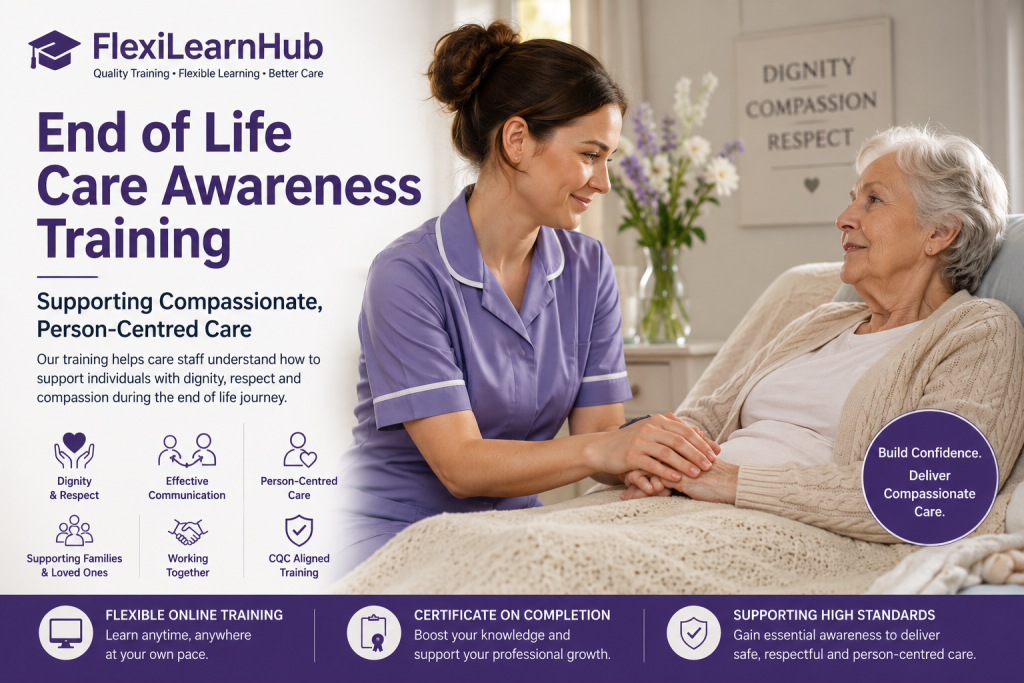
Providing compassionate, person-centred support is one of the most important responsibilities within health and social care. End of Life Care Awareness Training helps care staff develop an understanding of the principles that support dignity, comfort, communication and respect for individuals approaching the end of life. For many care workers, healthcare assistants and support staff, understanding these principles can help build confidence while promoting high-quality care and support. Understanding End of Life Care End of life care focuses on supporting individuals with compassion, dignity and respect during the final stages of life. The aim is to ensure that people receive care which reflects their wishes, preferences and individual needs while maintaining comfort and quality of life. Care should always be person-centred and delivered in a way that respects individual choices and values. Why Awareness Training Matters End of Life Care Awareness Training helps staff understand the importance of: Dignity and respect Person-centred care Effective communication Supporting emotional wellbeing Working collaboratively with families and professionals Understanding individual wishes and preferences Awareness training supports confidence while helping staff understand their professional responsibilities. Supporting Dignity and Respect Every individual deserves to be treated with dignity throughout their care journey. Care staff play an important role in creating a supportive environment where individuals feel respected, listened to and valued. Small actions, compassionate communication and person-centred approaches can make a significant difference to the experience of those receiving care. The Importance of Communication Good communication is a key element of quality care. This includes: Listening carefully Respecting individual preferences Communicating clearly and sensitively Supporting families appropriately Working effectively as part of a wider care team Strong communication helps ensure care remains focused on the individual’s needs and wishes. Supporting Families and Loved Ones Families and loved ones are often an important part of the care journey. Care staff may be involved in providing reassurance, practical support and compassionate communication while working within their professional role and organisational procedures. Awareness training helps staff understand the importance of family involvement and person-centred approaches. Who Should Complete End of Life Care Awareness Training? This type of training may be beneficial for: Care Assistants Senior Carers Support Workers Healthcare Assistants Care Home Staff Team Leaders Care Coordinators Registered Managers Understanding end of life care principles can support professional development across the entire care team. Supporting Professional Standards Health and social care professionals are expected to deliver care that is safe, respectful and person-centred. End of Life Care Awareness Training helps support these standards by increasing understanding of dignity, communication and compassionate care practices. Learn More with FlexiLearnHub FlexiLearnHub offers End of Life Care Awareness Training designed to support care staff working within care homes, supported living services and healthcare environments. Our flexible online training helps learners strengthen awareness, build confidence and support compassionate, person-centred care. Visit: FlexiLearnHub Food Safety & Hygiene HACCP Level 2 Allergen Awareness Nutrition & Hydration Dysphagia & IDDSI Awareness Advanced IDDSI Level 4 Professional Purée Presentation Infection Prevention & Control Dementia Awareness Mental Capacity Act & DoLS Awareness (CQC-Aligned) End of Life Care Awareness (CQC-Aligned) Modern Slavery Awareness (CQC-Aligned) Health & Safety Awareness in Care Settings (CQC-Aligned) Moving and Handling of People in Care Training helps kitchen teams remain compliant while continually developing their professional knowledge.
Mental Capacity Act & DoLS Training: Why Every Care Worker Needs Awareness
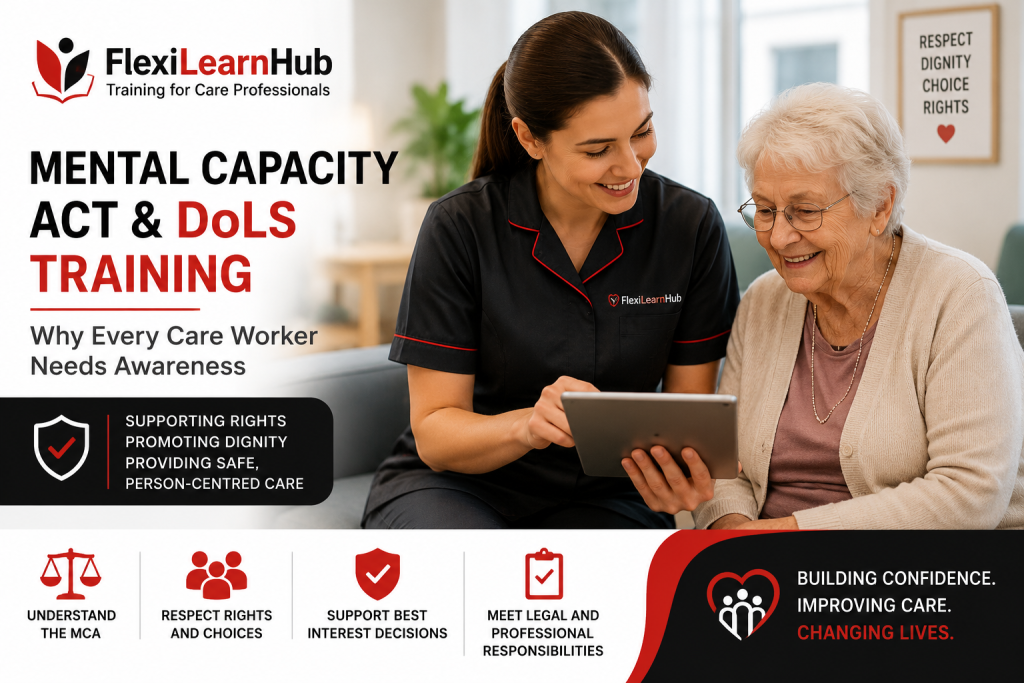
Understanding the Mental Capacity Act (MCA) and Deprivation of Liberty Safeguards (DoLS) is an important part of working within health and social care. These frameworks help protect the rights, dignity and wellbeing of individuals who may have difficulty making certain decisions for themselves. What Is the Mental Capacity Act? The Mental Capacity Act provides a framework that supports decision-making while helping to protect individuals who may lack capacity for specific decisions. The legislation promotes: The Act applies to a wide range of care and healthcare settings. Why Awareness Training Matters Training helps staff build confidence when supporting individuals in day-to-day care environments. Benefits include: ✔ Greater understanding of professional responsibilities ✔ Improved confidence when supporting residents ✔ Better awareness of rights and dignity ✔ Stronger person-centred care practices ✔ Support for regulatory compliance Supporting Safe and Respectful Care Understanding MCA and DoLS principles contributes to a culture of respect, dignity and person-centred support. Awareness training helps staff understand how legislation supports the people they care for while reinforcing professional responsibilities within regulated care environments. Developing Professional Confidence Ongoing learning plays an important role in workforce development. Training can help care workers, senior carers, support workers and managers strengthen their understanding of key principles while supporting consistent standards across teams. Learn More FlexiLearnHub offers Mental Capacity Act & DoLS Awareness Training designed to support care staff working within care homes, supported living services and healthcare environments. Explore our training courses to strengthen awareness, support professional development and build confidence in person-centred care.
Common Training Gaps Identified During Care Home Inspections
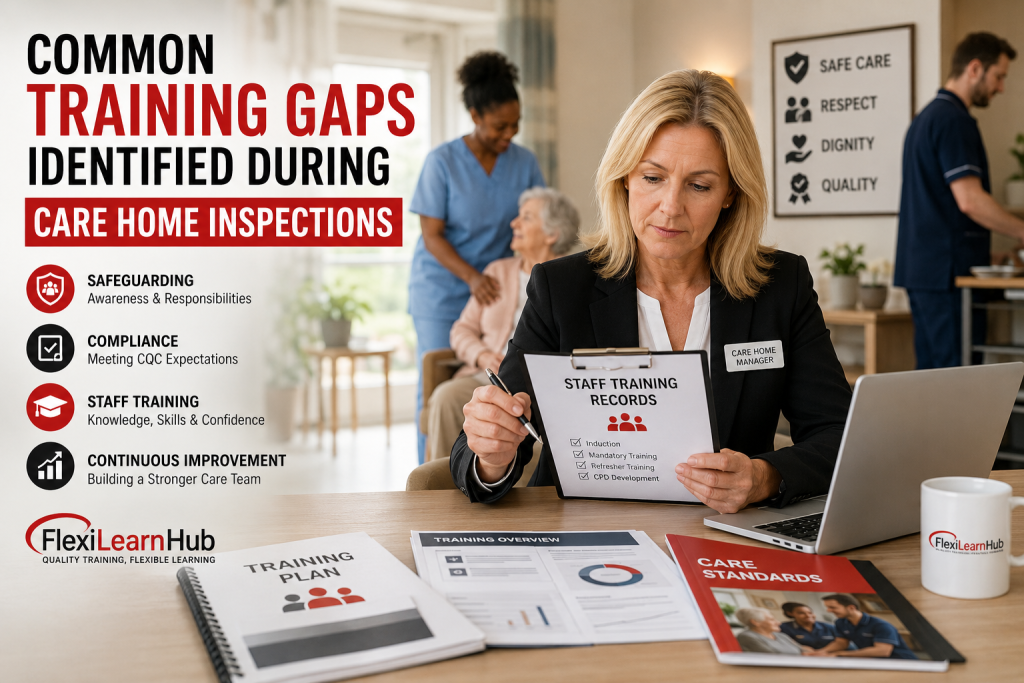
Care providers work hard to maintain high standards of care, safety and professionalism. One area that frequently receives attention during inspections is staff training. While training alone does not determine inspection outcomes, providers are expected to demonstrate that staff have the knowledge, skills and support required to carry out their roles effectively. Identifying and addressing training gaps can help organisations strengthen workplace confidence, support safe care delivery and maintain consistent standards across teams. Why Training Matters Training helps ensure staff understand their responsibilities and can apply organisational policies and procedures appropriately within their roles. Effective training programmes support: ✔ Safe care delivery ✔ Regulatory awareness ✔ Professional confidence ✔ Consistent working practices ✔ Continuous professional development Maintaining accurate training records and refresher schedules also helps demonstrate a commitment to workforce development. Safeguarding Awareness One of the most important training areas within health and social care is safeguarding. Staff should understand: ✔ Different forms of abuse and neglect ✔ Professional responsibilities ✔ Reporting procedures ✔ Whistleblowing processes ✔ Professional boundaries Regular safeguarding refresher training helps ensure staff remain confident in recognising concerns and responding appropriately. Related Training:Safeguarding Adults Level 1 & 2 Training Mental Capacity Act & DoLS Awareness Understanding the Mental Capacity Act (MCA) and Deprivation of Liberty Safeguards (DoLS) remains essential within many care settings. Training should support awareness of: ✔ Decision-making principles ✔ Individual rights ✔ Consent and capacity ✔ Professional responsibilities ✔ Person-centred care approaches A lack of understanding in this area can create uncertainty when supporting individuals who may have fluctuating or impaired capacity. Related Training:Mental Capacity Act & DoLS Awareness Training Infection Prevention & Control Infection prevention remains a core area of workplace training. Staff should understand: ✔ Hygiene practices ✔ Cross-contamination awareness ✔ Use of PPE ✔ Workplace procedures ✔ Reporting processes Regular refresher training helps reinforce safe working practices and workplace standards. Related Training:Infection Prevention & Control Training Moving & Handling Awareness Moving and handling training supports both staff and resident safety. Training should help staff understand: ✔ Risk awareness ✔ Safe working practices ✔ Professional responsibilities ✔ Equipment awareness ✔ Workplace procedures Regular updates help maintain consistency across teams and reduce avoidable risks. Related Training:Moving & Handling of People Training Dementia Awareness Many care environments support individuals living with dementia. Training helps staff develop understanding of: ✔ Person-centred approaches ✔ Communication techniques ✔ Emotional wellbeing ✔ Environmental considerations ✔ Individual support needs Building confidence in dementia awareness can improve day-to-day interactions and support positive care experiences. Related Training:Dementia Awareness Training Mealtime Safety & Nutritional Awareness Mealtimes play an important role in health, wellbeing and quality of life. Training gaps can sometimes occur around: ✔ Nutrition and hydration ✔ Dysphagia awareness ✔ Texture modified meals ✔ Food safety ✔ Allergen awareness Providing staff with appropriate awareness training helps support safer mealtime experiences and improved understanding of individual needs. Related Training: Supporting Consistent Standards Across Teams Care providers often face challenges when managing training across large teams, multiple shifts and varying levels of experience. A structured training programme can help: ✔ Track learning progress ✔ Identify refresher requirements ✔ Maintain consistent standards ✔ Support induction programmes ✔ Demonstrate workforce development Online training systems can also help simplify administration while supporting ongoing professional development. Group Training for Care Homes & Employers FlexiLearnHub offers flexible online training suitable for both individual learners and care organisations. Our Group Training system enables employers to: ✔ Enrol multiple staff members ✔ Assign training programmes ✔ Monitor learner progress ✔ Track certificate completion ✔ Support workforce development This helps organisations maintain oversight of staff training while reducing administrative workload. Building a Positive Learning Culture Addressing training gaps is not simply about compliance. It is about creating a workplace culture where staff feel confident, supported and equipped to deliver high-quality care. Regular training, refresher learning and professional development opportunities can help organisations strengthen workforce confidence and support positive outcomes for the people they care for. Explore Our Care Home Staff Training Courses FlexiLearnHub provides a growing range of online care training courses designed to support: ✔ Care Assistants ✔ Senior Care Staff ✔ Support Workers ✔ Team Leaders ✔ Care Home Managers ✔ Healthcare Professionals Explore our care training courses and group training solutions to support safe, effective and person-centred care.