
Care Home Kitchen Inspections: 12 Essential Checks Every Manager Should Make

A Practical Food Safety and Compliance Guide for Residential and Nursing Homes Care home kitchen inspections play an important role in protecting residents, maintaining food hygiene standards and ensuring that catering operations are managed safely. In residential and nursing homes, food safety responsibilities extend beyond preparing meals. Catering teams must consider residents’ individual nutritional requirements, food allergies, swallowing difficulties, infection risks and the safe management of kitchen equipment. For care home managers, regular kitchen inspections provide an opportunity to identify potential problems before they affect residents, staff or the wider organisation. However, an effective inspection involves more than checking whether the kitchen looks clean. It requires a structured approach to food safety management, documentation, staff practices, equipment maintenance and corrective action. In this guide, we explore 12 essential checks every care home manager should consider, together with practical advice for improving inspection readiness and supporting safer catering services. Why Care Home Kitchen Inspections Matter Care home kitchens provide meals for people who may be particularly vulnerable to foodborne illness, dehydration, malnutrition and other complications associated with unsafe food provision. Some residents may also require specialist diets, texture-modified meals or additional assistance with eating and drinking. Effective care home kitchen inspections help managers assess whether suitable arrangements are in place to manage these risks. Regular inspections can support: Safer food preparation and service. Compliance with relevant food hygiene legislation. Effective HACCP-based food safety management. Improved kitchen cleanliness and organisation. Appropriate allergen management. Safer provision of specialist diets. Early identification of equipment faults. Better staff awareness and accountability. Continuous improvement in catering standards. Care homes in England are subject to relevant food safety legislation and, where applicable, CQC requirements relating to safe care, nutrition, hydration and governance. Food businesses are also subject to official food hygiene controls undertaken by the relevant local authority. Internal kitchen inspections are a useful management tool, but they do not replace official inspections or regulatory assessments. For further information, visit the Food Standards Agency and Care Quality Commission. 1. Care Home Kitchen Inspections: Cleanliness and General Hygiene The first inspection check should assess the overall cleanliness and hygienic condition of the kitchen. A kitchen may appear tidy while still presenting risks from contaminated surfaces, poorly maintained equipment or inadequate cleaning procedures. Managers should examine food preparation areas, storage spaces, sinks, floors, walls and frequently touched surfaces. What should managers check? Are work surfaces clean and in good condition? Are food preparation areas free from unnecessary clutter? Are cleaning schedules available and being followed? Are appropriate cleaning chemicals and equipment provided? Are cleaning materials stored safely away from food? Are staff using suitable cleaning and disinfection methods? Are damaged surfaces or equipment reported for repair? Cleaning procedures should distinguish between removing visible dirt and applying appropriate disinfection where required. Staff must follow the manufacturer’s instructions for cleaning products, including correct dilution and contact times. Manager’s action: Check whether cleaning records reflect actual work completed, rather than relying solely on signed paperwork. 2. Refrigeration, Freezer and Food Temperature Checks Temperature control is one of the most important aspects of food safety. Incorrect refrigeration, inadequate cooking or unsafe hot holding can increase the risk of harmful bacterial growth. Care home kitchen inspections should include a review of temperature monitoring procedures and associated records. Essential checks Are refrigerator and freezer temperatures monitored? Are records completed at the required frequency? Are corrective actions documented when temperatures fall outside safe limits? Are chilled foods stored at appropriate temperatures? Are cooking and reheating temperatures checked where required? Are hot-held foods maintained safely? Are food probes clean, suitable and functioning correctly? In England, Wales and Northern Ireland, foods requiring temperature control are generally subject to a maximum chilled holding temperature of 8°C, subject to applicable exemptions. The Food Standards Agency recommends setting refrigerators at 5°C or below to provide a safety margin. Temperature requirements for cooking, reheating and hot holding should follow the organisation’s validated food safety procedures and applicable legislation. Why records matter Temperature records help demonstrate that food safety controls are being monitored. However, simply recording a temperature is not enough. If a reading indicates a problem, staff must understand what action to take and when to escalate concerns. Manager’s action: Select a recent temperature record and check whether any out-of-range reading was investigated and appropriately resolved. For additional learning, explore FlexiLearnHub HACCP Level 2 Training. 3. Food Storage, Labelling and Stock Rotation Poor food storage can contribute to contamination, unnecessary waste and the use of unsuitable or expired ingredients. Care home managers should inspect dry stores, refrigerators, freezers and food preparation areas. What should be checked? Are food products stored in suitable conditions? Are raw and ready-to-eat foods appropriately separated? Are opened products correctly labelled? Are date markings clear and accurate? Are use-by dates being followed? Are stock rotation procedures effective? Are food containers clean and suitable? Are chemicals stored separately from food? Staff should understand the difference between use-by dates, which relate to food safety, and best-before dates, which generally relate to quality. Foods past their use-by dates must not be supplied or used. Managers should also consider whether stock arrangements remain appropriate for residents requiring specialist diets. Manager’s action: Check a selection of products from different storage areas, rather than examining only the most accessible shelves. 4. Allergen Management and Resident Dietary Information Food allergens require particular attention in care homes because residents may rely on staff to identify and manage their dietary needs. An error in allergen information or meal preparation can have serious consequences. Allergen inspection checks Managers should confirm that: Accurate allergen information is available. Staff understand how to access it. Resident allergy information is current. Ingredients and recipes are checked when substitutions occur. Cross-contact risks are managed. Suitable procedures exist for communicating dietary requirements. Staff know how to respond to an allergen-related concern. Allergen controls should cover every stage of food provision, including ordering, storage, preparation and service. A last-minute ingredient substitution can introduce an allergen that was not present in the original recipe. For
Emergency Catering in Care Homes: What Happens When the Power Goes Out?

Emergency catering in care homes is an essential part of maintaining resident safety, wellbeing and continuity of care when unexpected disruptions affect normal kitchen operations. A power outage may seem like a straightforward maintenance problem, but in a residential or nursing home, the consequences can extend far beyond lighting and electrical equipment. Refrigeration may stop working. Cooking facilities may become unavailable. Food deliveries could be disrupted, while residents continue to require safe, nutritious meals, adequate hydration and support with individual dietary needs. For residents living with dementia, swallowing difficulties, diabetes or other health conditions, even a short interruption to normal catering arrangements can create additional challenges. This is why care homes need more than a general emergency plan. They need practical arrangements for maintaining safe food and drink provision when essential services are unavailable. In this guide, we explore the risks associated with power outages, the responsibilities of care and catering teams, and the steps organisations can take to strengthen emergency food continuity planning. See our Certificated Training Course on Emergency Preparedness in care and catering Why Emergency Catering Matters in Care Homes Unlike many other catering environments, care homes provide essential services to people who may be unable to obtain or prepare food independently. Residents depend on staff to maintain suitable meals, drinks, dietary modifications and mealtime support throughout the day. An unexpected disruption can affect: The consequences will depend on the nature and duration of the disruption, the equipment affected and the needs of residents. Effective emergency catering in care homes requires advance planning, clear responsibilities and realistic alternative arrangements. A written plan is useful, but it must also be understood by the people expected to implement it. 1. What Should Happen Immediately During a Power Outage? When electricity is lost, the first priority is to establish the extent of the disruption and protect residents and staff. Care home managers should follow the organisation’s emergency procedures, including arrangements for contacting the electricity network operator, maintenance providers and other relevant services. The catering team should promptly assess which equipment is affected. Immediate catering checks These may include: Staff should avoid unnecessarily opening refrigerators and freezers, as this allows cold air to escape. The kitchen manager or designated responsible person should document decisions and communicate any changes to the care team. Key point: The first response should be organised and based on the actual risks, rather than assumptions about how long the disruption will last. See our Certificated Training Course on Emergency Preparedness in care and catering 2. Protecting Refrigerated and Frozen Food One of the most immediate concerns during a power outage is the safety of food stored under temperature control. Refrigerators and freezers rely on electricity to maintain conditions that help prevent harmful bacterial growth and food deterioration. When power is lost, temperatures may gradually rise. The rate of change depends on several factors, including the equipment, ambient temperature, how full it is and how frequently doors are opened. See our Certificated Training Course on Emergency Preparedness in care and catering Why temperature monitoring matters Care home kitchens should already have established food safety procedures for checking and recording storage temperatures. During an outage, these records become particularly important. Staff should: Food that looks or smells acceptable is not necessarily safe. Equally, the fact that a refrigerator has temporarily lost power does not automatically mean every item must be discarded. Decisions should take account of temperatures, time, food type and applicable food safety guidance. Key point: Food safety decisions must be evidence-based and should never rely solely on appearance, smell or guesswork. 3. What Happens When Cooking Equipment Cannot Be Used? A power outage may prevent the use of ovens, electric hobs, microwaves and other kitchen equipment. This can make normal meal preparation impossible, particularly where meals depend on cooking, reheating or hot holding. For care homes, the challenge is maintaining suitable food provision without introducing additional safety risks. See our Certificated Training Course on Emergency Preparedness in care and catering Alternative catering arrangements Depending on the organisation’s emergency plan, possible arrangements may include: Any alternative must be assessed for food safety, hygiene, allergens, nutritional suitability and individual dietary requirements. Staff must not improvise with unsafe cooking equipment, use outdoor appliances indoors or operate generators without appropriate safety arrangements. Key point: Alternative food provision must remain safe and suitable for the residents receiving it. 4. Planning Emergency Food Supplies A well-prepared care home should consider what food and drink supplies would be needed if normal deliveries or kitchen operations were interrupted. Emergency stock arrangements should reflect the size of the home, the number of residents, available storage and individual nutritional requirements. See our Certificated Training Course on Emergency Preparedness in care and catering What should an emergency food plan consider? A practical plan may include: Care homes should also consider whether essential preparation equipment would remain available during an outage. For example, a shelf-stable meal may not be useful if it requires heating and no safe alternative heating method exists. Emergency supplies should be reviewed regularly to ensure they remain appropriate. Key point: Emergency stock is only useful when it can be prepared, served and consumed safely. 5. Maintaining Nutrition and Hydration During an Emergency Residents’ nutritional and hydration needs do not disappear when normal catering services are disrupted. Some individuals may be particularly vulnerable to reduced intake, including residents who require assistance with eating or drinking. Emergency menus should therefore consider more than simply providing enough food. See our Certificated Training Course on Emergency Preparedness in care and catering Important nutritional considerations Care and catering teams may need to account for: Where possible, emergency meals should provide appropriate energy, protein and fluids while remaining acceptable to residents. Staff should monitor concerns about reduced intake and escalate them through established care procedures. Key point: Maintaining adequate nutrition and hydration is a central responsibility during emergency catering arrangements. 6. Protecting Residents With Dysphagia and IDDSI Requirements One of the most important considerations in emergency catering in care homes
Dysphagia in Care Homes: 10 Common Mistakes Staff Must Avoid
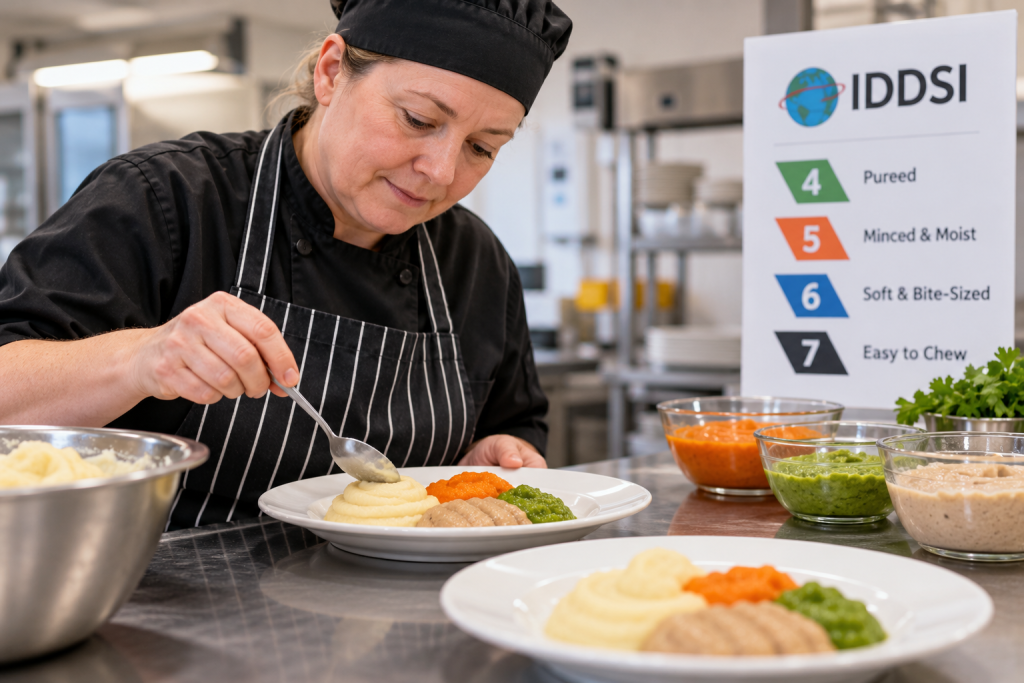
Dysphagia in care homes is an important consideration for staff responsible for supporting residents with eating, drinking, nutrition and hydration. When swallowing difficulties are not recognised or managed appropriately, residents may face increased risks of choking, aspiration, dehydration, malnutrition and respiratory complications. For care home managers, nurses, care assistants and catering teams, understanding dysphagia is an essential part of delivering safe, person-centred care. However, mistakes can occur even in settings where staff are experienced and committed to providing high-quality support. Problems may arise through poor communication, incorrect food preparation, inconsistent care plans or misunderstandings about the International Dysphagia Diet Standardisation Initiative (IDDSI) Framework. This guide explores 10 common dysphagia mistakes in care homes, explains why they matter and identifies practical steps that organisations can take to reduce avoidable risks. What Is Dysphagia? Dysphagia is the medical term for difficulty swallowing. It can affect a person’s ability to swallow food, drinks, saliva or medication safely and effectively. Swallowing difficulties may occur alongside conditions such as: Not everyone with these conditions will experience dysphagia, and swallowing difficulties can also develop for other reasons. Some residents may cough or choke during meals, while others may experience less obvious symptoms. Importantly, aspiration can sometimes occur without coughing, a phenomenon known as silent aspiration. Dysphagia therefore requires individual assessment, appropriate professional input and consistent implementation of recommended care. 1. Failing to Recognise the Warning Signs of Dysphagia One of the most significant mistakes is assuming that swallowing difficulties will always be obvious. Recognising the early signs of dysphagia in care homes is essential for identifying residents who may need further assessment and support. Residents may develop changes gradually, and early warning signs can be overlooked during busy mealtimes. Possible indicators include: These symptoms do not automatically confirm dysphagia, but they should prompt appropriate assessment. How care homes can reduce the risk Staff should understand the signs that require attention and know how to report concerns promptly. New or worsening swallowing difficulties should be escalated according to the resident’s care plan and local procedures, with referral to an appropriate healthcare professional, often a Speech and Language Therapist (SLT). Key point: Staff should never assume that the absence of coughing means swallowing is safe. 2. Providing the Wrong IDDSI Food Texture The IDDSI Framework provides standardised terminology and testing methods for food textures and drink thicknesses. It helps healthcare professionals, care staff and catering teams communicate more consistently about texture-modified diets. For foods, commonly used IDDSI levels include: Each level has specific characteristics and, where applicable, testing requirements. A common mistake is assuming that food is suitable simply because it looks soft or has been chopped into smaller pieces. For example, IDDSI Level 5 Minced & Moist food must meet defined particle-size and moisture requirements. For adults, food particles should generally be no larger than 4 mm in width. IDDSI Level 6 Soft & Bite-Sized food has different requirements, including adult bite-sized pieces generally no larger than 1.5 cm in their longest dimension, alongside appropriate softness and texture. How care homes can reduce the risk Catering teams should prepare food according to the resident’s documented recommendations and the relevant IDDSI testing methods. Visual appearance alone is not sufficient to establish that a meal meets an IDDSI level. Staff must not independently change a resident’s prescribed food texture because another consistency appears easier to prepare or serve. Key point: Correct IDDSI classification depends on the food’s properties and testing, not simply its appearance. 3. Preparing Thickened Drinks Incorrectly Some residents with dysphagia may be advised to use thickened drinks following an individual swallowing assessment. Managing dysphagia in care homes also requires staff to understand the importance of preparing drinks according to individual clinical recommendations. The IDDSI Framework identifies drink thickness levels from Level 0 (Thin) through to Level 4 (Extremely Thick). A frequent mistake is preparing drinks by estimation rather than following the recommended product instructions and required consistency. Problems may arise when: Thickened drinks are not suitable for every person with dysphagia. Their use requires individual clinical consideration, including potential effects on hydration, comfort and quality of life. How care homes can reduce the risk Where thickened drinks have been recommended, staff should follow the resident’s swallowing-management plan, the specific thickener’s instructions and relevant IDDSI testing guidance. Any concerns about acceptance, hydration or swallowing safety should be reported to the appropriate healthcare professional. Key point: Staff must never introduce, discontinue or alter thickened drinks without appropriate clinical guidance. 4. Poor Communication Between Care and Catering Teams Effective dysphagia management depends on accurate communication. A resident’s swallowing recommendations may be documented correctly in their care plan, but mistakes can occur if the kitchen team does not receive updated information. For example, a resident may have a revised texture recommendation following an SLT assessment. If the change is not communicated to the catering team, an unsuitable meal could be prepared. Other communication failures include: How care homes can reduce the risk Care homes should establish reliable procedures for sharing and confirming dietary requirements. These may include updated kitchen records, clear meal identification, documented handovers and checks before meals are served. Confidential resident information should be shared only with staff who need it to deliver care safely. Key point: A swallowing recommendation is only effective when everyone responsible for implementing it has accurate information. 5. Not Following Individual Swallowing Care Plans Two residents with dysphagia may have very different needs. Effective management of dysphagia in care homes depends on following each resident’s individual swallowing care plan. One person may require a modified food texture, while another may need specific positioning, supervision or swallowing strategies recommended by an SLT. A common mistake is applying a general approach to everyone with dysphagia. For example, staff may assume that all residents with swallowing difficulties should receive pureed meals or thickened drinks. This can result in inappropriate restrictions, reduced food enjoyment or potentially unsafe care. How care homes can reduce the risk Staff should follow each resident’s individual, current swallowing-management plan. Where relevant,
Reducing Medication Errors in Care Homes: Practical Steps for Safer Care

Medication plays an important role in supporting the health, comfort and wellbeing of many people living in care homes. With some residents taking several different medicines at different times of the day, safe medicines management requires careful organisation, clear communication and appropriately trained and competent staff. Medication errors can happen for many reasons. A dose may be missed, information may be recorded incorrectly, communication may break down during a handover, or staff may be interrupted while carrying out medication-related duties. Reducing medication errors is therefore not simply about telling individual staff members to be more careful. Care providers need effective systems, clear procedures, appropriate training and a positive culture where concerns and mistakes can be reported, reviewed and used as opportunities for learning. This guide explores practical ways care homes can strengthen medication safety and help protect the people they support. What Is a Medication Error? A medication error is a preventable incident involving medicines that may result in inappropriate medicine use or potential harm. Within a care environment, an error could involve: Not every medication error results in harm, but every error or near miss should be taken seriously because it may reveal an opportunity to make systems safer. Developing strong medication awareness across the workforce can help staff understand these risks and recognise their own responsibilities. Why Can Medication Errors Happen in Care Homes? Medication management can involve several people and organisations, including care staff, managers, GPs, pharmacies, nurses and other healthcare professionals. Safe systems therefore depend on effective communication and accurate information. Factors that can contribute to errors may include: Rather than automatically assuming an error occurred because one person was careless, providers should consider the circumstances surrounding an incident and whether changes could make the overall system safer. 1. Ensure Staff Understand Their Responsibilities Not every care worker will have the same responsibilities for medication. Care providers should clearly establish which employees are authorised and competent to perform particular medication-related tasks. Staff should understand: Medication awareness is valuable across the wider workforce, even when individual employees do not administer medicines. Knowing the limits of one’s role is itself an important part of safe practice. 2. Provide Appropriate Training and Assess Competence Training should reflect an employee’s role and responsibilities. Where staff are responsible for administering or supporting people with medicines, providers should ensure they have received appropriate training and have been assessed as competent before undertaking those duties independently. Training should not be viewed as a one-off event. Knowledge can fade, procedures change and employees may encounter situations they have not previously experienced. Regular refresher training can therefore form part of a wider programme of supervision, competency assessment and continuing professional development. Managers should also distinguish between completing a training course and demonstrating practical competence. A certificate provides evidence of learning, but providers must still satisfy themselves that staff can apply relevant knowledge safely within their role. 3. Reduce Interruptions and Distractions Medication-related tasks require concentration. Unnecessary interruptions during a medication round can increase cognitive workload and make it more difficult for staff to maintain a consistent process. Care providers should consider how medication rounds are organised and whether avoidable distractions can be reduced. This might include: The objective should never be to rush medication administration simply to meet a timetable. A calm, organised environment supports safer practice. 4. Maintain Accurate Medication Records Accurate record keeping is fundamental to medicines management. Medication Administration Records (MARs), whether paper-based or electronic, provide important information about prescribed medicines and their administration. Records should be completed according to organisational procedures and should provide an accurate account of what has occurred. Poor documentation can create uncertainty for the next person supporting the resident and may increase the possibility of a missed or duplicated dose. Staff should therefore understand the importance of: Good records support continuity, accountability and safer decision-making. 5. Strengthen Staff Handovers A change of shift is a particularly important point for communication. Medication-related information can be lost if handovers are rushed, incomplete or dependent on memory. Relevant information might include: Written records remain essential, but effective verbal communication can provide valuable context. A structured handover process can help ensure important information reaches the right people. 6. Respond Appropriately When a Resident Refuses Medication People receiving care should be treated with dignity and respect, and medication should not simply be forced upon someone because it has been prescribed. If a resident refuses medication, staff should follow the care home’s medicines policy and relevant care plan, record the refusal correctly and seek appropriate advice where necessary. Issues concerning a person’s ability to make a particular decision may also involve the principles of the Mental Capacity Act. Our guide to Mental Capacity Act and DoLS awareness explains why understanding capacity, choice and individual rights is so important within adult social care. Staff should never automatically assume that a diagnosis, disability or age means someone lacks capacity. 7. Recognise and Report Possible Adverse Effects Care workers often spend considerable time with residents and may notice changes that others do not immediately see. Changes could include: Care staff should not attempt to diagnose the cause themselves unless this falls within their professional role. Instead, concerns should be reported promptly through the appropriate channels so that a suitable healthcare professional can assess the situation. Observations should also be recorded according to organisational procedures. 8. Store Medicines Safely Safe medication management extends beyond administration. Medicines should be stored according to relevant requirements, manufacturers’ instructions and organisational policies. Depending on the medicine, this may involve specific requirements relating to: Storage arrangements should help prevent unauthorised access while ensuring medicines remain suitable for use. Regular checks can help identify expired medicines, storage problems or discrepancies before they create unnecessary risk. 9. Encourage Accurate and Open Reporting Staff should know exactly what to do if they make or discover a medication error. Trying to hide an error can increase the risk of harm because appropriate action may be delayed. A positive safety culture encourages staff to report incidents
Medication Awareness in Care Homes: Why Every Care Worker Needs Basic Knowledge

Medication plays a vital role in supporting the health, wellbeing and quality of life of many people living in residential care homes, nursing homes and supported living environments. From managing long-term health conditions to relieving pain and treating illness, medicines help residents remain as healthy, comfortable and independent as possible. While administering medication is often carried out by trained and authorised staff, medication awareness is important for everyone working within a care setting. Every member of the care team should understand the principles of safe medication practice, recognise potential risks and know how their role contributes to protecting residents from avoidable harm. Developing medication awareness is not about turning every care worker into a medication administrator. Instead, it helps staff understand why medicines matter, how errors can occur and the importance of working safely, communicating effectively and following agreed procedures. In this guide, we explore why medication awareness is essential in modern care settings and how ongoing training supports both resident safety and high-quality care. Why Medication Awareness Matters Residents living in care settings often rely on several different medications to manage a range of health conditions. Some medicines may need to be taken at specific times, while others require careful monitoring or special administration instructions. Although only appropriately trained staff should administer medication, everyone involved in supporting residents has a responsibility to promote safe care. Medication awareness helps staff: When every member of the team understands these principles, residents benefit from more consistent and coordinated care. Understanding Your Role Different care workers have different responsibilities depending on their role, training and employer policies. Medication awareness training helps staff understand: Understanding professional boundaries is an important part of providing safe care and maintaining public trust. Common Causes of Medication Errors Medication errors can occur in any healthcare environment. Many are preventable and often result from communication problems, distractions or failure to follow established procedures. Examples include: Developing awareness helps staff recognise situations where additional care and attention are needed. Supporting Safe Medication Practices Safe medication practice depends on teamwork. Good practice includes: Consistency helps reduce unnecessary risks while promoting confidence among both staff and residents. The Importance of Communication Effective communication is one of the most important factors in medication safety. Staff should always communicate clearly when: Good communication helps ensure continuity of care and reduces the likelihood of misunderstandings. Recognising Possible Side Effects Although diagnosis remains the responsibility of healthcare professionals, care workers are often well placed to notice changes in a resident’s condition. Possible observations may include: Promptly reporting concerns allows appropriate action to be taken without delay. Accurate Record Keeping Clear documentation supports safe medication management. Good records help ensure: Incomplete or inaccurate records can increase the risk of avoidable mistakes. Supporting Residents with Respect Medication should always be provided in a way that respects each person’s dignity, privacy and individual preferences. Staff should support residents by: Every interaction should help preserve trust between residents and care staff. Medication Awareness and CQC Expectations The Care Quality Commission expects providers to have appropriate systems that promote safe, effective care. Medication awareness contributes to: Training also demonstrates an organisation’s commitment to maintaining high standards throughout the year rather than simply preparing for inspections. Why Ongoing Training Matters Healthcare guidance continues to evolve, making regular refresher training an important part of professional development. Ongoing learning helps staff: Learning should be viewed as an ongoing journey rather than a one-time requirement. Creating a Positive Safety Culture The safest care environments encourage everyone to speak up when something doesn’t seem right. Managers can support this by: When staff feel confident raising concerns, organisations become safer for everyone. Key Takeaways Medication awareness is an essential part of delivering safe, compassionate and person-centred care. While not every care worker administers medication, understanding the principles of safe medication practice helps protect residents, supports teamwork and reduces the risk of avoidable errors. By investing in regular training and promoting a positive culture of learning, care providers demonstrate their commitment to quality, professionalism and continuous improvement. Medication awareness is not simply about following procedures—it is about ensuring every resident receives the safe, respectful and high-quality care they deserve. Continue Developing Your Knowledge At FlexiLearnHub, we provide flexible online training designed to support care providers, managers and care professionals across the UK. Our growing library of CQC-aligned and CPD-accredited courses helps organisations build confident, knowledgeable teams while supporting compliance, professional development and outstanding standards of care. Visit FlexiLearnHub’s CPD & CQC Aligned certificated OnLine training courses Our growing course library includes: Thank you for visiting FlexiLearnHub Further Reading
How Annual Refresher Training Helps Care Homes Maintain High Standards

Providing outstanding care relies on more than recruiting dedicated staff. Ongoing professional development plays an important role in helping care teams maintain knowledge, strengthen confidence and continue delivering safe, person-centred care. Annual refresher training gives care professionals the opportunity to revisit essential topics, stay informed about current best practice and reinforce the standards expected within regulated care environments. Whether you’re supporting residents directly or managing a care team, regular training helps create a culture of continuous learning and professional development. Why Refresher Training Matters Even experienced care professionals benefit from regular refresher training. Over time, procedures, guidance and workplace practices can evolve, making it important for staff to revisit key topics and maintain confidence in their role. Regular refresher training helps organisations: Refresher training is not about questioning experience—it is about keeping knowledge current and ensuring best practice remains at the centre of everyday care. Supporting CQC Expectations The Care Quality Commission (CQC) expects providers to ensure staff have the skills, knowledge and competence to perform their roles safely and effectively. Providing regular refresher training demonstrates an organisation’s commitment to: Training also supports managers when planning staff development and maintaining learning records. Key Topics for Annual Refresher Training Although training requirements vary between organisations, many care providers include refresher training in areas such as: Regular refresher training helps ensure these important topics remain familiar and relevant within day-to-day practice. Flexible Online Learning for Busy Care Teams Finding time for staff training can be challenging. Flexible online learning allows care professionals to complete training at a time that fits around their responsibilities while allowing organisations to maintain workforce development without unnecessary disruption. Online learning offers benefits including: For employers, online learning also makes it easier to coordinate training across multiple members of staff. Group Training for Care Providers Care homes training three or more employees can benefit from many benefits including lower rate for our courses courses at FlexiLearnHub’s Group Training for Employers. Managers can: This helps reduce administration while ensuring staff receive consistent, high-quality training. Building a Positive Learning Culture Organisations that invest in ongoing learning often create more confident teams. When staff receive regular opportunities to refresh their knowledge, they are better equipped to support residents, communicate effectively and understand their professional responsibilities. Continuous learning also demonstrates a commitment to maintaining high standards across every area of care. Learn with FlexiLearnHub FlexiLearnHub provides flexible online training designed specifically for the care, catering and hospitality sectors. Our growing library of CQC-aligned awareness courses and CPD-accredited training helps individuals and organisations support professional development, strengthen workplace compliance and maintain high standards of care. Whether you are refreshing existing knowledge or introducing new staff to essential awareness topics, FlexiLearnHub makes professional online learning simple, flexible and accessible. Our growing course library includes: Thank you for visiting FlexiLearnHub
Understanding Modern Slavery Awareness in Care, Hospitality & Recruitment

Modern slavery is a serious issue that can affect many sectors, including adult social care, hospitality, recruitment and other customer-facing industries. While many professionals may never encounter a situation directly, developing awareness helps organisations promote safe working environments, recognise potential concerns and understand the importance of following safeguarding and reporting procedures. Modern Slavery Awareness Training provides learners with an understanding of professional responsibilities, workplace awareness and the importance of responding appropriately in accordance with organisational policies and established procedures. What Is Modern Slavery? Modern slavery is an umbrella term that covers a range of forms of exploitation where individuals may be controlled, coerced or exploited for another person’s benefit. Although awareness training does not replace organisational policies or specialist safeguarding procedures, it helps staff understand: Developing awareness encourages a proactive approach to maintaining safe and respectful workplaces. Why Modern Slavery Awareness Matters Every member of staff has a role to play in promoting safe and professional working practices. Awareness training helps employees better understand: Regular refresher training also helps organisations maintain a culture of awareness and continuous professional development. Which Sectors Benefit from Modern Slavery Awareness Training? Modern Slavery Awareness Training is valuable across many industries, particularly those working closely with members of the public. This includes: Any organisation committed to safeguarding, ethical working practices and professional responsibility can benefit from awareness training. Supporting Compliance Through Staff Training Providing regular workplace training helps employers demonstrate their commitment to maintaining professional standards and supporting staff development. Benefits include: Training forms part of a wider commitment to creating safe, respectful and responsible workplaces. Flexible Online Modern Slavery Awareness Training At FlexiLearnHub, our Modern Slavery Awareness course has been designed to provide engaging, easy-to-follow online learning suitable for professionals across multiple sectors. Learners benefit from: Why Choose FlexiLearnHub? FlexiLearnHub provides professional online training designed specifically for the care, catering and hospitality sectors. Our growing course library includes: Our flexible online platform allows learners to complete training whenever it suits them while supporting employers with workforce development and compliance. Start Your Modern Slavery Awareness Training Today Whether you are an individual learner or an employer responsible for staff development, Modern Slavery Awareness Training helps build professional confidence, strengthen workplace awareness and support safe, ethical working practices. Explore the Modern Slavery Awareness course at FlexiLearnHub and continue your professional development today.
Why Every Care Home Needs Mental Capacity Act & DoLS Awareness Training

Supporting people within adult social care involves more than providing day-to-day assistance. Care professionals are expected to work in a way that promotes dignity, respect, person-centred care and individual rights while following professional standards and organisational procedures. Developing awareness of the Mental Capacity Act (MCA) and Deprivation of Liberty Safeguards (DoLS) helps staff better understand their professional responsibilities and supports safe, compassionate care within regulated care settings. What is the Mental Capacity Act? The Mental Capacity Act 2005 provides a legal framework that supports decision-making for adults who may have difficulty making certain decisions for themselves. For care staff, understanding the principles of the Mental Capacity Act helps promote: Awareness training helps staff understand these important principles while recognising the importance of following organisational policies, care plans and established procedures. Understanding Deprivation of Liberty Safeguards (DoLS) Deprivation of Liberty Safeguards are designed to help protect individuals who may lack capacity and require care arrangements that are in their best interests. While detailed legal decisions remain the responsibility of appropriately trained professionals, awareness training helps staff understand: Developing awareness supports safer and more consistent care across all care settings. Why Awareness Training Matters Regular refresher training helps organisations maintain high standards of care while supporting staff confidence and professional development. Benefits include: See Our Courses Visit: FlexiLearnHub Training helps kitchen teams remain compliant while continually developing their professional knowledge. Who Should Complete Mental Capacity Act & DoLS Awareness Training? This course is suitable for a wide range of professionals, including: Every member of the care team plays an important role in supporting safe, respectful and person-centred care. Flexible Online Learning with FlexiLearnHub At FlexiLearnHub, our Mental Capacity Act & DoLS Awareness (CQC-Aligned) course has been designed to provide engaging, easy-to-follow online learning. Learners benefit from: Supporting Better Care Through Professional Development Investing in staff training helps organisations promote high standards of care while supporting professional development and workplace confidence. Whether you are an individual learner or responsible for managing staff training, Mental Capacity Act & DoLS Awareness Training forms an important part of a well-rounded learning programme for adult social care professionals. Learn with FlexiLearnHub Start your Mental Capacity Act & DoLS Awareness (CQC-Aligned) training today and strengthen your understanding of person-centred care, professional responsibilities and safe working practices within adult social care. Mental Capacity Act & DoLS Awareness