
Preparing for a CQC Inspection: A Staff Training Checklist for Care Homes

Preparing for a Care Quality Commission (CQC) inspection is an important responsibility for every care provider. While inspections are designed to assess the quality and safety of care being delivered, they also provide an opportunity to demonstrate the commitment, professionalism and dedication of your team. One of the key areas inspectors consider is staff training. Well-trained employees are better equipped to provide safe, effective and compassionate care while confidently demonstrating their knowledge and competence during an inspection. Rather than viewing inspections as something to prepare for at the last minute, successful care providers embed learning and professional development into everyday practice. This approach not only supports compliance but also helps create a positive culture where residents receive the highest possible standard of care. In this guide, we’ll explain how staff training contributes to inspection readiness and provide a practical checklist to help your organisation prepare with confidence. Why Staff Training Matters During a CQC Inspection The CQC expects providers to ensure that staff have the knowledge, skills and competence required to carry out their roles safely and effectively. Inspectors do not simply look for certificates. They want to see evidence that staff understand their responsibilities, apply good practice consistently and continue developing their knowledge throughout their employment. Effective training helps organisations demonstrate that they are committed to: When learning is embedded into everyday practice, staff naturally feel more confident answering inspectors’ questions and demonstrating how they support residents. Understanding What CQC Inspectors Are Looking For Every inspection is different, but inspectors are generally interested in whether a service is safe, effective, caring, responsive and well-led. Training supports each of these areas. For example: Safe Staff understand safeguarding procedures, infection prevention, moving and handling, medication awareness, food safety and health and safety responsibilities. Effective Employees receive appropriate induction, ongoing training and refresher learning to maintain competence throughout their careers. Caring Staff communicate respectfully, preserve dignity, promote independence and understand person-centred care. Responsive Care teams recognise changing needs, respond appropriately and understand how to report concerns. Well-led Managers demonstrate a commitment to continuous learning, maintain accurate training records and encourage professional development across the organisation. Strong staff training contributes to every aspect of quality care. A Practical Staff Training Checklist Every care provider should regularly review training to ensure staff knowledge remains current and relevant. A comprehensive training programme may include: Core Care Training Catering and Food Safety Training Where food is prepared or served, additional learning may include: Training requirements will vary depending on individual job roles, but regular review helps ensure everyone receives appropriate learning. Keep Training Records Accurate and Up to Date One of the simplest ways to demonstrate good governance is through organised training records. Managers should ensure documentation is accurate, accessible and regularly reviewed. Useful records include: Having these documents readily available helps inspections run more smoothly while demonstrating effective leadership. Ensure New Starters Receive a Structured Induction A thorough induction lays the foundation for safe practice. New employees should understand: Providing a structured induction helps new staff settle into their role while promoting consistency across the workforce. Prepare Staff for Inspector Conversations Inspectors often speak directly with care staff during visits. Rather than asking people to memorise policies, they explore how staff apply their knowledge in real situations. Typical questions may include: Staff who receive regular training are generally more confident because they understand the principles behind their everyday practice. Encourage Continuous Professional Development Excellent care providers recognise that learning does not end once mandatory training is complete. Ongoing professional development helps staff: Creating opportunities for regular learning demonstrates a commitment to quality improvement throughout the organisation. Common Training Gaps Identified During Inspections Although every inspection is unique, some common issues regularly arise. Examples include: Reviewing these areas regularly helps reduce the risk of avoidable compliance issues. How Online Training Supports Inspection Readiness Online learning has become an increasingly valuable way for care providers to maintain consistent training across their workforce. Flexible learning allows staff to complete training around their work schedules while enabling managers to monitor progress more effectively. Benefits include: When combined with supervision, practical competency assessments and ongoing support, online training forms an important part of a wider learning strategy. Building a Positive Learning Culture The organisations that perform well during inspections rarely prepare only when an inspection is expected. Instead, they create workplaces where learning becomes part of everyday life. Managers can encourage this by: A positive learning culture benefits residents, staff and the organisation alike. Inspection Readiness Checklist Before your next inspection, consider the following questions: ✔ Are all mandatory training courses up to date? ✔ Have new employees completed their induction? ✔ Are refresher training dates being monitored? ✔ Are certificates easy to access? ✔ Is your training matrix current? ✔ Can staff confidently explain safeguarding procedures? ✔ Do employees understand the Mental Capacity Act and DoLS? ✔ Have catering staff completed appropriate food safety training? ✔ Are infection prevention procedures regularly refreshed? ✔ Is evidence of competency available where required? If you can confidently answer “yes” to these questions, your organisation is likely to be in a stronger position when inspectors visit. Preparing Every Day, Not Just Before an Inspection The most effective way to prepare for a CQC inspection is to maintain high standards every day. By investing in regular staff training, keeping accurate records and promoting continuous professional development, care providers demonstrate their commitment to delivering safe, compassionate and person-centred care. Inspection success is not achieved through last-minute preparation. It is built through consistent leadership, ongoing learning and a culture where quality improvement is part of everyday practice. Support Your Team with Flexible Online Training At FlexiLearnHub, we provide flexible online awareness training designed to support care providers, managers and care professionals across the UK. Our growing library of CQC-aligned and CPD-accredited courses covers essential subjects including safeguarding, dementia awareness, infection prevention and control, health and safety, moving and handling, food safety, Mental Capacity Act & DoLS, dysphagia awareness, the IDDSI Framework and many other key
Common Training Gaps Identified During Care Home Inspections
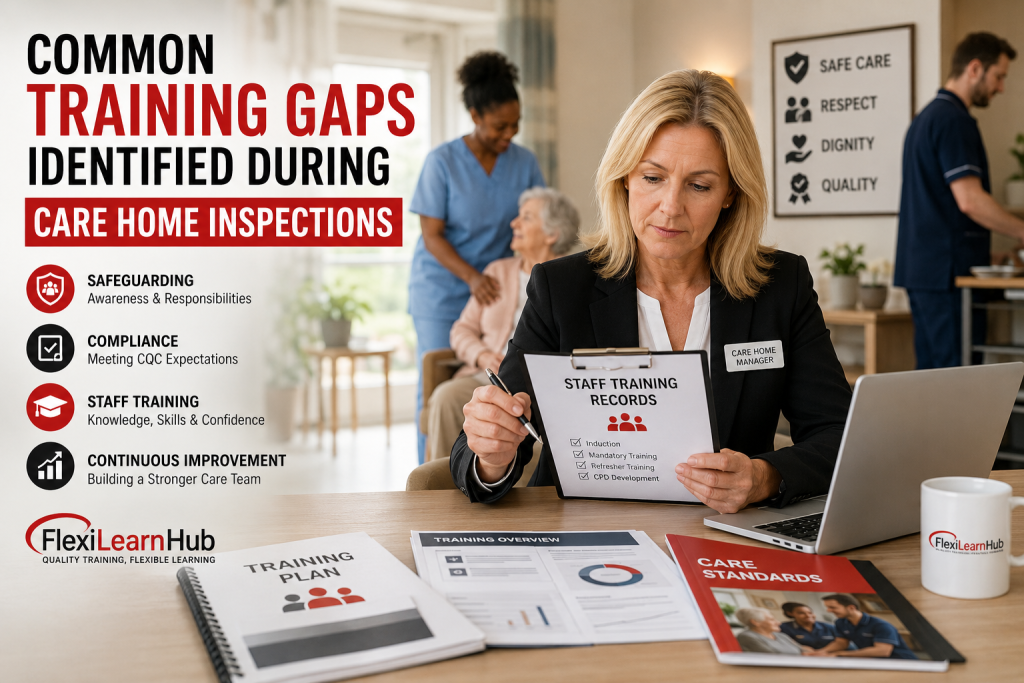
Care providers work hard to maintain high standards of care, safety and professionalism. One area that frequently receives attention during inspections is staff training. While training alone does not determine inspection outcomes, providers are expected to demonstrate that staff have the knowledge, skills and support required to carry out their roles effectively. Identifying and addressing training gaps can help organisations strengthen workplace confidence, support safe care delivery and maintain consistent standards across teams. Why Training Matters Training helps ensure staff understand their responsibilities and can apply organisational policies and procedures appropriately within their roles. Effective training programmes support: ✔ Safe care delivery ✔ Regulatory awareness ✔ Professional confidence ✔ Consistent working practices ✔ Continuous professional development Maintaining accurate training records and refresher schedules also helps demonstrate a commitment to workforce development. Safeguarding Awareness One of the most important training areas within health and social care is safeguarding. Staff should understand: ✔ Different forms of abuse and neglect ✔ Professional responsibilities ✔ Reporting procedures ✔ Whistleblowing processes ✔ Professional boundaries Regular safeguarding refresher training helps ensure staff remain confident in recognising concerns and responding appropriately. Related Training:Safeguarding Adults Level 1 & 2 Training Mental Capacity Act & DoLS Awareness Understanding the Mental Capacity Act (MCA) and Deprivation of Liberty Safeguards (DoLS) remains essential within many care settings. Training should support awareness of: ✔ Decision-making principles ✔ Individual rights ✔ Consent and capacity ✔ Professional responsibilities ✔ Person-centred care approaches A lack of understanding in this area can create uncertainty when supporting individuals who may have fluctuating or impaired capacity. Related Training:Mental Capacity Act & DoLS Awareness Training Infection Prevention & Control Infection prevention remains a core area of workplace training. Staff should understand: ✔ Hygiene practices ✔ Cross-contamination awareness ✔ Use of PPE ✔ Workplace procedures ✔ Reporting processes Regular refresher training helps reinforce safe working practices and workplace standards. Related Training:Infection Prevention & Control Training Moving & Handling Awareness Moving and handling training supports both staff and resident safety. Training should help staff understand: ✔ Risk awareness ✔ Safe working practices ✔ Professional responsibilities ✔ Equipment awareness ✔ Workplace procedures Regular updates help maintain consistency across teams and reduce avoidable risks. Related Training:Moving & Handling of People Training Dementia Awareness Many care environments support individuals living with dementia. Training helps staff develop understanding of: ✔ Person-centred approaches ✔ Communication techniques ✔ Emotional wellbeing ✔ Environmental considerations ✔ Individual support needs Building confidence in dementia awareness can improve day-to-day interactions and support positive care experiences. Related Training:Dementia Awareness Training Mealtime Safety & Nutritional Awareness Mealtimes play an important role in health, wellbeing and quality of life. Training gaps can sometimes occur around: ✔ Nutrition and hydration ✔ Dysphagia awareness ✔ Texture modified meals ✔ Food safety ✔ Allergen awareness Providing staff with appropriate awareness training helps support safer mealtime experiences and improved understanding of individual needs. Related Training: Supporting Consistent Standards Across Teams Care providers often face challenges when managing training across large teams, multiple shifts and varying levels of experience. A structured training programme can help: ✔ Track learning progress ✔ Identify refresher requirements ✔ Maintain consistent standards ✔ Support induction programmes ✔ Demonstrate workforce development Online training systems can also help simplify administration while supporting ongoing professional development. Group Training for Care Homes & Employers FlexiLearnHub offers flexible online training suitable for both individual learners and care organisations. Our Group Training system enables employers to: ✔ Enrol multiple staff members ✔ Assign training programmes ✔ Monitor learner progress ✔ Track certificate completion ✔ Support workforce development This helps organisations maintain oversight of staff training while reducing administrative workload. Building a Positive Learning Culture Addressing training gaps is not simply about compliance. It is about creating a workplace culture where staff feel confident, supported and equipped to deliver high-quality care. Regular training, refresher learning and professional development opportunities can help organisations strengthen workforce confidence and support positive outcomes for the people they care for. Explore Our Care Home Staff Training Courses FlexiLearnHub provides a growing range of online care training courses designed to support: ✔ Care Assistants ✔ Senior Care Staff ✔ Support Workers ✔ Team Leaders ✔ Care Home Managers ✔ Healthcare Professionals Explore our care training courses and group training solutions to support safe, effective and person-centred care.
Why Staff Training Matters During CQC Inspections
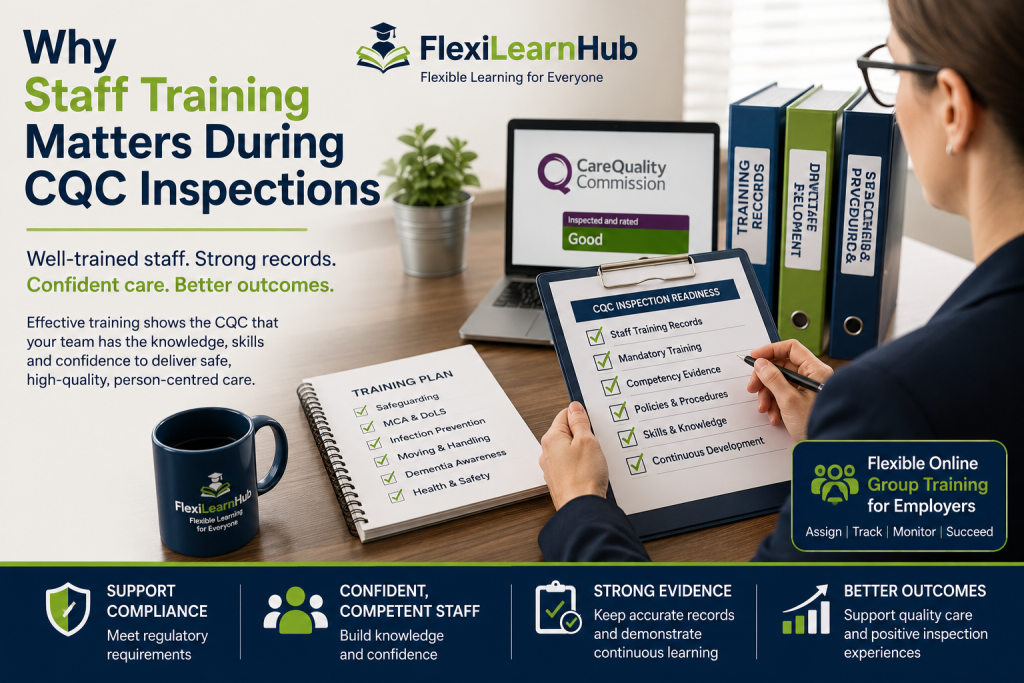
Staff training plays an important role in supporting quality care, workplace confidence and ongoing professional development within health and social care environments. For care providers, maintaining effective staff training programmes can also help demonstrate a commitment to safe, effective and person-centred care during Care Quality Commission (CQC) inspections. While training alone does not determine inspection outcomes, it can form part of the wider evidence that organisations use to demonstrate good practice and continuous improvement. Training and Compliance Care providers have a responsibility to ensure that staff receive appropriate information, instruction and workplace training relevant to their roles. Training helps support: ✔ Safe working practices ✔ Professional competence ✔ Workplace confidence ✔ Understanding of organisational policies and procedures ✔ Continuous professional development Providing access to appropriate learning opportunities helps create a culture where staff can develop their knowledge and understanding throughout their careers. How Training Records Support Inspection Readiness During inspections, providers may be asked to demonstrate how staff are supported to carry out their roles effectively. Maintaining accurate training records can help organisations: ✔ Monitor staff learning ✔ Track completed training ✔ Identify refresher requirements ✔ Demonstrate workforce development ✔ Support compliance monitoring Well-maintained training records can provide evidence of ongoing investment in staff development and workplace learning. Common Training Areas Reviewed by Inspectors Training requirements vary between organisations and job roles. However, common workplace training areas often include: Safeguarding Awareness Supporting awareness of protecting individuals from abuse, neglect and harm. Mental Capacity Act & DoLS Awareness Understanding key principles that support decision-making and individual rights. Infection Prevention & Control Promoting safe working practices and workplace hygiene standards. Moving and Handling Awareness Supporting safer working practices when assisting individuals with movement and mobility. Dementia Awareness Helping staff develop understanding of dementia and person-centred approaches to care. Health & Safety Awareness Supporting safe workplace practices and risk awareness. Managing Training Across Multiple Staff For many care providers, managing training across multiple employees can become increasingly challenging. Organisations may need to: ✔ Monitor training completion ✔ Manage refresher training ✔ Track learner progress ✔ Maintain training records ✔ Support workforce development Having a structured training system can help simplify administration while supporting staff learning. Flexible Online Group Training for Employers FlexiLearnHub provides flexible online training designed to support employers, managers and workplace teams. Our Group Training system allows organisations to: ✔ Assign training to staff ✔ Monitor learner progress ✔ Track course completion ✔ Manage workplace learning ✔ Access training records online Explore our Group Training options: Supporting Continuous Professional Development Professional development should be viewed as an ongoing process rather than a one-off event. Regular training and refresher learning can help support workplace confidence, encourage good practice and contribute to a positive learning culture within care environments. By investing in staff development, organisations can help build knowledgeable, confident teams that are better equipped to support the individuals they care for. Explore Our Care Training Courses FlexiLearnHub offers a growing range of online training designed to support care staff, catering teams and workplace managers. Popular training areas include: ✔ Safeguarding Awareness ✔ Mental Capacity Act & DoLS Awareness ✔ Infection Prevention & Control ✔ Moving and Handling Awareness ✔ Dementia Awareness ✔ Health & Safety Awareness ✔ Nutrition & Hydration ✔ Dysphagia & IDDSI Awareness Explore our training courses and resources to support workplace learning and professional development.