
Reducing Medication Errors in Care Homes: Practical Steps for Safer Care

Medication plays an important role in supporting the health, comfort and wellbeing of many people living in care homes. With some residents taking several different medicines at different times of the day, safe medicines management requires careful organisation, clear communication and appropriately trained and competent staff. Medication errors can happen for many reasons. A dose may be missed, information may be recorded incorrectly, communication may break down during a handover, or staff may be interrupted while carrying out medication-related duties. Reducing medication errors is therefore not simply about telling individual staff members to be more careful. Care providers need effective systems, clear procedures, appropriate training and a positive culture where concerns and mistakes can be reported, reviewed and used as opportunities for learning. This guide explores practical ways care homes can strengthen medication safety and help protect the people they support. What Is a Medication Error? A medication error is a preventable incident involving medicines that may result in inappropriate medicine use or potential harm. Within a care environment, an error could involve: Not every medication error results in harm, but every error or near miss should be taken seriously because it may reveal an opportunity to make systems safer. Developing strong medication awareness across the workforce can help staff understand these risks and recognise their own responsibilities. Why Can Medication Errors Happen in Care Homes? Medication management can involve several people and organisations, including care staff, managers, GPs, pharmacies, nurses and other healthcare professionals. Safe systems therefore depend on effective communication and accurate information. Factors that can contribute to errors may include: Rather than automatically assuming an error occurred because one person was careless, providers should consider the circumstances surrounding an incident and whether changes could make the overall system safer. 1. Ensure Staff Understand Their Responsibilities Not every care worker will have the same responsibilities for medication. Care providers should clearly establish which employees are authorised and competent to perform particular medication-related tasks. Staff should understand: Medication awareness is valuable across the wider workforce, even when individual employees do not administer medicines. Knowing the limits of one’s role is itself an important part of safe practice. 2. Provide Appropriate Training and Assess Competence Training should reflect an employee’s role and responsibilities. Where staff are responsible for administering or supporting people with medicines, providers should ensure they have received appropriate training and have been assessed as competent before undertaking those duties independently. Training should not be viewed as a one-off event. Knowledge can fade, procedures change and employees may encounter situations they have not previously experienced. Regular refresher training can therefore form part of a wider programme of supervision, competency assessment and continuing professional development. Managers should also distinguish between completing a training course and demonstrating practical competence. A certificate provides evidence of learning, but providers must still satisfy themselves that staff can apply relevant knowledge safely within their role. 3. Reduce Interruptions and Distractions Medication-related tasks require concentration. Unnecessary interruptions during a medication round can increase cognitive workload and make it more difficult for staff to maintain a consistent process. Care providers should consider how medication rounds are organised and whether avoidable distractions can be reduced. This might include: The objective should never be to rush medication administration simply to meet a timetable. A calm, organised environment supports safer practice. 4. Maintain Accurate Medication Records Accurate record keeping is fundamental to medicines management. Medication Administration Records (MARs), whether paper-based or electronic, provide important information about prescribed medicines and their administration. Records should be completed according to organisational procedures and should provide an accurate account of what has occurred. Poor documentation can create uncertainty for the next person supporting the resident and may increase the possibility of a missed or duplicated dose. Staff should therefore understand the importance of: Good records support continuity, accountability and safer decision-making. 5. Strengthen Staff Handovers A change of shift is a particularly important point for communication. Medication-related information can be lost if handovers are rushed, incomplete or dependent on memory. Relevant information might include: Written records remain essential, but effective verbal communication can provide valuable context. A structured handover process can help ensure important information reaches the right people. 6. Respond Appropriately When a Resident Refuses Medication People receiving care should be treated with dignity and respect, and medication should not simply be forced upon someone because it has been prescribed. If a resident refuses medication, staff should follow the care home’s medicines policy and relevant care plan, record the refusal correctly and seek appropriate advice where necessary. Issues concerning a person’s ability to make a particular decision may also involve the principles of the Mental Capacity Act. Our guide to Mental Capacity Act and DoLS awareness explains why understanding capacity, choice and individual rights is so important within adult social care. Staff should never automatically assume that a diagnosis, disability or age means someone lacks capacity. 7. Recognise and Report Possible Adverse Effects Care workers often spend considerable time with residents and may notice changes that others do not immediately see. Changes could include: Care staff should not attempt to diagnose the cause themselves unless this falls within their professional role. Instead, concerns should be reported promptly through the appropriate channels so that a suitable healthcare professional can assess the situation. Observations should also be recorded according to organisational procedures. 8. Store Medicines Safely Safe medication management extends beyond administration. Medicines should be stored according to relevant requirements, manufacturers’ instructions and organisational policies. Depending on the medicine, this may involve specific requirements relating to: Storage arrangements should help prevent unauthorised access while ensuring medicines remain suitable for use. Regular checks can help identify expired medicines, storage problems or discrepancies before they create unnecessary risk. 9. Encourage Accurate and Open Reporting Staff should know exactly what to do if they make or discover a medication error. Trying to hide an error can increase the risk of harm because appropriate action may be delayed. A positive safety culture encourages staff to report incidents
Preparing for a CQC Inspection: A Staff Training Checklist for Care Homes

Preparing for a Care Quality Commission (CQC) inspection is an important responsibility for every care provider. While inspections are designed to assess the quality and safety of care being delivered, they also provide an opportunity to demonstrate the commitment, professionalism and dedication of your team. One of the key areas inspectors consider is staff training. Well-trained employees are better equipped to provide safe, effective and compassionate care while confidently demonstrating their knowledge and competence during an inspection. Rather than viewing inspections as something to prepare for at the last minute, successful care providers embed learning and professional development into everyday practice. This approach not only supports compliance but also helps create a positive culture where residents receive the highest possible standard of care. In this guide, we’ll explain how staff training contributes to inspection readiness and provide a practical checklist to help your organisation prepare with confidence. Why Staff Training Matters During a CQC Inspection The CQC expects providers to ensure that staff have the knowledge, skills and competence required to carry out their roles safely and effectively. Inspectors do not simply look for certificates. They want to see evidence that staff understand their responsibilities, apply good practice consistently and continue developing their knowledge throughout their employment. Effective training helps organisations demonstrate that they are committed to: When learning is embedded into everyday practice, staff naturally feel more confident answering inspectors’ questions and demonstrating how they support residents. Understanding What CQC Inspectors Are Looking For Every inspection is different, but inspectors are generally interested in whether a service is safe, effective, caring, responsive and well-led. Training supports each of these areas. For example: Safe Staff understand safeguarding procedures, infection prevention, moving and handling, medication awareness, food safety and health and safety responsibilities. Effective Employees receive appropriate induction, ongoing training and refresher learning to maintain competence throughout their careers. Caring Staff communicate respectfully, preserve dignity, promote independence and understand person-centred care. Responsive Care teams recognise changing needs, respond appropriately and understand how to report concerns. Well-led Managers demonstrate a commitment to continuous learning, maintain accurate training records and encourage professional development across the organisation. Strong staff training contributes to every aspect of quality care. A Practical Staff Training Checklist Every care provider should regularly review training to ensure staff knowledge remains current and relevant. A comprehensive training programme may include: Core Care Training Catering and Food Safety Training Where food is prepared or served, additional learning may include: Training requirements will vary depending on individual job roles, but regular review helps ensure everyone receives appropriate learning. Keep Training Records Accurate and Up to Date One of the simplest ways to demonstrate good governance is through organised training records. Managers should ensure documentation is accurate, accessible and regularly reviewed. Useful records include: Having these documents readily available helps inspections run more smoothly while demonstrating effective leadership. Ensure New Starters Receive a Structured Induction A thorough induction lays the foundation for safe practice. New employees should understand: Providing a structured induction helps new staff settle into their role while promoting consistency across the workforce. Prepare Staff for Inspector Conversations Inspectors often speak directly with care staff during visits. Rather than asking people to memorise policies, they explore how staff apply their knowledge in real situations. Typical questions may include: Staff who receive regular training are generally more confident because they understand the principles behind their everyday practice. Encourage Continuous Professional Development Excellent care providers recognise that learning does not end once mandatory training is complete. Ongoing professional development helps staff: Creating opportunities for regular learning demonstrates a commitment to quality improvement throughout the organisation. Common Training Gaps Identified During Inspections Although every inspection is unique, some common issues regularly arise. Examples include: Reviewing these areas regularly helps reduce the risk of avoidable compliance issues. How Online Training Supports Inspection Readiness Online learning has become an increasingly valuable way for care providers to maintain consistent training across their workforce. Flexible learning allows staff to complete training around their work schedules while enabling managers to monitor progress more effectively. Benefits include: When combined with supervision, practical competency assessments and ongoing support, online training forms an important part of a wider learning strategy. Building a Positive Learning Culture The organisations that perform well during inspections rarely prepare only when an inspection is expected. Instead, they create workplaces where learning becomes part of everyday life. Managers can encourage this by: A positive learning culture benefits residents, staff and the organisation alike. Inspection Readiness Checklist Before your next inspection, consider the following questions: ✔ Are all mandatory training courses up to date? ✔ Have new employees completed their induction? ✔ Are refresher training dates being monitored? ✔ Are certificates easy to access? ✔ Is your training matrix current? ✔ Can staff confidently explain safeguarding procedures? ✔ Do employees understand the Mental Capacity Act and DoLS? ✔ Have catering staff completed appropriate food safety training? ✔ Are infection prevention procedures regularly refreshed? ✔ Is evidence of competency available where required? If you can confidently answer “yes” to these questions, your organisation is likely to be in a stronger position when inspectors visit. Preparing Every Day, Not Just Before an Inspection The most effective way to prepare for a CQC inspection is to maintain high standards every day. By investing in regular staff training, keeping accurate records and promoting continuous professional development, care providers demonstrate their commitment to delivering safe, compassionate and person-centred care. Inspection success is not achieved through last-minute preparation. It is built through consistent leadership, ongoing learning and a culture where quality improvement is part of everyday practice. Support Your Team with Flexible Online Training At FlexiLearnHub, we provide flexible online awareness training designed to support care providers, managers and care professionals across the UK. Our growing library of CQC-aligned and CPD-accredited courses covers essential subjects including safeguarding, dementia awareness, infection prevention and control, health and safety, moving and handling, food safety, Mental Capacity Act & DoLS, dysphagia awareness, the IDDSI Framework and many other key
How Annual Refresher Training Helps Care Homes Maintain High Standards

Providing outstanding care relies on more than recruiting dedicated staff. Ongoing professional development plays an important role in helping care teams maintain knowledge, strengthen confidence and continue delivering safe, person-centred care. Annual refresher training gives care professionals the opportunity to revisit essential topics, stay informed about current best practice and reinforce the standards expected within regulated care environments. Whether you’re supporting residents directly or managing a care team, regular training helps create a culture of continuous learning and professional development. Why Refresher Training Matters Even experienced care professionals benefit from regular refresher training. Over time, procedures, guidance and workplace practices can evolve, making it important for staff to revisit key topics and maintain confidence in their role. Regular refresher training helps organisations: Refresher training is not about questioning experience—it is about keeping knowledge current and ensuring best practice remains at the centre of everyday care. Supporting CQC Expectations The Care Quality Commission (CQC) expects providers to ensure staff have the skills, knowledge and competence to perform their roles safely and effectively. Providing regular refresher training demonstrates an organisation’s commitment to: Training also supports managers when planning staff development and maintaining learning records. Key Topics for Annual Refresher Training Although training requirements vary between organisations, many care providers include refresher training in areas such as: Regular refresher training helps ensure these important topics remain familiar and relevant within day-to-day practice. Flexible Online Learning for Busy Care Teams Finding time for staff training can be challenging. Flexible online learning allows care professionals to complete training at a time that fits around their responsibilities while allowing organisations to maintain workforce development without unnecessary disruption. Online learning offers benefits including: For employers, online learning also makes it easier to coordinate training across multiple members of staff. Group Training for Care Providers Care homes training three or more employees can benefit from many benefits including lower rate for our courses courses at FlexiLearnHub’s Group Training for Employers. Managers can: This helps reduce administration while ensuring staff receive consistent, high-quality training. Building a Positive Learning Culture Organisations that invest in ongoing learning often create more confident teams. When staff receive regular opportunities to refresh their knowledge, they are better equipped to support residents, communicate effectively and understand their professional responsibilities. Continuous learning also demonstrates a commitment to maintaining high standards across every area of care. Learn with FlexiLearnHub FlexiLearnHub provides flexible online training designed specifically for the care, catering and hospitality sectors. Our growing library of CQC-aligned awareness courses and CPD-accredited training helps individuals and organisations support professional development, strengthen workplace compliance and maintain high standards of care. Whether you are refreshing existing knowledge or introducing new staff to essential awareness topics, FlexiLearnHub makes professional online learning simple, flexible and accessible. Our growing course library includes: Thank you for visiting FlexiLearnHub
Why Staff Training Matters During CQC Inspections
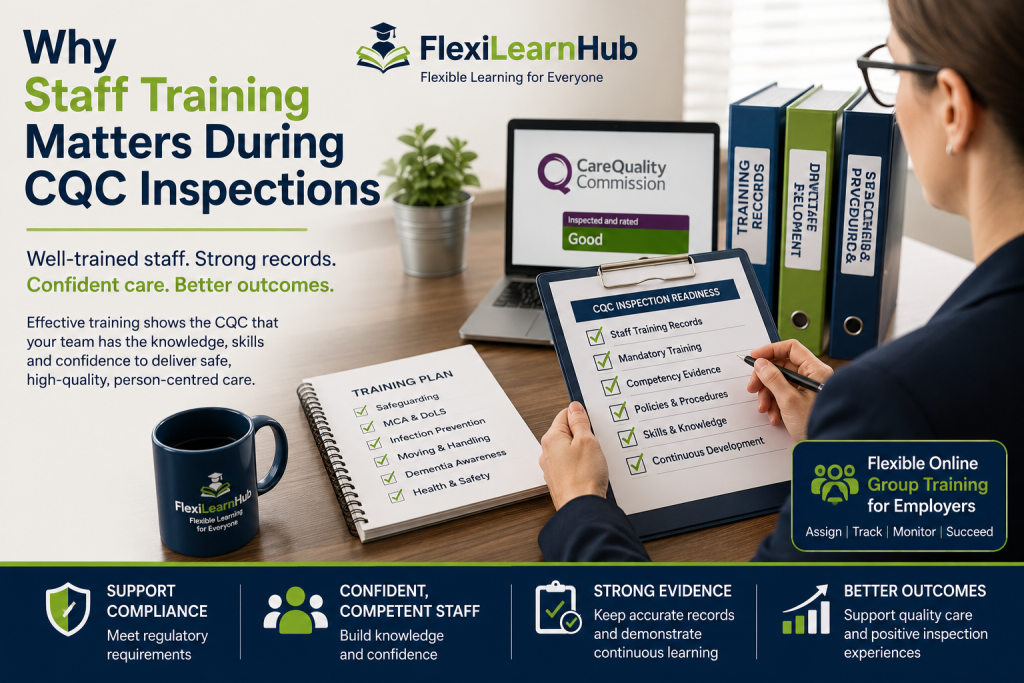
Staff training plays an important role in supporting quality care, workplace confidence and ongoing professional development within health and social care environments. For care providers, maintaining effective staff training programmes can also help demonstrate a commitment to safe, effective and person-centred care during Care Quality Commission (CQC) inspections. While training alone does not determine inspection outcomes, it can form part of the wider evidence that organisations use to demonstrate good practice and continuous improvement. Training and Compliance Care providers have a responsibility to ensure that staff receive appropriate information, instruction and workplace training relevant to their roles. Training helps support: ✔ Safe working practices ✔ Professional competence ✔ Workplace confidence ✔ Understanding of organisational policies and procedures ✔ Continuous professional development Providing access to appropriate learning opportunities helps create a culture where staff can develop their knowledge and understanding throughout their careers. How Training Records Support Inspection Readiness During inspections, providers may be asked to demonstrate how staff are supported to carry out their roles effectively. Maintaining accurate training records can help organisations: ✔ Monitor staff learning ✔ Track completed training ✔ Identify refresher requirements ✔ Demonstrate workforce development ✔ Support compliance monitoring Well-maintained training records can provide evidence of ongoing investment in staff development and workplace learning. Common Training Areas Reviewed by Inspectors Training requirements vary between organisations and job roles. However, common workplace training areas often include: Safeguarding Awareness Supporting awareness of protecting individuals from abuse, neglect and harm. Mental Capacity Act & DoLS Awareness Understanding key principles that support decision-making and individual rights. Infection Prevention & Control Promoting safe working practices and workplace hygiene standards. Moving and Handling Awareness Supporting safer working practices when assisting individuals with movement and mobility. Dementia Awareness Helping staff develop understanding of dementia and person-centred approaches to care. Health & Safety Awareness Supporting safe workplace practices and risk awareness. Managing Training Across Multiple Staff For many care providers, managing training across multiple employees can become increasingly challenging. Organisations may need to: ✔ Monitor training completion ✔ Manage refresher training ✔ Track learner progress ✔ Maintain training records ✔ Support workforce development Having a structured training system can help simplify administration while supporting staff learning. Flexible Online Group Training for Employers FlexiLearnHub provides flexible online training designed to support employers, managers and workplace teams. Our Group Training system allows organisations to: ✔ Assign training to staff ✔ Monitor learner progress ✔ Track course completion ✔ Manage workplace learning ✔ Access training records online Explore our Group Training options: Supporting Continuous Professional Development Professional development should be viewed as an ongoing process rather than a one-off event. Regular training and refresher learning can help support workplace confidence, encourage good practice and contribute to a positive learning culture within care environments. By investing in staff development, organisations can help build knowledgeable, confident teams that are better equipped to support the individuals they care for. Explore Our Care Training Courses FlexiLearnHub offers a growing range of online training designed to support care staff, catering teams and workplace managers. Popular training areas include: ✔ Safeguarding Awareness ✔ Mental Capacity Act & DoLS Awareness ✔ Infection Prevention & Control ✔ Moving and Handling Awareness ✔ Dementia Awareness ✔ Health & Safety Awareness ✔ Nutrition & Hydration ✔ Dysphagia & IDDSI Awareness Explore our training courses and resources to support workplace learning and professional development.