
Food Poisoning in Care Homes: Prevention, Warning Signs & Staff Responsibilities

Food safety is important in every catering environment, but within a care home it deserves particular attention. Meals may be prepared for older people and individuals with health conditions or other factors that can make the consequences of illness more significant. Preventing food poisoning therefore involves much more than simply keeping a kitchen looking clean. Safe food handling depends on good systems, appropriate staff training, effective temperature control, personal hygiene, contamination prevention and clear communication between care and catering teams. Food poisoning is caused by consuming food contaminated with harmful germs. According to the NHS, common causes include food that has not been cooked or reheated thoroughly, food that has not been stored correctly, food left out for too long, food handled by somebody who is ill or has not washed their hands properly, and food eaten after its use-by date. nhs.uk For care homes, understanding these risks can help staff build safer everyday practices around food preparation and service. Why Food Safety Matters in Care Homes A care-home kitchen may prepare dozens or even hundreds of meals each day. This creates numerous points at which food must be stored, prepared, cooked, transported and served correctly. Food may also need to meet individual requirements such as: This means food safety is not solely the responsibility of the chef. Kitchen assistants, care workers, domestic staff, managers and anybody involved in handling, transporting or serving food can all contribute to maintaining safe practices. Good food safety depends on everyone understanding where their own responsibilities begin and end. What Can Cause Food Poisoning? Food can become unsafe at different stages between delivery and service. The NHS identifies Campylobacter, Salmonella, E. coli and norovirus among infections commonly associated with food poisoning. nhs.uk However, staff do not need to identify which microorganism is responsible in order to understand the basic principles of prevention. Several everyday failures can increase food-safety risks. 1. Poor Hand Hygiene Hands can transfer contamination between people, equipment, surfaces and food. Staff involved with food should follow their workplace’s handwashing and personal-hygiene procedures, particularly before handling food and after activities that could contaminate their hands. The NHS specifically identifies food handled by someone who is ill or who has not washed their hands as one way food poisoning can occur. nhs.uk 2. Cross-Contamination Cross-contamination can occur when harmful microorganisms are transferred from one food, surface, utensil or piece of equipment to another. Raw and ready-to-eat foods therefore need careful separation. Work surfaces, chopping boards, utensils, containers and hands can all become routes of contamination when appropriate procedures are not followed. A kitchen may look visibly clean while unsafe cross-contamination is still occurring. 3. Incorrect Food Storage Food needs to be stored according to its requirements and the care home’s food-safety procedures. Poor refrigeration, unsuitable storage arrangements or leaving food at inappropriate temperatures can increase risk. Stock rotation is equally important. Staff should understand the difference between date markings and follow the manufacturer’s storage instructions and their organisation’s food-safety system. The NHS specifically warns that incorrectly chilled or frozen food and food eaten after its use-by date can cause food poisoning. nhs.uk For more information, see our guide to Temperature Control in Care Homes: 4. Inadequate Cooking or Reheating Food must be prepared according to safe procedures. Simply judging food by its appearance is not always sufficient to determine whether appropriate cooking or reheating requirements have been met. Care-home catering teams should follow their food-safety management procedures for cooking, reheating, temperature checking and recording. The NHS includes food that has not been cooked or reheated thoroughly among recognised causes of food poisoning. nhs.uk 5. Leaving Food Out for Too Long Food safety does not stop when cooking finishes. Meals may sometimes need to travel from the kitchen to dining rooms, individual rooms or other areas of a care setting. That makes the period between preparation and consumption important. Staff should follow the organisation’s procedures for holding, transporting and serving food and avoid leaving foods requiring temperature control outside appropriate conditions unnecessarily. This is particularly relevant when meals are served over an extended period or when a resident’s meal is delayed. 6. Staff Working While Unwell A staff member experiencing vomiting or diarrhoea should not simply continue handling food as normal. Illness can create a route through which infection spreads to food, surfaces, colleagues or residents. Every care home should have procedures explaining what staff must do if they develop symptoms of infectious illness and when they can safely return to duties involving food. Managers should ensure employees understand these procedures and know whom they need to inform. Recognising Possible Food Poisoning Care workers are often well placed to notice changes in a resident’s wellbeing. The NHS lists common food-poisoning symptoms including: Symptoms can begin within hours or days of eating contaminated food, although in some circumstances they may take longer to appear. nhs.uk However, these symptoms are not specific to food poisoning. Staff should not attempt to diagnose food poisoning themselves. Instead, they should follow the care home’s procedures for reporting illness and obtaining appropriate clinical advice. Why Dehydration Requires Attention Vomiting and diarrhoea can result in fluid loss. This is particularly relevant in care settings because the NHS identifies older people, people with weakened immune systems and people with certain other health conditions among those at increased risk from dehydration. nhs.uk Care staff should therefore follow each person’s care plan and organisational procedures, observe for concerns and escalate them appropriately. Our related guide provides further information: Nutrition and Hydration in Care Homeshttps://flexilearnhub.com/nutrition-hydration-care-homes/ What Should Staff Do if Food Poisoning Is Suspected? The first priority is the wellbeing of the person concerned. Staff should follow the individual’s care plan, their employer’s illness and infection-control procedures and the appropriate escalation pathway. Depending on the circumstances, this may include: Staff should not attempt to determine the organism responsible or make clinical diagnoses unless that falls within their professional role. The NHS advises contacting 111 in a number of circumstances, including when a person cannot
What Are Texture Modified Meals? A Guide for Care & Catering Teams
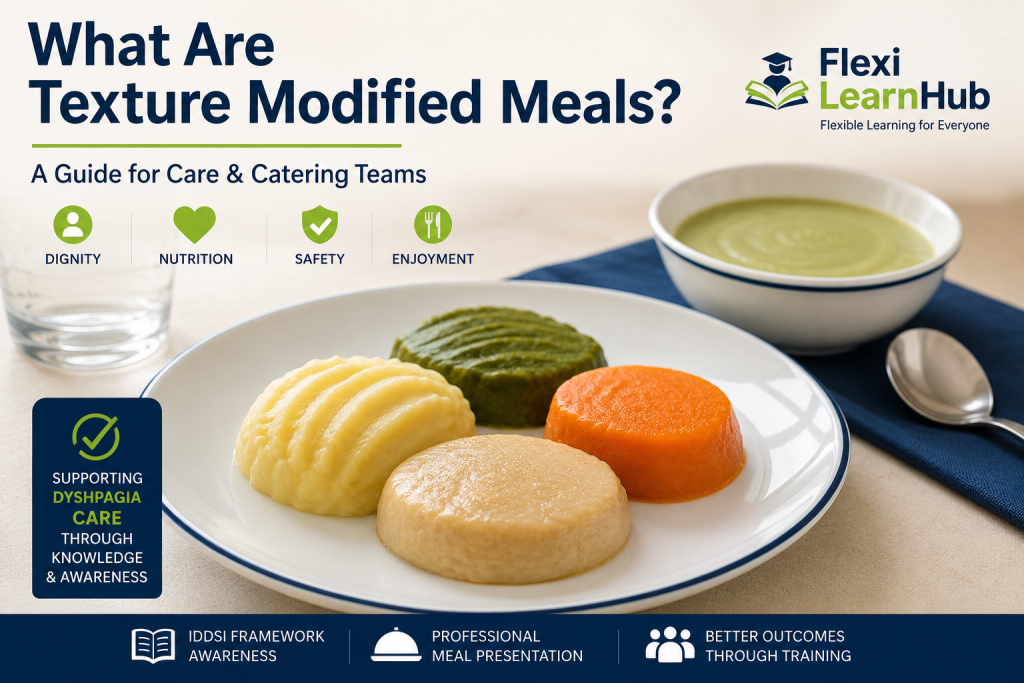
Within healthcare, care homes and specialist catering environments, texture modified meals play an important role in supporting individuals who may require modified food textures as part of their care and support arrangements. As awareness of dysphagia and specialist dietary requirements continues to grow, understanding texture modified meals is becoming increasingly important for care staff, catering teams and healthcare professionals. Understanding Texture Modified Meals Texture modified meals are foods that have been prepared, adapted or modified to achieve a specific texture or consistency. These meals are commonly used within healthcare, aged care and specialist care environments where individuals may require food textures that differ from standard meals. The goal is to provide meals that are suitable for an individual’s assessed needs while still supporting nutrition, hydration and positive mealtime experiences. Why Are Texture Modified Meals Important? Mealtimes are about far more than simply providing food. Within care environments, mealtimes can contribute to wellbeing, dignity, comfort and social interaction. Professional preparation and presentation of texture modified meals can help support: ✔ Positive mealtime experiences ✔ Dignity and respect ✔ Professional catering standards ✔ Visual appeal ✔ Consistency within care catering environments For catering teams, understanding texture modified meals is increasingly recognised as an important part of professional practice. The Role of the IDDSI Framework he International Dysphagia Diet Standardisation Initiative (IDDSI) Framework provides internationally recognised terminology and guidance relating to texture modified foods and drinks. The framework helps support consistency across healthcare, aged care and specialist catering environments. Many organisations now use the IDDSI Framework as part of their workplace awareness and professional development programmes. For a more detailed overview, visit our dedicated: IDDSI & Dysphagia Awareness Training Hub Why Professional Presentation Still Matters One common misconception is that texture modified meals cannot look appealing. In reality, professional meal presentation remains an important part of modern care catering. Thoughtfully presented meals can help support: ✔ Mealtime dignity ✔ Visual appeal ✔ Positive dining experiences ✔ Professional workplace standards ✔ Confidence within catering teams This is one reason why specialist awareness around professional purée presentation and plating is becoming increasingly popular within healthcare catering environments. Specialist IDDSI & Dysphagia Training At FlexiLearnHub, we provide specialist online training designed to support care and catering professionals. Our training includes: Dysphagia Care Training within The IDDSI Framework Designed to help provide awareness and understanding of texture modified meals, dysphagia awareness and the IDDSI Framework. Advanced IDDSI Level 4 Professional Purée Presentation & Plating Focused on professional shaping, plating and presentation awareness for Level 4 texture modified meals. Watch Our IDDSI Awareness Videos Watch our latest YouTube videos exploring: ✔ IDDSI awareness ✔ Texture modified meals ✔ Professional meal presentation ✔ Care catering standards [YouTube Long Video] [YouTube Short] Flexible Online Learning for Care & Catering Teams FlexiLearnHub provides flexible online learning designed for modern care, healthcare and catering environments. Explore our specialist training courses and resources to support professional development and workplace awareness. 👉 Dysphagia Course 👉 Advanced Level 4 Course 👉 Group Training for Employers Thank You!
Why IDDSI Awareness & Professional Meal Presentation Matter in Care Catering
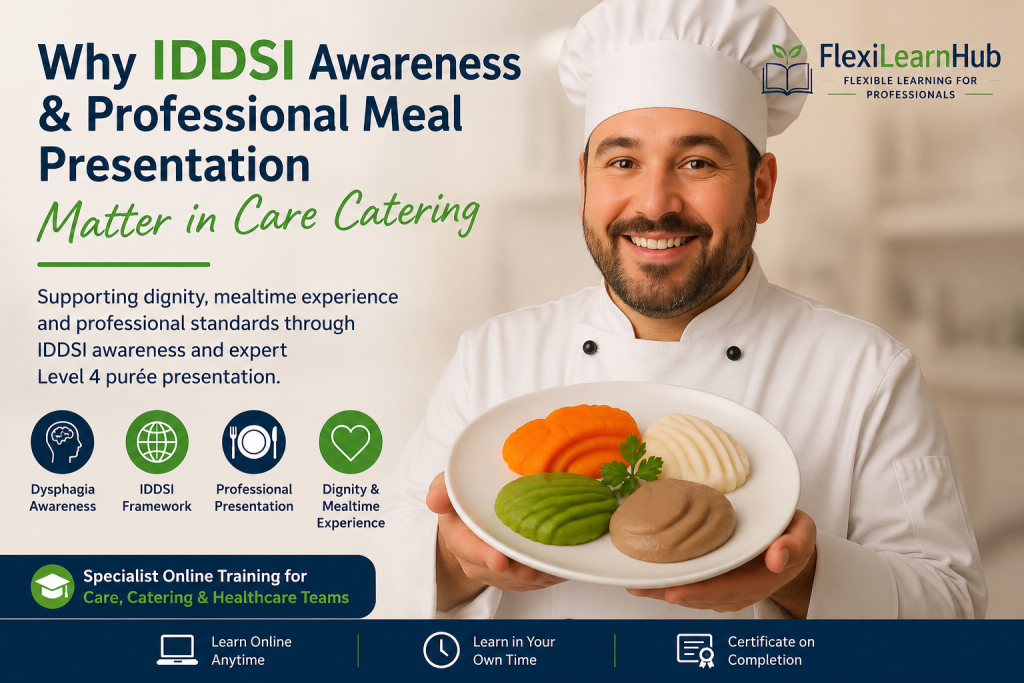
Within healthcare, care homes and specialist catering environments, awareness around dysphagia support and texture modified meals is becoming increasingly important. For many individuals requiring texture modified meals, mealtimes are not simply about nutrition. Mealtime experience, presentation, dignity and professional standards also play an important role within care environments. As awareness of dysphagia support continues to grow internationally, the IDDSI Framework has become an increasingly recognised part of care catering and healthcare foodservice environments worldwide. Understanding the IDDSI Framework The International Dysphagia Diet Standardisation Initiative, commonly known as IDDSI, provides a globally recognised framework designed to support consistency and awareness around texture modified foods and drinks. The framework helps provide standardised terminology and guidance for texture modified meals and drinks used within healthcare, aged care and specialist catering environments. Today, the IDDSI Framework is recognised across many countries worldwide and is increasingly used within care homes, healthcare catering and specialist care environments. Why Presentation Matters in Texture Modified Meals While texture modified meals are an important part of many care catering environments, presentation standards are sometimes overlooked. Meals that appear inconsistent, poorly shaped or visually unappealing may negatively affect the overall mealtime experience. Professional meal presentation can help support: Dignity during mealtimesProfessional catering standardsPositive dining experiencesWorkplace pride within catering teamsImproved visual appeal of texture modified meals Within modern care catering environments, presentation is increasingly recognised as an important part of professional foodservice standards. Supporting Dignity Through Professional Care Catering Care catering is about more than simply preparing food. For many residents and individuals within care environments, mealtimes are an important part of daily wellbeing, comfort and routine. Professional presentation and thoughtful meal preparation can help contribute to a more positive and respectful dining environment. This is one reason why awareness around dysphagia support and specialist meal presentation continues to grow within healthcare and care catering sectors. Training for Care Home Catering Teams At FlexiLearnHub, we provide specialist online training designed for real workplace environments. Our training courses help support awareness and professional understanding across both care and catering sectors. Our specialist IDDSI-related courses include: Dysphagia Care Training within The IDDSI Framework Designed to help provide awareness and understanding of dysphagia support, texture modified meals and the IDDSI Framework within care and healthcare environments. Advanced IDDSI Level 4 Professional Purée Presentation & Plating Focused on professional presentation, shaping and plating awareness for Level 4 texture modified meals within healthcare and specialist catering environments. These courses are suitable for: Care home chefsHealthcare catering teamsCatering managersKitchen assistantsCare staffSpecialist care catering environments Watch Our IDDSI Awareness Video Watch our latest YouTube video exploring the importance of IDDSI awareness and professional meal presentation within care catering environments. Explore our specialist Dysphagia & IDDSI Awareness training courses at FlexiLearnHub. Flexible Online Learning for Care & Catering Teams FlexiLearnHub provides flexible online learning designed to support modern workplaces. Learners can complete training online, in their own time, while building professional awareness and workplace understanding within care, healthcare and catering environments. Explore our online training platform today: IDDSI Dysphagia Awareness Training for Care Homes (CPD Accredited) Advanced IDDSI Level 4 Professional Purée Presentation & Plating Training View Our Courses: Group Training for Employers: