
How Annual Refresher Training Helps Care Homes Maintain High Standards

Providing outstanding care relies on more than recruiting dedicated staff. Ongoing professional development plays an important role in helping care teams maintain knowledge, strengthen confidence and continue delivering safe, person-centred care. Annual refresher training gives care professionals the opportunity to revisit essential topics, stay informed about current best practice and reinforce the standards expected within regulated care environments. Whether you’re supporting residents directly or managing a care team, regular training helps create a culture of continuous learning and professional development. Why Refresher Training Matters Even experienced care professionals benefit from regular refresher training. Over time, procedures, guidance and workplace practices can evolve, making it important for staff to revisit key topics and maintain confidence in their role. Regular refresher training helps organisations: Refresher training is not about questioning experience—it is about keeping knowledge current and ensuring best practice remains at the centre of everyday care. Supporting CQC Expectations The Care Quality Commission (CQC) expects providers to ensure staff have the skills, knowledge and competence to perform their roles safely and effectively. Providing regular refresher training demonstrates an organisation’s commitment to: Training also supports managers when planning staff development and maintaining learning records. Key Topics for Annual Refresher Training Although training requirements vary between organisations, many care providers include refresher training in areas such as: Regular refresher training helps ensure these important topics remain familiar and relevant within day-to-day practice. Flexible Online Learning for Busy Care Teams Finding time for staff training can be challenging. Flexible online learning allows care professionals to complete training at a time that fits around their responsibilities while allowing organisations to maintain workforce development without unnecessary disruption. Online learning offers benefits including: For employers, online learning also makes it easier to coordinate training across multiple members of staff. Group Training for Care Providers Care homes training three or more employees can benefit from many benefits including lower rate for our courses courses at FlexiLearnHub’s Group Training for Employers. Managers can: This helps reduce administration while ensuring staff receive consistent, high-quality training. Building a Positive Learning Culture Organisations that invest in ongoing learning often create more confident teams. When staff receive regular opportunities to refresh their knowledge, they are better equipped to support residents, communicate effectively and understand their professional responsibilities. Continuous learning also demonstrates a commitment to maintaining high standards across every area of care. Learn with FlexiLearnHub FlexiLearnHub provides flexible online training designed specifically for the care, catering and hospitality sectors. Our growing library of CQC-aligned awareness courses and CPD-accredited training helps individuals and organisations support professional development, strengthen workplace compliance and maintain high standards of care. Whether you are refreshing existing knowledge or introducing new staff to essential awareness topics, FlexiLearnHub makes professional online learning simple, flexible and accessible. Our growing course library includes: Thank you for visiting FlexiLearnHub
Why Every Care Home Needs Mental Capacity Act & DoLS Awareness Training

Supporting people within adult social care involves more than providing day-to-day assistance. Care professionals are expected to work in a way that promotes dignity, respect, person-centred care and individual rights while following professional standards and organisational procedures. Developing awareness of the Mental Capacity Act (MCA) and Deprivation of Liberty Safeguards (DoLS) helps staff better understand their professional responsibilities and supports safe, compassionate care within regulated care settings. What is the Mental Capacity Act? The Mental Capacity Act 2005 provides a legal framework that supports decision-making for adults who may have difficulty making certain decisions for themselves. For care staff, understanding the principles of the Mental Capacity Act helps promote: Awareness training helps staff understand these important principles while recognising the importance of following organisational policies, care plans and established procedures. Understanding Deprivation of Liberty Safeguards (DoLS) Deprivation of Liberty Safeguards are designed to help protect individuals who may lack capacity and require care arrangements that are in their best interests. While detailed legal decisions remain the responsibility of appropriately trained professionals, awareness training helps staff understand: Developing awareness supports safer and more consistent care across all care settings. Why Awareness Training Matters Regular refresher training helps organisations maintain high standards of care while supporting staff confidence and professional development. Benefits include: See Our Courses Visit: FlexiLearnHub Training helps kitchen teams remain compliant while continually developing their professional knowledge. Who Should Complete Mental Capacity Act & DoLS Awareness Training? This course is suitable for a wide range of professionals, including: Every member of the care team plays an important role in supporting safe, respectful and person-centred care. Flexible Online Learning with FlexiLearnHub At FlexiLearnHub, our Mental Capacity Act & DoLS Awareness (CQC-Aligned) course has been designed to provide engaging, easy-to-follow online learning. Learners benefit from: Supporting Better Care Through Professional Development Investing in staff training helps organisations promote high standards of care while supporting professional development and workplace confidence. Whether you are an individual learner or responsible for managing staff training, Mental Capacity Act & DoLS Awareness Training forms an important part of a well-rounded learning programme for adult social care professionals. Learn with FlexiLearnHub Start your Mental Capacity Act & DoLS Awareness (CQC-Aligned) training today and strengthen your understanding of person-centred care, professional responsibilities and safe working practices within adult social care. Mental Capacity Act & DoLS Awareness
Temperature Control in Care Homes: Safe Food Storage and Serving
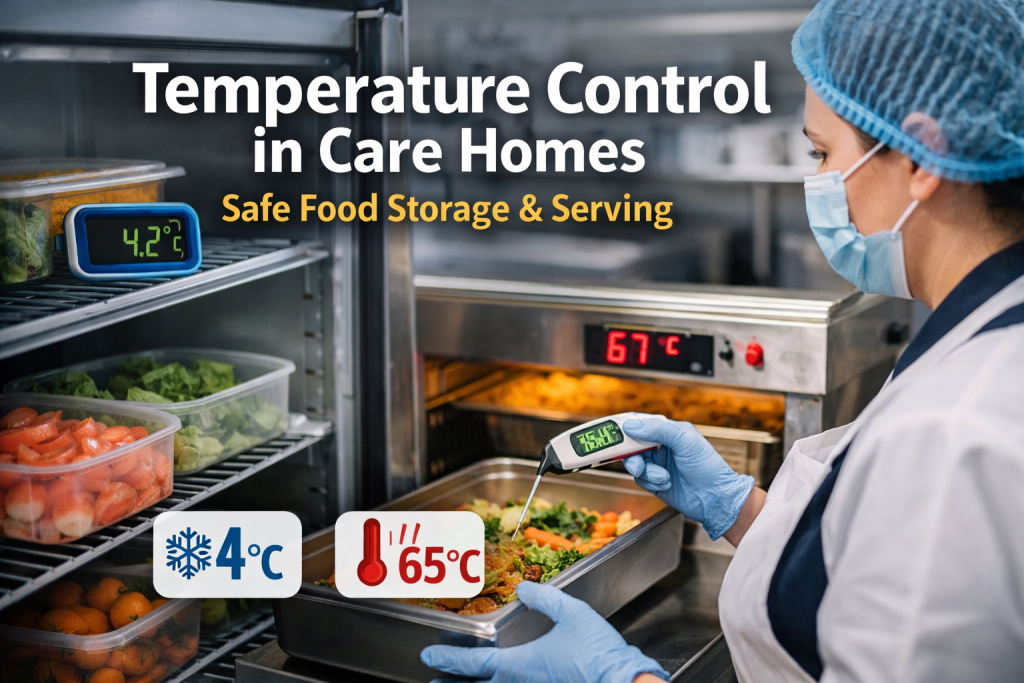
Temperature control is one of the most important aspects of food safety in care homes. Incorrect storage or serving temperatures can quickly lead to bacterial growth and increase the risk of foodborne illness. In this guide, we explain safe temperature control practices and how care staff can reduce risk while maintaining compliance. Why Temperature Control is Critical in Care Settings Maintaining safe food temperatures is essential to protect vulnerable residents in care settings. Improper temperature control can lead to: Maintaining correct temperatures is key to protecting residents. Safe Food Storage Temperatures Food must be stored at correct temperatures to prevent bacteria multiplying. General guidelines include: Regular temperature checks are essential to ensure compliance. Cooking and Reheating Food Safely Food must be cooked and reheated properly to eliminate harmful bacteria. Best practice includes: These steps help reduce risk and ensure food safety. Common Temperature Control Mistakes Some common issues in care settings include: Training helps staff identify and prevent these risks. The Role of Training in Temperature Control Staff must understand how to monitor and maintain safe temperatures. Training supports: Start your Food Safety training here Supporting Care Homes with Practical Training FlexiLearnHub provides flexible online training designed for care and catering teams. Our courses help staff: Conclusion Temperature control is a critical part of food safety in care homes. With the right knowledge and training, care teams can ensure food is stored, prepared and served safely. Start Your Training Today Ensure your team understands safe food handling and temperature control practices. Start your training today For a full overview of food safety in care homes:Read our Food Safety in Care Homes guide Learn about allergen risks:Allergen Awareness in Care Homes Explore more training guides: Safeguarding Training Infection Prevention Moving & Handling Dementia Awareness