
Temperature Control in Care Homes: Safe Food Storage and Serving
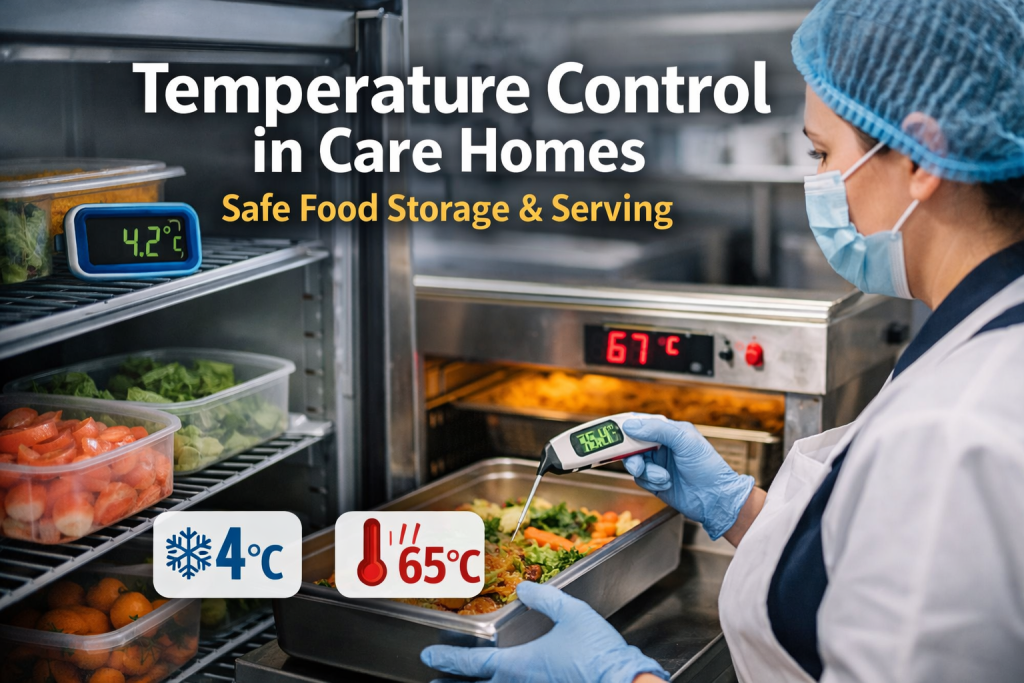
Temperature control is one of the most important aspects of food safety in care homes. Incorrect storage or serving temperatures can quickly lead to bacterial growth and increase the risk of foodborne illness. In this guide, we explain safe temperature control practices and how care staff can reduce risk while maintaining compliance. Why Temperature Control is Critical in Care Settings Maintaining safe food temperatures is essential to protect vulnerable residents in care settings. Improper temperature control can lead to: Maintaining correct temperatures is key to protecting residents. Safe Food Storage Temperatures Food must be stored at correct temperatures to prevent bacteria multiplying. General guidelines include: Regular temperature checks are essential to ensure compliance. Cooking and Reheating Food Safely Food must be cooked and reheated properly to eliminate harmful bacteria. Best practice includes: These steps help reduce risk and ensure food safety. Common Temperature Control Mistakes Some common issues in care settings include: Training helps staff identify and prevent these risks. The Role of Training in Temperature Control Staff must understand how to monitor and maintain safe temperatures. Training supports: Start your Food Safety training here Supporting Care Homes with Practical Training FlexiLearnHub provides flexible online training designed for care and catering teams. Our courses help staff: Conclusion Temperature control is a critical part of food safety in care homes. With the right knowledge and training, care teams can ensure food is stored, prepared and served safely. Start Your Training Today Ensure your team understands safe food handling and temperature control practices. Start your training today For a full overview of food safety in care homes:Read our Food Safety in Care Homes guide Learn about allergen risks:Allergen Awareness in Care Homes Explore more training guides: Safeguarding Training Infection Prevention Moving & Handling Dementia Awareness
Allergen Awareness in Care Homes: Essential Training for Staff

Allergen awareness in care homes is critical to protecting residents from potentially life-threatening allergic reactions. With increasing food allergy prevalence and strict UK regulations, care providers must ensure all staff understand how to manage allergens safely. In this guide, we explain why allergen awareness matters and how proper training supports safe, compliant care. Why Allergen Awareness is Critical in Care Homes Residents in care settings may have known allergies, intolerances, or complex dietary needs. Even small mistakes can result in serious health risks. Effective allergen management helps to: Prevent allergic reactions Protect vulnerable residents Build trust with residents and families Maintain regulatory compliance Understanding the 14 Major Allergens UK food law identifies 14 major allergens that must be declared and managed correctly, including: Milk Eggs Nuts Peanuts Gluten Fish and shellfish Soybeans Mustard Sesame Staff must understand how these allergens are used in food preparation and how to communicate them clearly. Common Allergen Risks in Care Settings Some of the most common allergen risks include: Cross-contamination during food preparation Incorrect labelling or missing information Lack of communication between kitchen and care staff Staff not aware of resident dietary needs Without proper training, these risks can lead to serious consequences. Natasha’s Law and Legal Responsibilities Introduced in 2021, Natasha’s Law requires food businesses to provide full ingredient labelling on pre-packed for direct sale (PPDS) foods. For care homes, this means: Accurate allergen information must be available Staff must understand allergen procedures Clear communication must be maintained Failure to comply can result in serious legal and reputational consequences. The Role of Allergen Training Allergen training ensures staff understand how to identify, manage and communicate allergen risks effectively. Training helps staff: Prevent cross-contamination Follow correct food handling procedures Communicate clearly with colleagues and residents Maintain compliance with UK regulations To support safe practice, structured training is essential. Start your Allergen Awareness training course here Supporting Care Homes with Online Training FlexiLearnHub provides flexible online training designed for care homes, catering teams and hospitality staff. Our allergen awareness course helps staff: Understand legal requirements Manage allergens safely Reduce risks in the kitchen Build confidence in food safety practices Conclusion Allergen awareness is a vital part of safe care home catering. With proper training and clear procedures, care teams can protect residents and maintain high standards of safety and compliance. Food safety and hygiene practices are closely linked to allergen management. Read our food safety guide for care homes Staff training plays a key role in meeting compliance standards. Learn about CQC training requirements Start Your Training Today If your team requires allergen awareness training, FlexiLearnHub provides accessible online courses designed for real care environments. Flexible online learning Practical and easy to follow Certificate provided on completion Start your Allergen Awareness training today If you require experienced chefs to support your care home or catering operation: Visit ASL Catering Agency for chef recruitment and cover Related Training Guides IDDSI in Care Homes Food Safety in Care Homes Allergen Awareness in Care Homes Nutrition & Hydration in Care Homes CQC Training Requirements
Food Safety in Care Homes: Essential Training for Staff

Food safety in care homes is critical to protecting vulnerable residents and maintaining compliance with UK regulations. Poor food hygiene practices can lead to serious health risks, including foodborne illness and cross-contamination. In this guide, we explain the importance of food safety in care settings and why proper training is essential for all catering and care staff. Why Food Safety is Critical in Care Homes Care home residents are often more vulnerable to illness due to age, medical conditions or weakened immune systems. This makes safe food handling essential to: Prevent foodborne illness Protect resident health and wellbeing Maintain compliance with regulations Avoid enforcement action or penalties Key Food Safety Responsibilities for Staff All staff involved in food preparation or service must understand their responsibilities, including: Maintaining high standards of personal hygiene Preventing cross-contamination Storing food at correct temperatures Following cleaning and sanitisation procedures Managing allergens safely Common Food Safety Risks in Care Settings Some of the most common risks include: Poor hand hygiene Incorrect food storage temperatures Cross-contamination between raw and cooked foods Inadequate cleaning procedures Lack of allergen awareness Without proper training, these risks can quickly lead to serious issues. Food Safety Training and Legal Compliance Food safety training is not optional — it is a legal requirement for anyone handling food. Training ensures staff: Understand UK food hygiene regulations Follow safe food preparation practices Maintain compliance with inspection standards Reduce risk within the care environment To ensure your team meets required standards, structured training is essential. Start your Food Safety training course here Supporting Care Homes with Online Training FlexiLearnHub provides flexible online training designed for care homes and catering teams. Our Food Safety training helps staff: Build confidence in food handling Understand hygiene best practices Reduce risks in the kitchen Meet compliance and inspection standards Conclusion Food safety is a fundamental part of care home operations. With proper training and awareness, care teams can provide safe, high-quality meals while protecting the health of residents. Allergen awareness is also essential for safe food preparation. Read our allergen awareness guide for care homes To meet regulatory expectations, training must align with care standards. Learn about CQC training requirements for care homes Start Your Training Today If your team requires Food Safety training, FlexiLearnHub provides flexible online courses designed specifically for care and catering environments. Learn at your own pace Practical and easy to follow Certificate provided on completion Start your Food Safety training today If you require experienced chefs to support your care home or catering operation: Visit ASL Catering Agency for chef recruitment and cover Related Training Guides IDDSI in Care Homes Food Safety in Care Homes Allergen Awareness in Care Homes Nutrition & Hydration in Care Homes CQC Training Requirements